
Relocate A Tree Step By Step | The Lingo Way
February 21st, 2026
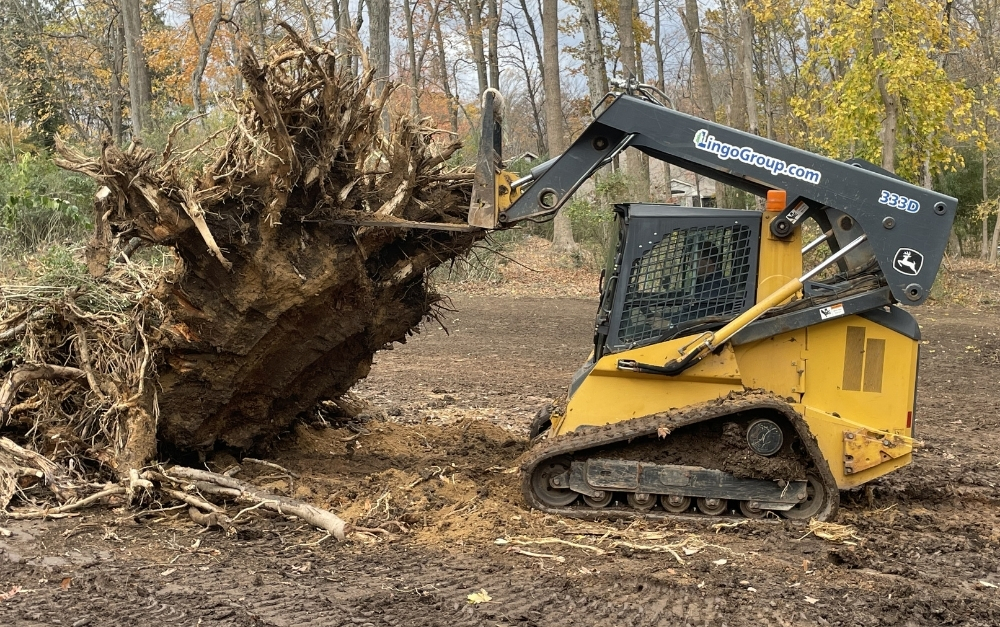
To relocate a tree successfully, preparation begins long before any machinery arrives on site. When a mature tree is moved without proper planning, root loss, soil compaction, and transplant shock can compromise survival within a single growing season.
Relocating a mature specimen is not a DIY undertaking. Large trees require hydraulic tree spades, heavy transport equipment, soil conditioning expertise, and coordinated irrigation planning. If you want to relocate a tree and expect it to survive Pennsylvania’s clay soils, freeze–thaw cycles, and summer heat, professional execution is essential. Here’s how we do it, step by step:
Step 1: Structural Assessment and Root Ball Engineering
Before we relocate a tree, we determine whether the tree is a viable candidate for transplanting. Not every mature tree should be moved.
Our evaluation includes:
-
Measuring trunk diameter (DBH) to calculate minimum root ball diameter
-
Inspecting canopy density and structural branch integrity
-
Identifying decay, girdling roots, or pest stress
-
Mapping underground utilities and access routes
Root ball sizing is critical. Industry standards typically recommend 10–12 inches of root ball diameter for every inch of trunk diameter. However, in compacted Pennsylvania clay soils, we often increase that margin to preserve additional feeder roots.
If the root ball is undersized, feeder roots are severed. And if that happens water uptake capacity drops. The final result is canopy decline in the first summer heat cycle.
We also analyze soil moisture patterns at both the current and future locations. A tree acclimated to well-draining soil may struggle if relocated into a poorly drained basin.
Step 2: Hydraulic Spade Extraction

Stock Photo
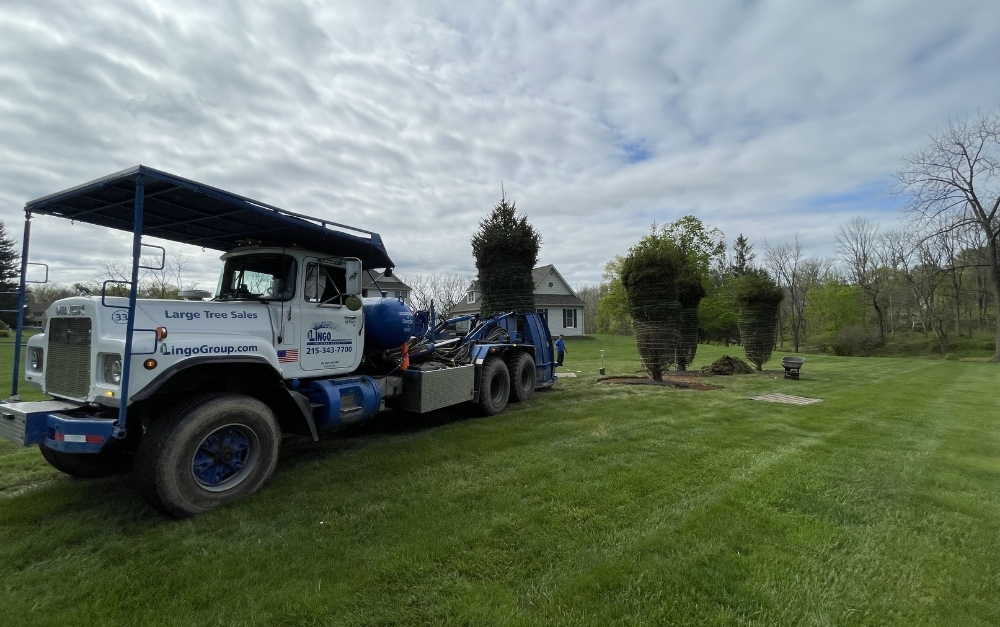
To relocate a tree of significant size, we use a truck-mounted hydraulic tree spade matched to the calculated root ball diameter.
The process is mechanical and controlled:
✓ Position spade evenly around marked root zone
✓ Insert blades incrementally to full depth
✓ Undercut and form a tapered root ball
✓ Lift vertically to maintain soil cohesion
The root ball remains intact inside the spade cone. Once lifted, it is transferred directly to transport equipment or held in the spade for immediate relocation if distance allows.
We do not hand-dig large-caliper trees. Mechanical symmetry protects root mass and keeps soil bonded around feeder roots.
Timing is typically scheduled during dormancy in late fall or early spring, consistent with transplant timing guidance from the U.S. Department of Agriculture Plant Hardiness Zone Map for Southeastern Pennsylvania climate conditions.
Step 3: Receiving Site Excavation and Soil Preparation
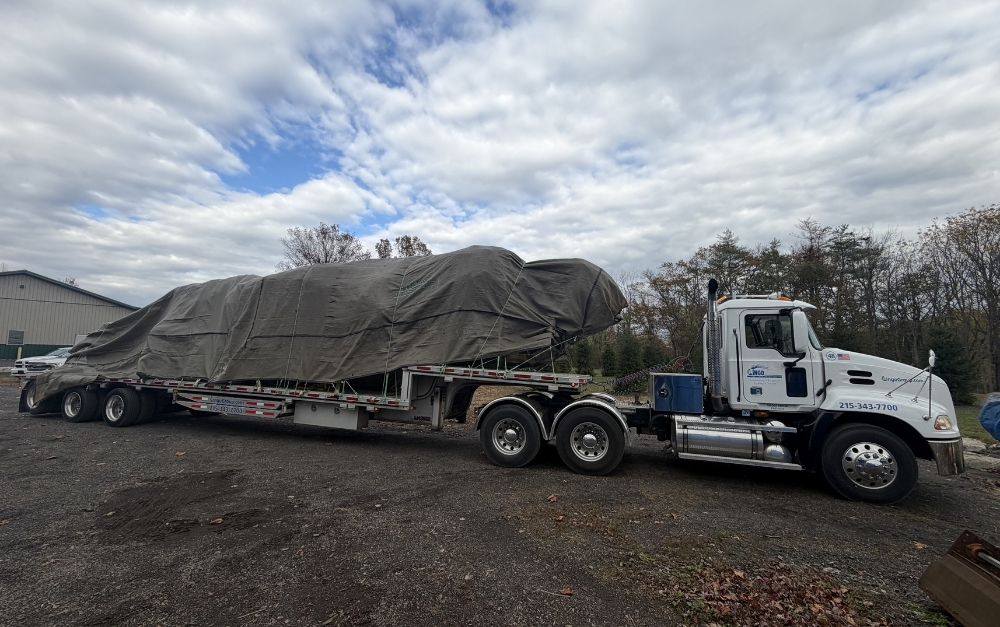
In order to relocate a tree successfully, the receiving hole is prepared before the tree is lowered into place.
Our sequence includes:
-
Excavating a hole slightly wider than the root ball
-
Loosening surrounding native soil beyond the pit edge
-
Verifying final grade elevation
-
Confirming drainage slope away from trunk
We avoid over-amending soil within the planting pit. The surrounding soil must encourage outward root growth rather than creating a contained pocket.
Drainage is confirmed visually and physically. Standing water in the pit halts the process until grade corrections are made.
Before placement, irrigation sleeves or supply lines are installed if required. We do not trench after the tree is set.
Step 4: Set, Orient, and Stabilize
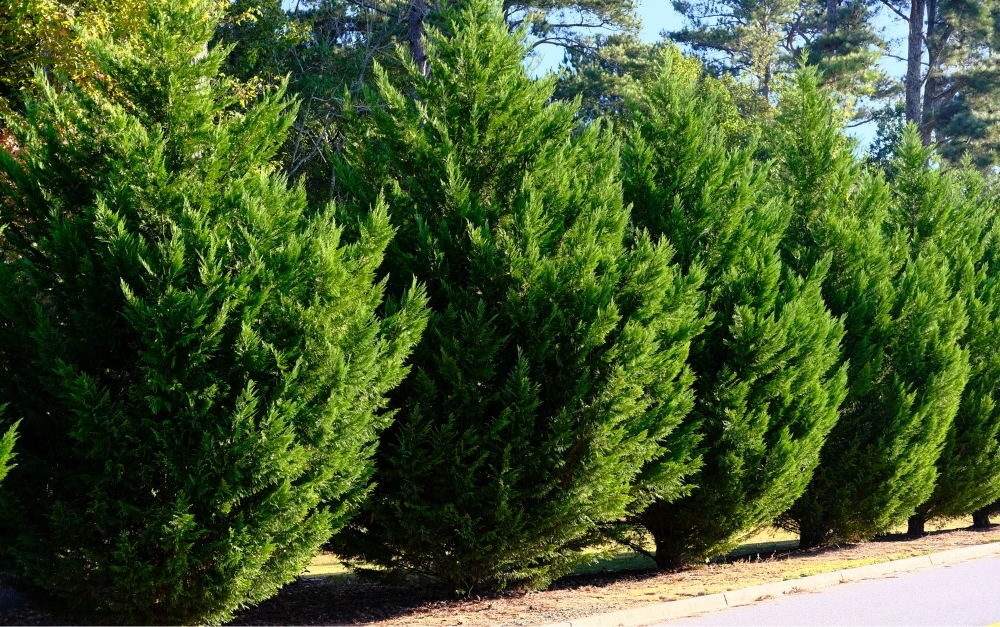
To relocate a tree accurately, placement is done in a single controlled motion.
Our actions:
✓ Lower root ball into prepared hole without rotation
✓ Confirm root flare is visible at finished grade
✓ Align canopy to planned orientation
✓ Backfill in lifts while compacting lightly by hand
We check vertical alignment from multiple angles before full backfill is complete.
Once set, stabilization systems are installed immediately. Depending on site exposure, we use:
✓ Underground anchoring systems beneath the root ball
✓ Three-point staking systems with adjustable tension
✓ Low-profile supports appropriate for commercial settings
Stabilization allows limited trunk movement while preventing root ball shifting.
Support systems are scheduled for inspection and removal once root establishment is confirmed.
Field Note
Pro Tip: The hydraulic spade must match or exceed the calculated root ball diameter.
Using an undersized spade reduces root mass retention. We select spade dimensions based on DBH calculations, not equipment availability.
Step 5: Irrigation Setup and Scheduled Monitoring
After we relocate a tree, we implement a defined irrigation and monitoring plan.
Immediate actions include:
-
Deep watering to settle soil
-
Inspection for air pockets
-
Adjustment of mulch depth around root zone
We maintain mulch away from the trunk and keep the root flare exposed.
Irrigation is calibrated to soil type and species requirements. We avoid preset timers that ignore rainfall patterns. Moisture levels are monitored manually during the first growing season.
Our management schedule includes:
✓ Inspection at 30, 60, and 90 days
✓ Structural pruning only if required to reduce stress
✓ Soil inspection before peak summer heat
✓ Fall evaluation before dormancy
Post-transplant monitoring aligns with professional arboricultural standards established by organizations such as the Tree Care Industry Association.
We maintain transplanting equipment and nursery staging capacity through our 22-acre operation in Chalfont , which allows us to coordinate relocation without subcontracting heavy machinery.
If you are planning construction, grading changes, or hardscape expansion and need to relocate a tree, review our tree transplanting services for technical scope and capability.
Then schedule a site evaluation through our Contact Us page. To relocate a tree properly, equipment access, soil conditions, and stabilization planning must be coordinated before excavation begins.
Relocating a tree is a controlled operation. When executed with the right machinery and sequencing, it preserves canopy structure and integrates seamlessly into your property’s next phase.