
10 Outdoor Landscape Lighting Ideas That Will Transform Your Bucks County Property
November 20th, 2025
1. Uplighting Trees & Major Landscape Features
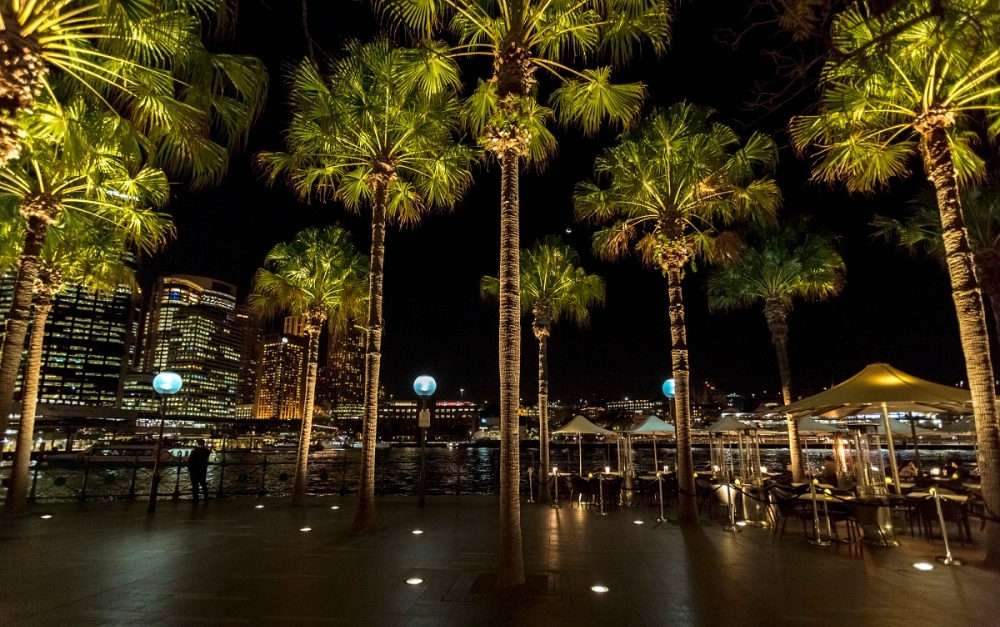
Image courtesy of www.erco.com
Outdoor landscape lighting starts with uplighting. Most properties look amazing during the day, but then everything kinda vanishes after dark if you don’t light anything correctly. Uplighting changes all that. It’s literally just placing a fixture near the ground and aiming it upward, but the impact is ridiculous. Suddenly, trees look taller, brick walls feel more dramatic, large shrubs get depth. And it’s not just about style. Uplighting gives structure to the landscape at night, helps define your property boundaries, and instantly looks high-end.
Honestly, people assume this is where the big budgets come in (it’s really not). What matters is the positioning, the color warmth, and picking the right fixtures. Warm LED around 2700–3000K keeps things feeling natural and elegant instead of sterile.
Why uplighting works well on large properties:
- Highlights architectural details without overpowering them
- Creates vertical contrast and stops the landscape from looking “flat”
- Makes even empty zones feel purposefully designed
- Dramatically increases curb appeal at night
- Helps guide the eye (and foot traffic) without overwhelming everything
2. Down-Lighting (“Moonlighting”) from Elevated Points
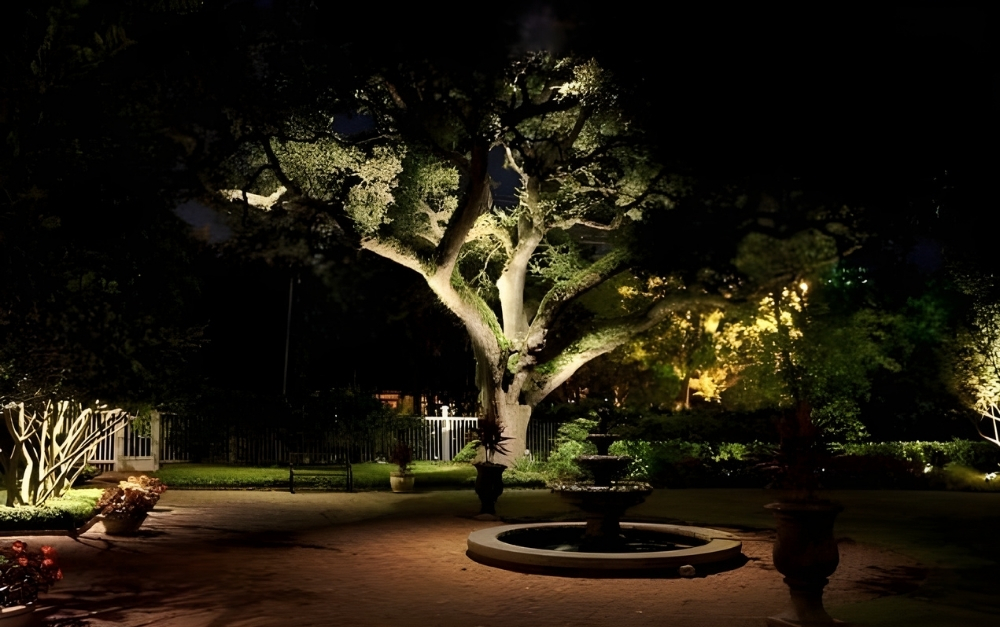
Image courtesy of www.tru-scapes.com
Imagine standing outside and feeling like the light is coming from the moon instead of some artificial spotlight. That’s basically what down-lighting does. Lights are mounted high, could be in a tree, roof edge, arbor, and the light filters through branches or gently falls over open areas. When done right, it doesn’t feel like lighting. It feels like your space is naturally lit from above.
Really what you’re going for is that kind of soft glow that makes people want to stay outside longer. There’s something relaxing about it. Not harsh or overdone. It lets shadows play, which adds depth and makes the property kind of irresistible at night.
Long story short: don’t just throw light on things. Let it fall. That’s the difference.
3. Path & Walkway Lighting
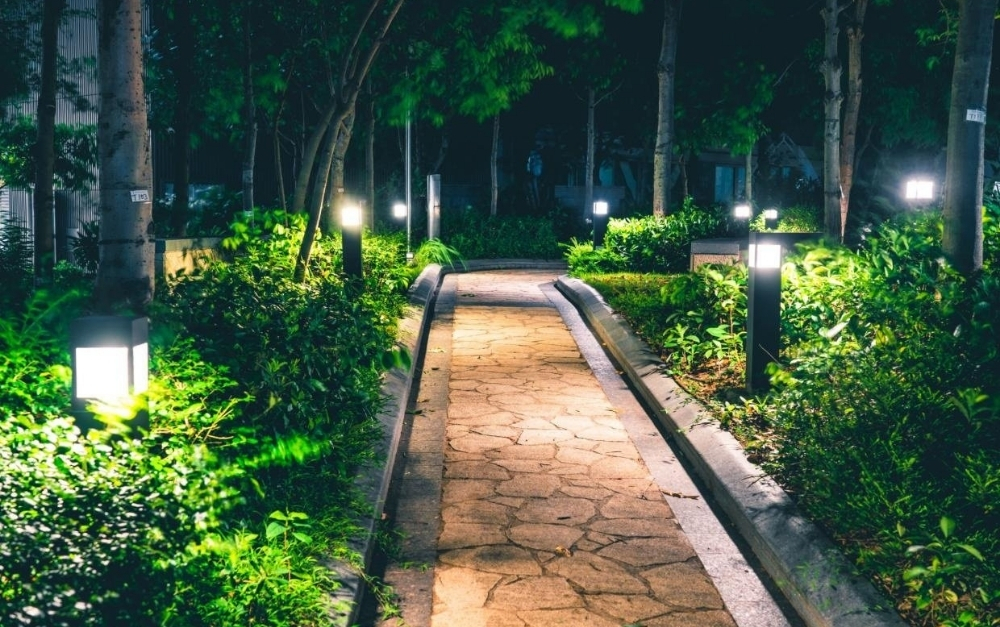
Image courtesy of www.masterlandscaper.com
Path lighting is always sold as “for safety,” which is true, but also boring. On a large estate or business campus, path lighting should do more than prevent injuries. It should create movement and anticipation. You want visitors and guests to be gently directed, not blasted by runway beams or stuck guessing where to walk.
A lot of people mess this part up and go too bright. If the path is all you see, you’ve missed the point.
Best practices for path & walkway lighting:
- Space fixtures consistently (not just wherever)
- Use warm tones, cooler whites feel commercial or “yard sale”
- Avoid “runway lines”; stagger where possible to create softness
- Add subtle uplighting nearby so the path feels integrated
- Use low-voltage LED so you’re not burning energy for no reason
When you do it right, walkways feel welcoming instead of purely practical. And that matters more than most people think.
4. Architectural Facade & Feature Lighting
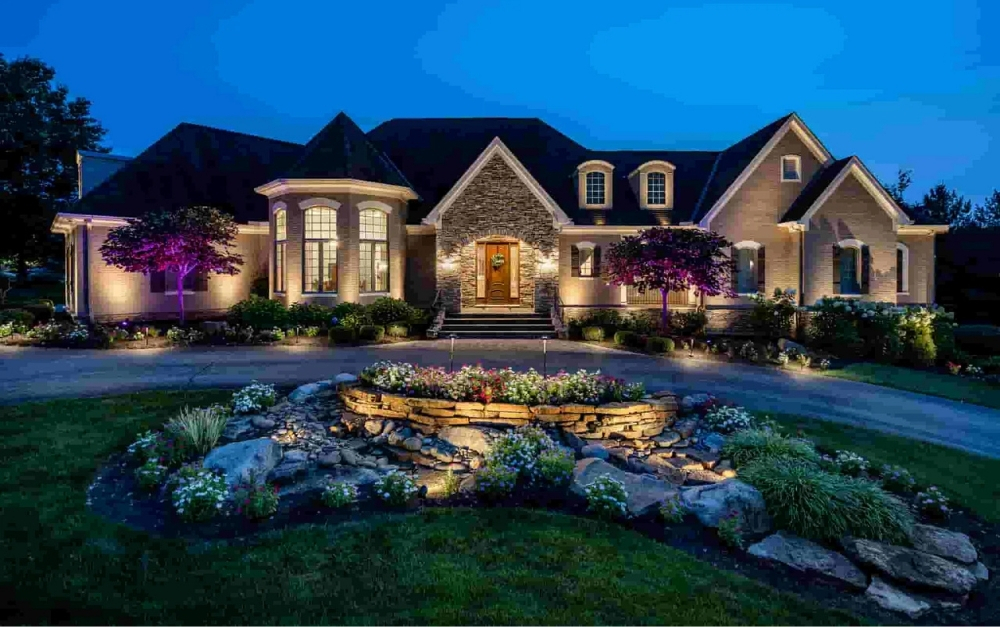
Image courtesy of www.havenlighting.com
You paid for (or inherited) good architecture, use it after dark. Facade lighting is about pulling forward the best parts of the structure and making them visible from different vantage points. Big stone walls? Highlight. Arched entry? Highlight. That long driveway leading to a dramatic front entrance? Light it strategically, not aggressively.
The mistake most people make: they light the entire building evenly. That actually makes it look dull. Better to pick key verticals, columns, corners, material textures, then light those.
The goal isn’t full visibility. The goal is presence. Think about that. The right lighting makes your home or building feel intentional even at night. It hints at luxury rather than screaming it.
5. Outdoor Landscape Lighting That Illuminates After Dark
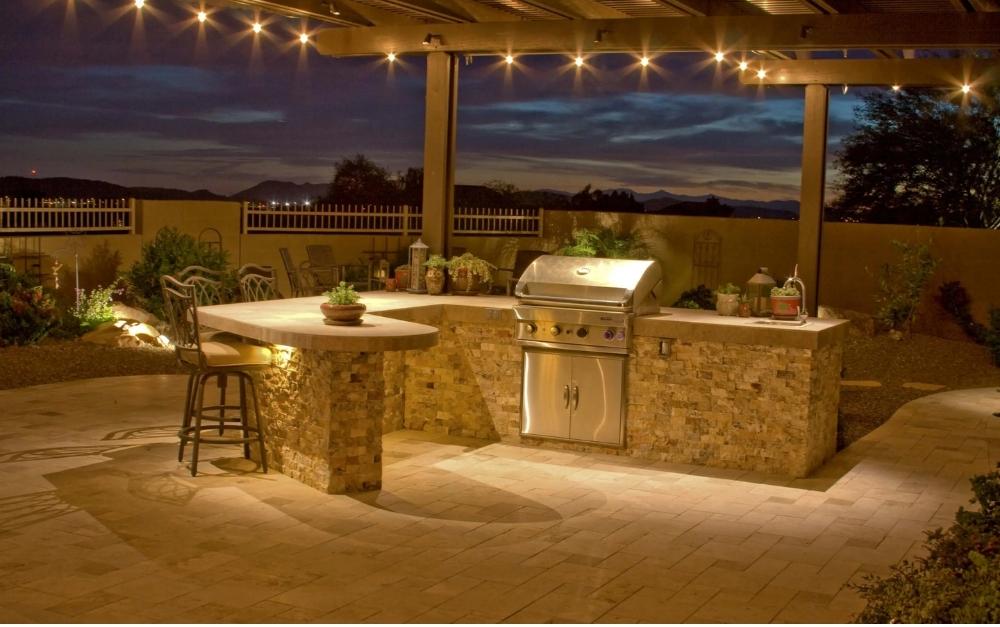
Image courtesy of www.straightlinelandscape.com
This is where the property comes alive if you’re someone who actually uses your space. Outdoor kitchens, patios, decks, covered seating areas, fire pit zones, all of these should be usable well beyond sundown. And I’m not talking about floodlights. I mean actual evening-level lighting that keeps it comfortable while still feeling like outdoors.
Dim levels matter. Fixture height matters. How light lands on surfaces matters. People should be able to see faces without squinting.
Checklist for effective outdoor area lighting:
- Combine down-lighting with soft ambient glow
- Avoid direct eye exposure to fixtures, hide them within architecture or landscape
- Use zone control if the space is multipurpose (dining vs lounging)
- Pick weather-rated fixtures that survive freeze, wind, moisture
- Match temperature to vibe (warm = intimate, cooler = functional/event)
When it feels like furniture, décor, and lighting are all designed together… yeah, that’s when it works.
6. Low-Voltage LED Systems That Prevent Future Headaches
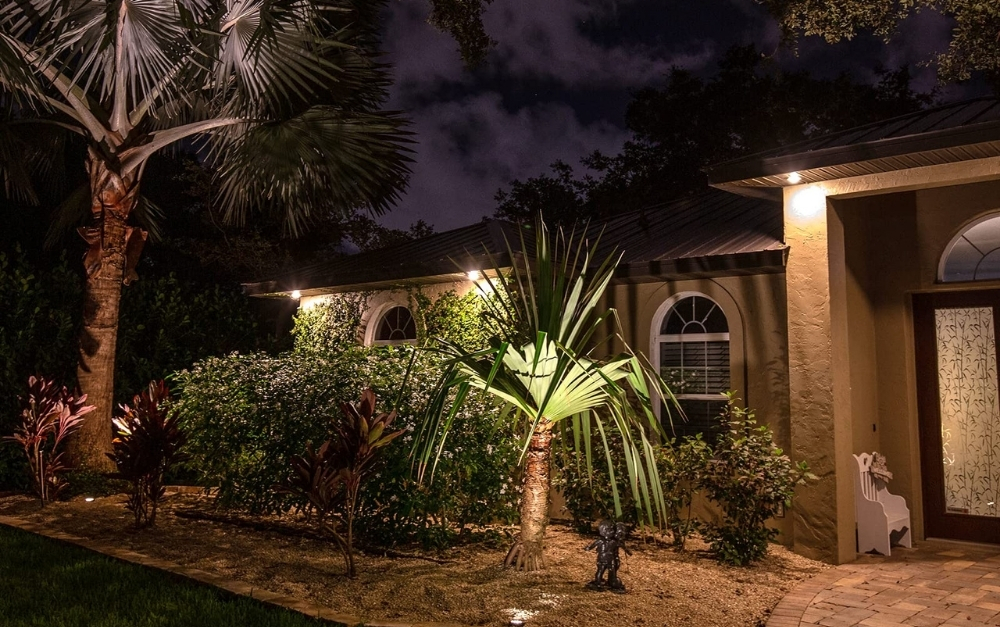
A lot of large properties get loaded with overly complicated or outdated outdoor landscape lighting systems because someone thought “more wattage = better.” It doesn’t. Low-voltage LEDs are more efficient, quieter (in terms of presence), and easier to maintain. And they can produce better light output even with less energy.
If your estate or commercial grounds are expansive, energy usage can skyrocket fast without proper planning. LED systems help bring utility costs way down while also enabling smart control (dimming, zoning, automation). So it’s not just practical, it’s deliberately refined.
In real terms, it means you’re choosing lighting that’s future-proof. And in Bucks County winters? That matters more than you think.
7. Layered Lighting for Depth & Visual Interest
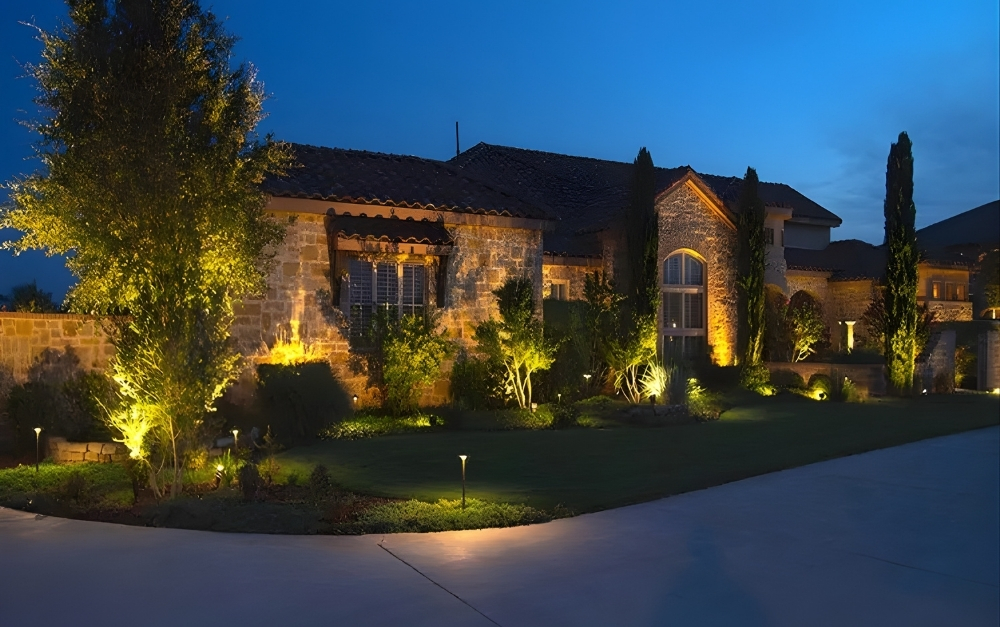
Image courtesy of www.landscapelightinggoaksville.com
Real talk: this is where properties go from “nicely lit” to “professionally designed.” Layering means using multiple types of lighting at different brightness levels, heights, and directions instead of blasting everything from one angle.
Key lighting layers to consider:
- Ambient lighting → overall glow, typically subtle
- Task lighting → pathways, steps, seating zones
- Accent lighting → trees, artwork, architecture
- Specialty lighting → pool edges, overhead event settings (if needed)
The run-on sentence part here (brace yourself): when you blend those layers properly, suddenly the space feels designed in three dimensions, movement feels natural, depth emerges even in dark areas, and what would otherwise be “just a yard” transforms into something closer to a resort experience, which, honestly, is something most property owners won’t admit they want but absolutely respond to.
8. Hardscape & Step Illumination That Looks Intentional
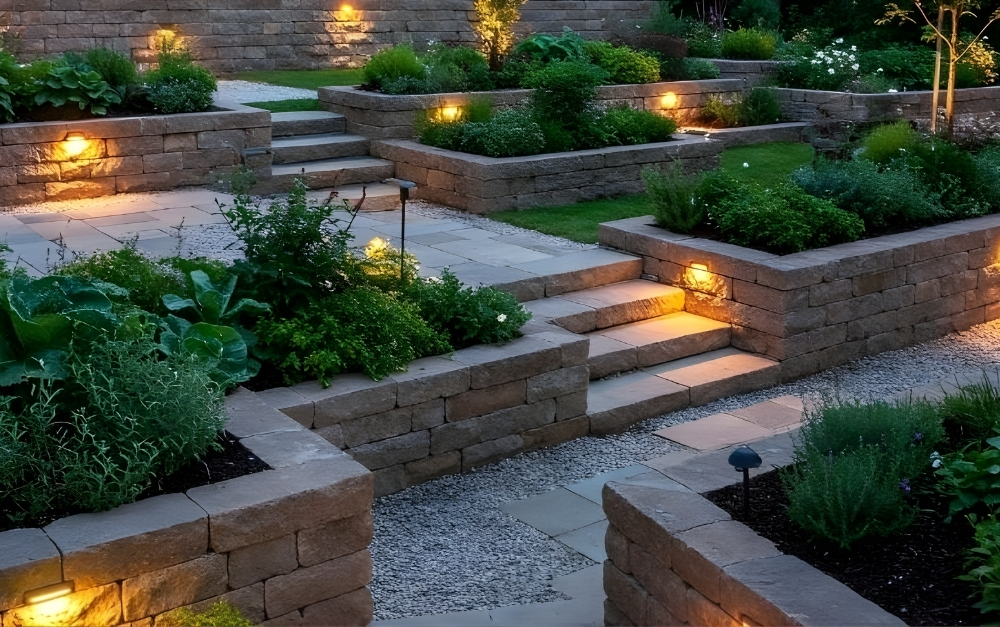
Image courtesy of www.superbrightleds.com
Stairs, terraced seating, patio edges, retaining walls, these areas become invisible at night without lighting, and invisible is dangerous. But lighting them too harshly makes it look like emergency exit signage.
The better move is integrated illumination. Step lights recessed into risers, under-cap lights in walls, even paver-based lighting when executed correctly. They shouldn’t draw attention to themselves; they should make the surfaces usable and subtly elevate the finish.
It’s one of those “no one notices unless it’s wrong” elements.
9. Smart Controls & Automation That Save Time, Energy & (Let’s Be Honest) Stress
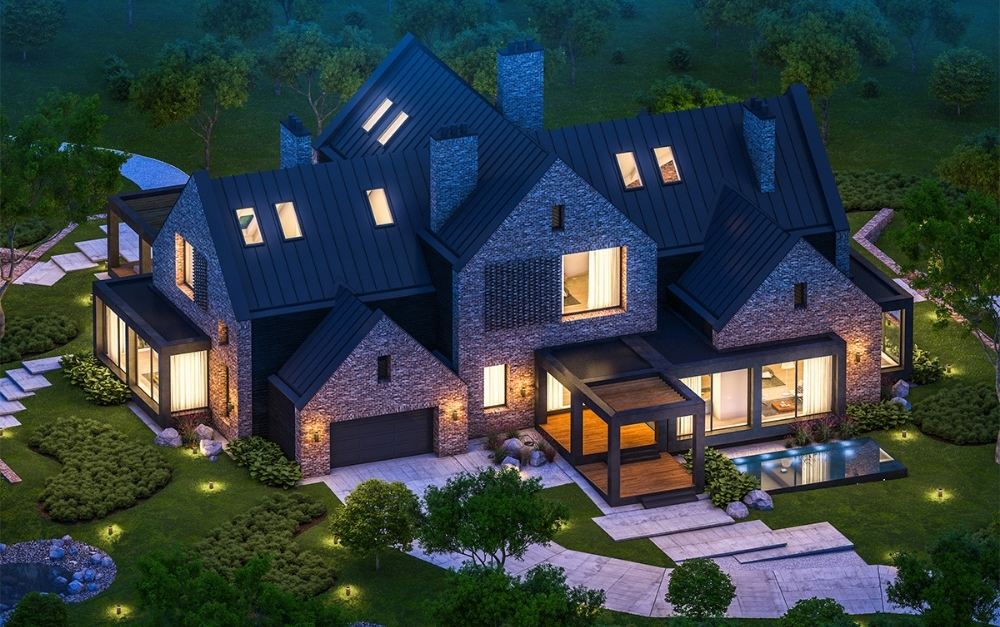
Image courtesy of www.shine.lighting
Managing a large lighting system manually is a nightmare. Smart automation solves that before it becomes a problem. Create zones. Dim areas as needed. Set timers for seasonal changes. Activate “event mode” versus daily use mode. Integrate with security if that’s something the property demands.
Smart lighting advantages:
- Automatically adjusts to time of day or season
- Provides single-action control over multiple zones
- Lets you dim or selectively enhance key features
- Simplifies maintenance and reduces unnecessary power usage
- Helps with safety & security without looking utilitarian
This is the kind of tech that makes a system feel like a system—not just “lights you can turn on.”
10. Seasonal & Weather-Ready Lighting Systems Built for Bucks County Realities
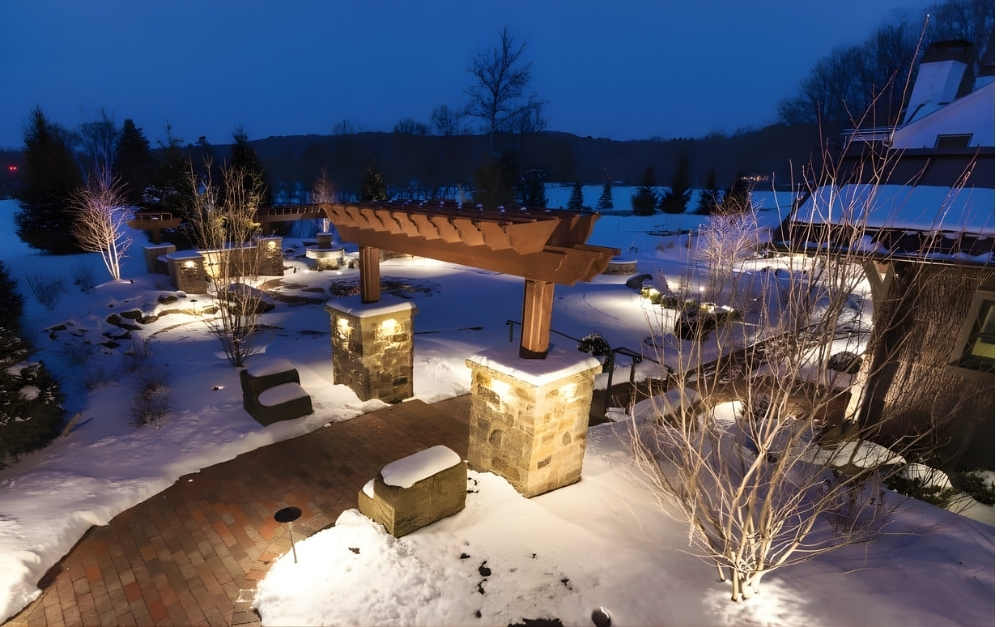
Image courtesy of www.tru-scapes.com
One thing people forget (until it’s too late): the landscape changes constantly. Snow management, leaf loss, ice, muddy ground in early spring, roots shifting. Fixtures must withstand that, and spacing should account for possible plant growth or shrinkage.
Weather-ready means using corrosion-resistant materials, planning cable locations so they won’t heave during freeze/thaw cycles, and installing fixtures in a way that still allows access for maintenance.
If outdoor lighting fails in late January when sunsets hit at 4:45 PM…you feel it. And so does everyone using the property.
Final Thought
Lighting isn’t just about visibility, it defines what your property feels like when people experience it. If daylight shows shape and structure, night lighting should do the same… and honestly, sometimes even better.
Use the property’s inherent strengths, be strategic with fixture selection and direction, and don’t shy away from subtle design choices just because “they’re not super noticeable.” The best lighting gets noticed without being seen.