
Standard vs Low Voltage LED Lighting | What’s the Difference?
NOVEMBER 18th, 2025
To many homeowners choosing the right voltage lights seems like overkill.
But here’s the thing, this decision actually matters WAY more than most people realize.
It’s not like picking between two paint colors. The voltage you choose affects your safety, your electric bill, how long your lights last, and whether your system stays looking good or turns into a maintenance nightmare after a couple of seasons.
So let’s talk about what’s actually different, why professionals almost always choose one over the other, and what that means for your property.
Standard Voltage: The Old-School Approach That Comes With Headaches
Standard voltage lighting runs on 120 volts, the same current that powers your kitchen outlets and living room lights. The wiring runs deeper underground, usually at least 18 inches down, and connects straight to your home’s electrical panel. No middle steps. Just straight voltage to the fixtures.
Sounds simple, right? It is. Which is exactly why it used to be the only option available.
But Simple Doesn’t Mean Better
Here’s where standard voltage starts creating problems. Let me break down what actually happens:
The Safety Issue
When you’re running 120 volts through buried wiring under your yard, you’re introducing genuine electrical hazard into spaces where people are walking, kids are playing, and landscapers are digging. If something goes wrong—and something always can—the consequences are serious. That’s why municipalities require permits, inspections, and strict code compliance for standard voltage work. It’s not red tape. It’s actual safety stuff.
Repairs Become a Nightmare
I’ve watched contractors deal with standard voltage repairs, and it’s painful to watch. Here’s what happens: A fixture fails or a connection corrodes (which happens, especially in wet springs or after freeze-thaw cycles), and suddenly you need to:
- Excavate trenches across your yard
- Trace buried circuits to find the problem
- Troubleshoot wiring that’s been underground for years
- Bring in equipment to dig everything up
What should be a simple fix turns into a day-long project with backhoes and torn-up landscape. You’re looking at major costs and major disruption for something that should take an hour.
The Fixture Replacement Cycle
Standard voltage systems generate way more heat, and that heat stresses components faster. After about 8 to 10 years, you’re replacing fixtures. And here’s the annoying part: as they age, the color temperature shifts. One side of your yard looks slightly warmer, another slightly cooler. It’s subtle at first, but once you notice it, it bothers you every time you look at it.
Energy Waste
Energy-wise, standard voltage is inefficient for what most homeowners actually need. You’re pushing full-power current through your system even when you just want modest, ambient illumination. It’s like running your oven all day just to keep some water warm.
Low Voltage LED: Where Everything Gets Better
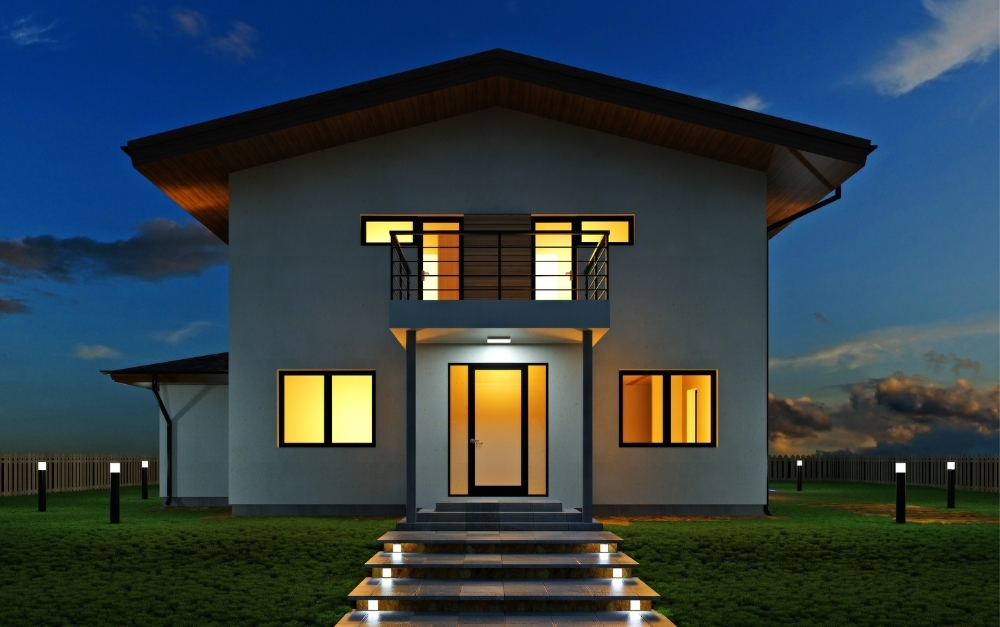
Low voltage operates at 12 volts, one-tenth of standard voltage. A transformer does the heavy lifting, stepping down your 120-volt household current to the 12 volts that power your entire system. That transformer can live anywhere convenient: mounted on your house, attached to a fence post, or tucked into a protected box.
From there, lighter gauge wiring runs just 4 to 6 inches below the surface, connecting all your fixtures into one network.
Why This Actually Changes Everything
I’ve been around outdoor lighting long enough to see why professionals almost universally choose low voltage for anything that matters. And it’s not because it’s trendy or new.
Safety is the obvious first win. At 12 volts, the shock hazard basically disappears. If wiring gets severed, if a kid touches something, if a landscaper accidentally cuts through a line, there’s no electrical danger. You can work on your system, expand it, repair it without worrying. That peace of mind matters more than people think.
Installation is faster and less destructive. The wiring is lighter, trenches are shallower, and the whole process doesn’t tear up your landscape the way standard voltage does. And when you need to adjust something six months later? It’s a quick job, not an excavation project.
But the real magic happens when you combine low voltage with LED technology. LED bulbs produce the same light output as older halogen fixtures but use a fraction of the power. Pair that with a 12-volt system that isn’t wasting energy pushing unnecessary current through your setup, and you get something genuinely remarkable: your outdoor lighting costs drop by 60 to 80 percent.
I’ve had homeowners check their electric bills and get actual shock at how much they’re saving. We’re talking $40 to $60 monthly savings during peak season. Over five years, that’s real money.
Durability is where low voltage really proves itself. Quality LED fixtures in a low voltage system stay consistent through winters, salt exposure, and seasonal swings. The color temperature holds true. The brightness doesn’t fade unevenly. After five years, your system looks almost identical to day one. After ten years, many fixtures are still performing at 95% output. That’s not theoretical, that’s what we actually see in the field.
The Money Conversation (Because It Actually Matters)
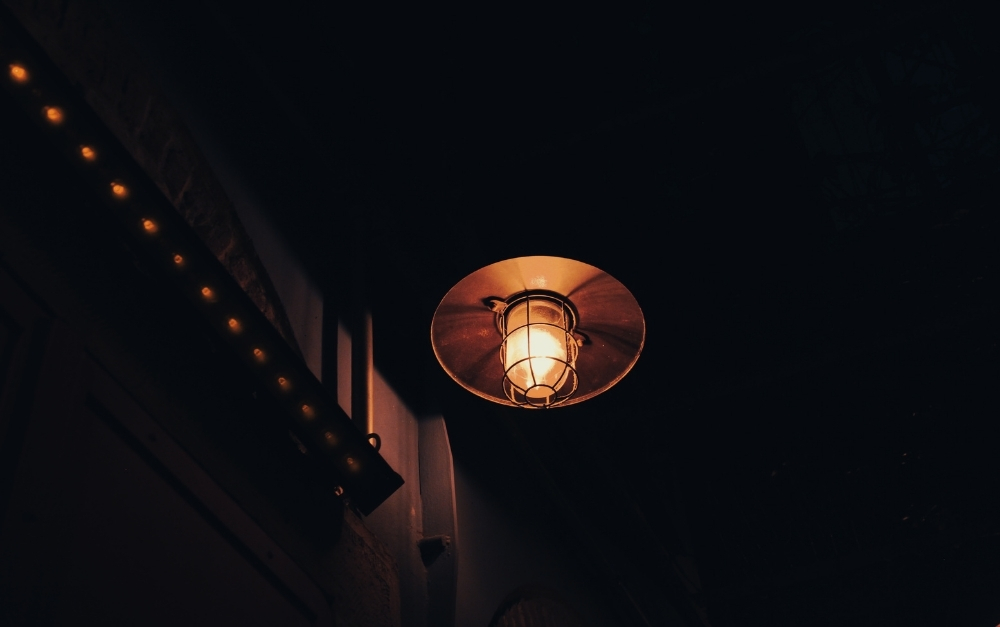
Let’s be straight about costs, because this is where a lot of people make the wrong call.
Low voltage typically costs less to install initially. Less digging, less labor, faster work. Even when it doesn’t cost less upfront, the gap is small. And then everything else tips the scales.
Monthly operating costs are where the real difference shows up. A standard voltage system might run $40 to $60 monthly during your outdoor season. A low voltage LED system doing the same job? Maybe $10 to $20. We’re talking $1,800 to $3,000 saved over five years just on electricity.
Maintenance and repairs favor low voltage by such a wide margin that it’s almost not fair. Fixtures fail less often. When they do, repairs are cheap and quick. You can usually handle small adjustments yourself. With standard voltage, every problem requires a professional, and every professional visit involves trenching and digging.
Fixture replacement is another factor. Standard voltage fixtures need replacing every 8 to 10 years. Low voltage LED fixtures? Often 15+ years without performance drop-off. That’s massive when you’re looking at the true cost of ownership.
Add it all together, lower energy bills, fewer repairs, simpler maintenance, longer fixture life, and low voltage is typically three to five times more economical over its entire lifespan. That’s not an exaggeration. That’s just the math.
Why the Best Designers Choose Low Voltage

Spend any time around high-end landscape design in Bucks County and you’ll notice something: every serious outdoor lighting designer specifies low voltage LED systems for quality properties. And it’s not because everyone follows the same trend.
It’s because nothing else delivers the same combination of reliability, precision, and long-term performance.
When you design with low voltage, you know exactly how the system will perform six months from now and six years from now. Colors won’t shift unevenly. Brightness won’t fade on one side of the yard while staying strong on the other. Weather won’t create the kind of connection failures that turn a well-designed system into a headache.
That consistency is what allows outdoor lighting systems to actually look intentional rather than like someone just scattered lights around. It’s what separates lighting that enhances a property from lighting that just happens to be there.
There’s also a design flexibility that low voltage provides. If you want to refine your lighting six months after installation, if you want to add fixtures to a new patio area, if you want to adjust positioning, it’s straightforward work. You’re not locked into some massive infrastructure that’s painful to modify.
The Simple Answer for Your Bucks County Property
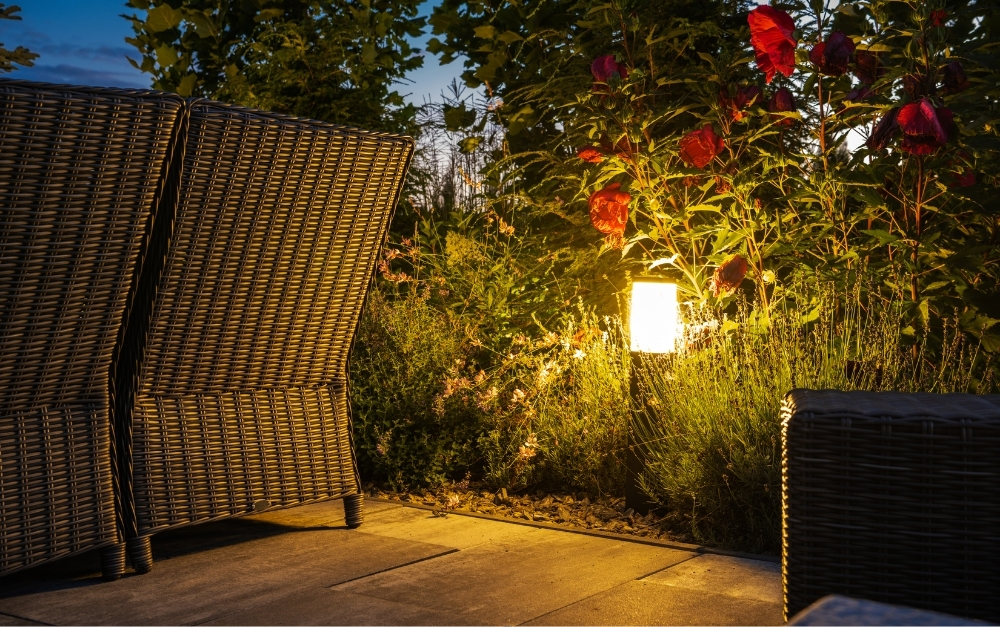
Look, this doesn’t need to be complicated. For almost every residential property in today’s landscape, low voltage LED is the right choice. It’s safer. It’s more efficient. It costs less to operate and maintain. Your fixtures last longer. And the whole system stays reliable year after year without becoming a burden.
The only time standard voltage makes sense is in some pretty specialized scenarios where you need extremely high output in a single location. That’s rare in residential work.
If you’re planning custom outdoor lighting for your home, this is the foundation you want to build on. A system designed around low voltage LED technology isn’t just a smarter choice, it’s the difference between outdoor lighting that works and outdoor lighting that actually enhances your space while staying simple to manage.
That’s what happens when you start with the right decision.
Why Bucks County homeowners trust The Lingo Group
We’ve been doing this since 1982. Forty plus years of designing landscapes, installing irrigation, building lighting systems, and helping people fall back in love with their homes.
We believe your property should work as one complete system, with lighting, drainage, irrigation, and hardscaping all designed with each other in mind. Because if one part fails, everything else is affected. That’s why it’s easier to keep it all under one roof (for you and for us).
We use the best materials we can get our hands on, source our own trees in our on site nursery, and always build for longevity and value. That’s how you get a property that wows in December and still looks sharp in June.
Homeowners across Doylestown, Chalfont, Warrington, and New Hope know what to expect from the Lingo Group, and that’s craftsmanship, consistency, and systems that just plain work, year after year.