

Estimating Mulch: Use Our Free Mulch Calculator
April 23rd, 2026
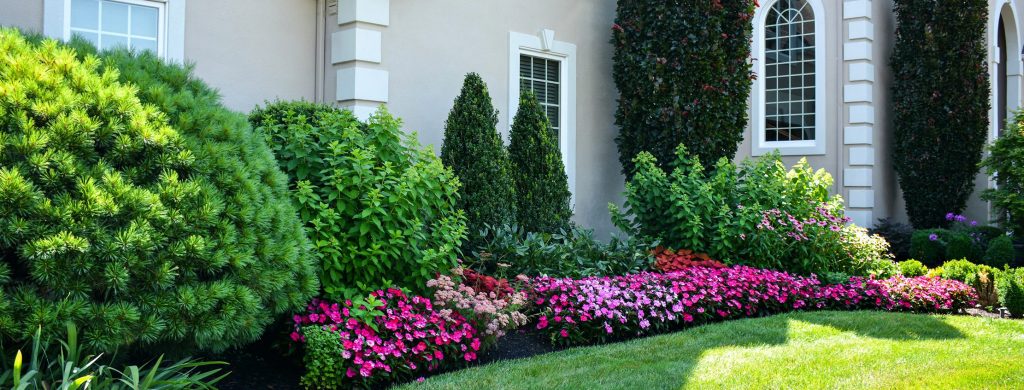
Estimating mulch starts with one practical goal: covering planting beds at the right depth without over-ordering, under-ordering, or burying the root flare of your trees and shrubs.
For commercial properties and large estates in Bucks County, mulch is one of the simplest upgrades you can make to improve appearance, reduce weed pressure, and help soil hold moisture through spring, summer, and early fall. It also has a big visual effect. Fresh mulch sharpens bed lines, makes plant material stand out, and gives the property a maintained look that matters when tenants, guests, clients, or residents pull in.
In simple terms, estimating mulch means measuring the area you want to cover, choosing the right installation depth, and converting that number into cubic yards. Once that is done correctly, the rest of the project becomes much easier to plan.
Use Our Free Calculator
Mulch Calculator
Add every bed or zone you plan to mulch. We will total the area, the cubic yards and the number of bags so you can order once and be done.
Ordering more than about three yards? Bulk delivery is almost always cheaper than bags, and we deliver and install across Bucks County. Call (215) 343-7700 or request a quote.
Figures are rounded up, because mulch settles and beds are never perfectly square. One cubic yard covers roughly 108 square feet at 3 inches deep. If your beds are irregular, break them into rectangles and add each one as its own zone.
Why Estimating Mulch Matters
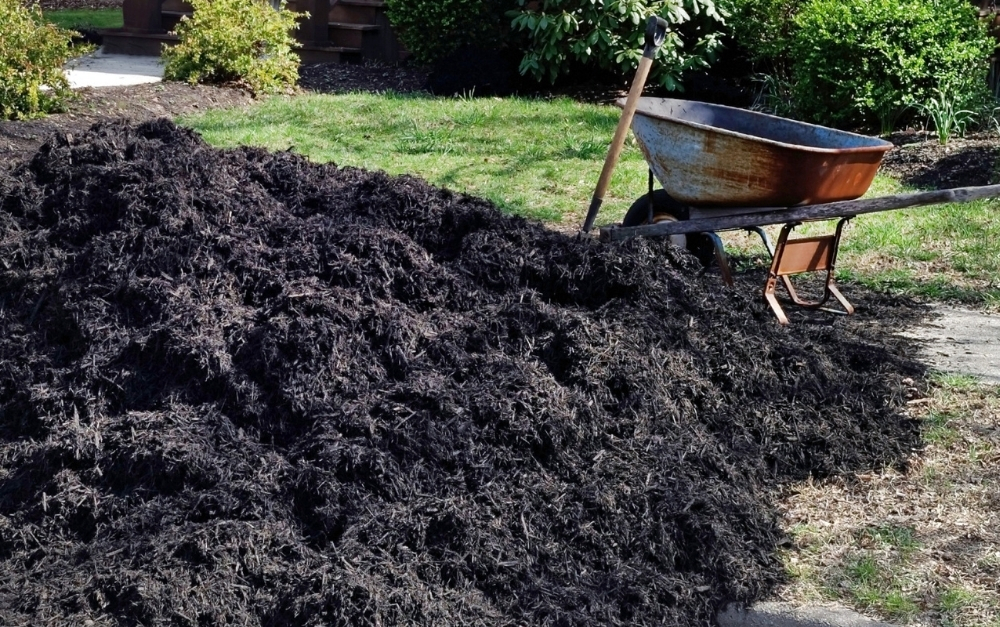 A mulch estimate affects more than the material order. It affects labor, cleanup, access, staging, and final appearance. A property that is short by even a small amount can end up with thin coverage, visible soil, inconsistent color, and beds that look unfinished. A property that gets too much mulch can end up with piled edges, buried crowns, and the all-too-common “mulch volcano” problem around trees.
The U.S. Environmental Protection Agency recommends applying mulch to a depth of about three to four inches for most plants, while cautioning against excessive buildup that can restrict water flow to roots. We use that principle because depth is where good mulch work either succeeds or starts creating problems. See EPA’s landscaping tips for the general depth guidance.
For most landscape beds, the estimating process is straightforward once the measurements are accurate.
Estimating Mulch for Existing Beds vs. Bare Beds
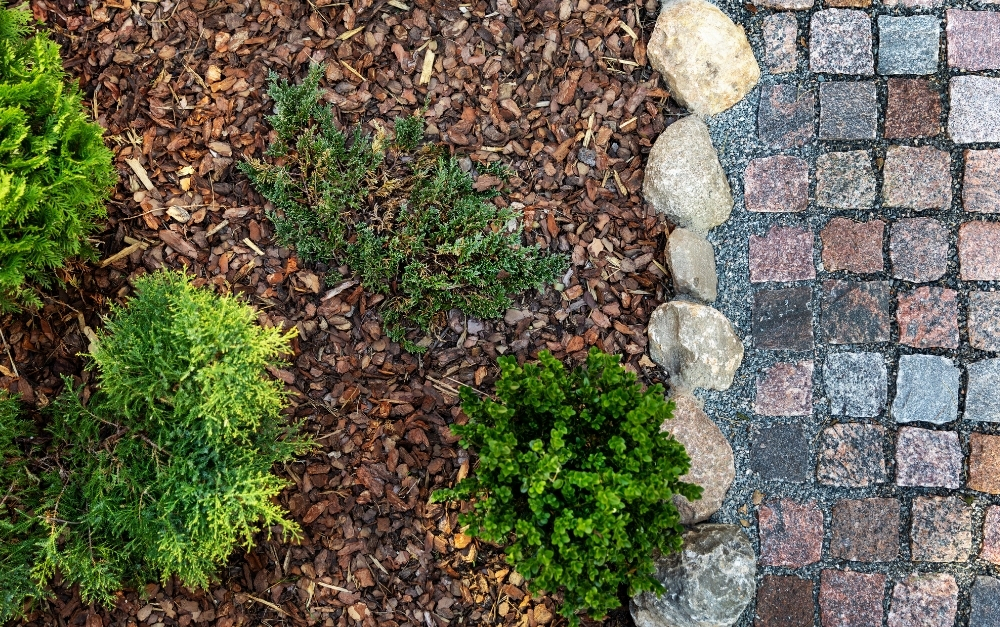 Not every bed should be estimated the same way. A spring refresh in an established landscape is different from a first-time installation or a bed that was neglected for a season.
Existing beds often need evaluation before math. If there is still a decent mulch layer in place, you may only need enough material to restore uniform color and proper depth. If the existing layer is matted, washed out, contaminated with weeds, or piled too deeply around plant bases, the site may need edge work, cleanup, redistribution, or partial removal before new mulch goes down.
Bare beds are simpler to calculate, but they still need attention to grade and bed definition. On large properties, a bed with unclear edges can consume far more mulch than expected because material spreads beyond where it should be contained.
ⓧ Guessing square footage by eye
ⓧ Ordering by “how it looked last year”
ⓧ Ignoring settling and decomposition
ⓧ Covering exposed tree flares with fresh mulch
ⓧ Treating every bed on the property as if it needs the same depth
That last point is especially important. Entrance islands, foundation beds, mailbox beds, and perimeter screening beds may all need different estimating assumptions based on visibility, existing conditions, and plant density.
Pro Tip
Pro Tip: When you are estimating mulch for a property with mature trees and shrubs, calculate the bed area first, then subtract any space you intentionally want to keep open around trunks and stems. That small adjustment gives you a cleaner estimate and supports healthier planting conditions.
What Usually Gets Missed in Mulch Estimates
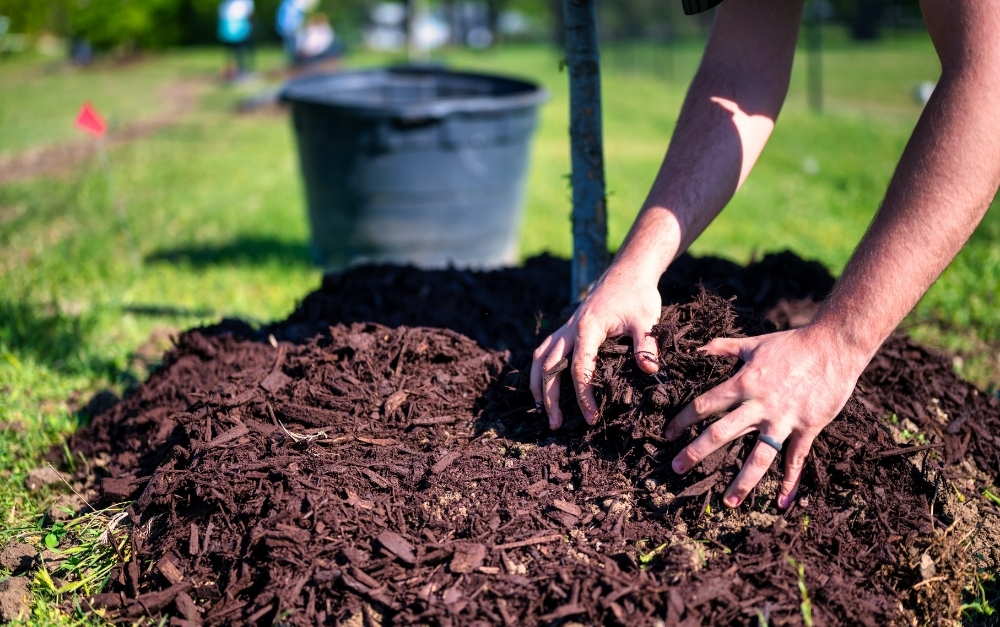 On paper, mulch estimating looks like basic math. In the field, it is often a site-conditions problem.
For example, slopes change how material settles. Tight bed curves increase waste. Properties with many small islands take longer to install than properties with the same square footage in broad, simple bed runs. Bed edges that were never redefined also make it harder to control coverage. All of that affects the practical side of estimating mulch, even if the raw cubic-yard number is technically correct.
That is why we look at mulch as both a material calculation and a finish-detail service. The quantity matters, but so does how the material is placed and how the beds are prepared before installation.
If you are already planning broader seasonal cleanup work, it often makes sense to pair mulch installation with yard cleanup in Bucks County, PA so the beds are cleaned, edged, and ready before material arrives.
The Practical Standard We Recommend
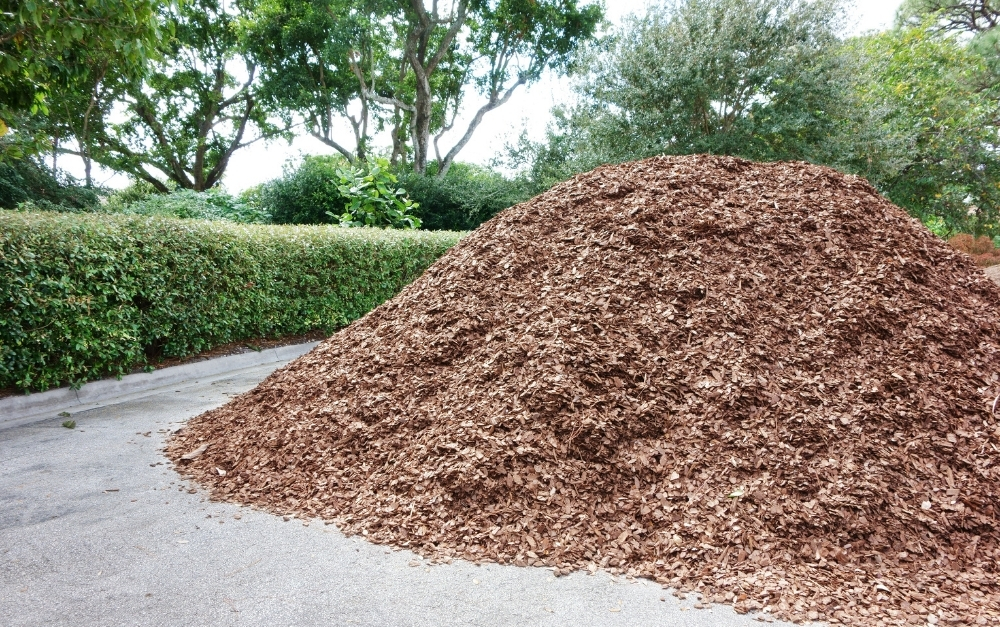 For most landscaped beds, we recommend thinking in terms of measured square footage, a clearly defined target depth, and a realistic adjustment for site conditions. That approach is simple, repeatable, and much more reliable than ordering “about what we got last time.”
Estimating mulch correctly is not complicated, but it does reward accuracy. Measure the beds. Decide on depth. Use the cubic-yard formula. Account for existing conditions. Then install the material with restraint around trunks, crowns, and root flares.
That gives you the result most properties are actually after: neat beds, healthy plantings, and a finished look that lasts.
When you are ready to move from estimating mulch to scheduling the work, the next step is simple: contact us and we can help you evaluate bed conditions, quantities, and the best approach for the property.