

Commercial Lawn Maintenance in Summer: What Every Property Plan Needs to Include
April 30th, 2026
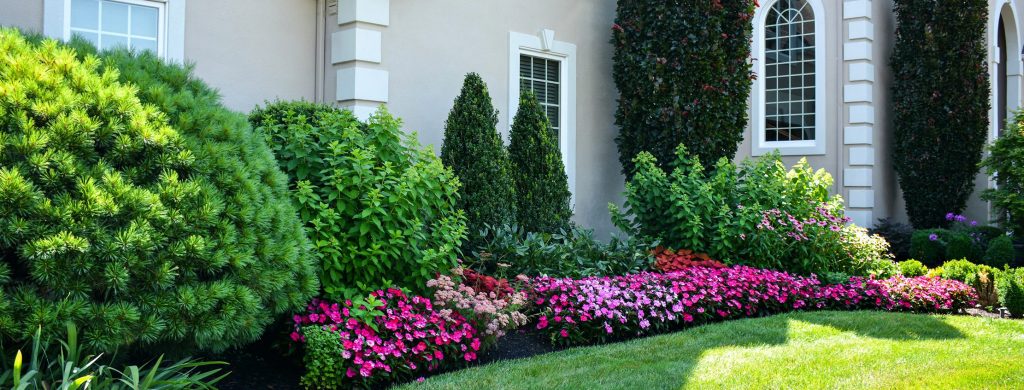
A strong commercial lawn maintenance plan prevents turf decline, reduces liability risks, and protects the long-term value of your property.
For commercial sites across Bucks County and the greater Philadelphia region, lawn care hinders on consistency, safety, and biological performance. Turf is a living system, and when maintenance plans miss key components, the result is predictable: thinning grass, weed pressure, drainage issues, and rising costs over time.
We approach commercial lawn maintenance as a structured system, not a checklist. Each element supports the others, and skipping one creates downstream problems that are harder, and more expensive, to correct later.
Why Commercial Lawn Maintenance Requires a Structured Plan
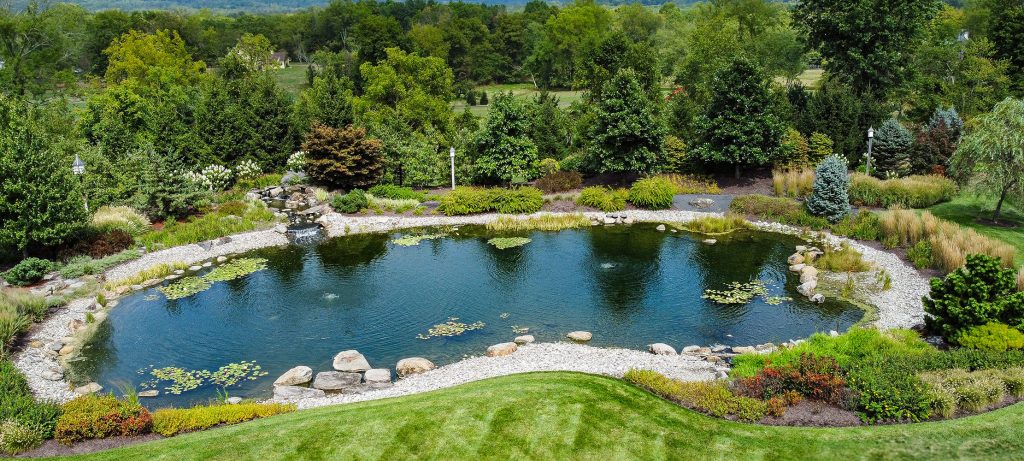
Commercial properties experience more stress than residential lawns. Foot traffic, vehicle runoff, compacted soils, and inconsistent irrigation all contribute to turf breakdown.
In Pennsylvania, seasonal swings add another layer of complexity. Spring brings rapid growth and nutrient demand, summer introduces heat stress, and fall becomes the critical recovery window.
A complete commercial lawn maintenance program accounts for:
✓ Soil health and compaction
✓ Nutrient timing and turf growth cycles
✓ Weed and pest pressure
✓ Moisture management and drainage
According to the U.S. Environmental Protection Agency, poor landscape management can increase runoff and pollutant load, directly impacting surrounding infrastructure. That risk is amplified on commercial sites with large impervious surfaces.
Core Components of Effective Commercial Lawn Maintenance
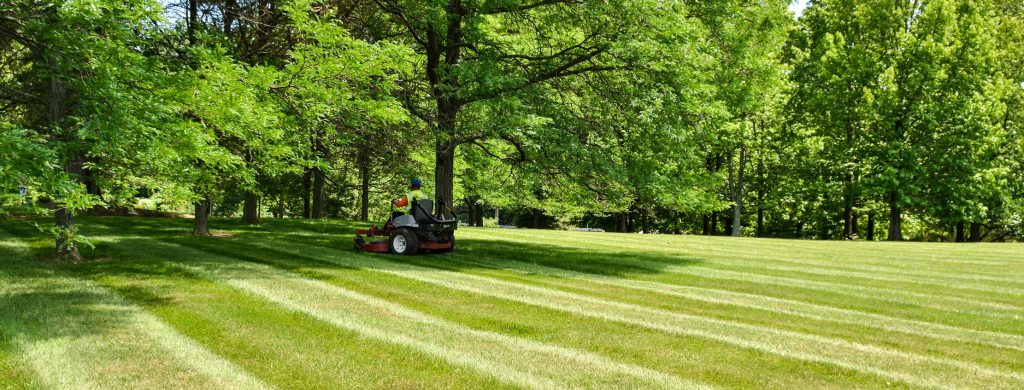
1. Consistent Mowing Practices
Mowing is the most visible part of commercial lawn maintenance, but it’s also one of the most misunderstood.
Cutting height, frequency, and blade sharpness all influence turf health. Cutting too short reduces root depth, making grass more vulnerable to drought and disease. In contrast, proper mowing supports thicker turf that naturally resists weeds.
We structure mowing schedules around growth rates, not calendar dates. In spring, that often means weekly service; in summer, frequency may adjust depending on rainfall and heat stress.
2. Fertilization Based on Turf Biology
Fertilization works best when you align nutrients with growth cycles.
Cool-season grasses common in Pennsylvania, such as fescue and bluegrass, require:
- Strong spring support for early growth
- Balanced summer applications to avoid stress
- Heavy fall feeding to rebuild root systems
Here’s how seasonal fertilization typically aligns:
| Season | Turf Priority | Fertilization Strategy |
|---|---|---|
| Spring | Growth surge | Nitrogen-focused applications |
| Summer | Stress management | Light, controlled feeding |
| Fall | Root development | Deep, nutrient-rich treatments |
This approach supports long-term turf density rather than short-term color.
For a deeper look at how we structure these programs, our turf management services outline the full lifecycle approach we apply to commercial properties.
3. Weed and Pest Control
Weeds are not just a cosmetic problem, they compete directly with turf for nutrients, water, and sunlight.
An effective commercial lawn maintenance plan uses a targeted approach, often referred to as Integrated Pest Management (IPM). This minimizes blanket chemical use while addressing specific issues.
Common commercial property challenges include:
ⓧ Broadleaf weeds spreading in thin turf
ⓧ Grub damage weakening root systems
ⓧ Invasive grasses overtaking maintained areas
According to the National Association of Landscape Professionals, proactive turf management significantly reduces the need for reactive chemical treatments, lowering long-term costs and environmental impact.
4. Aeration and Soil Management
Compacted soil is one of the most common, and most overlooked, issues in commercial lawn maintenance.
When soil becomes compacted:
- Oxygen cannot reach root zones
- Water runs off instead of absorbing
- Roots remain shallow and weak
Core aeration solves this by physically removing plugs of soil, allowing air, water, and nutrients to penetrate deeper.
In Bucks County, where clay-heavy soils are common, aeration is not optional, it’s essential.
5. Overseeding for Turf Density
Overseeding works in tandem with aeration to rebuild lawn density.
Thin turf creates opportunities for weeds. Dense turf crowds them out naturally.
We typically recommend overseeding in the fall when:
- Soil temperatures are still warm
- Weed competition is lower
- Moisture conditions are more stable
6. Irrigation and Water Management
Water is one of the most critical, and most mismanaged, elements of commercial lawn maintenance.
Too little water leads to dormancy and thinning. Too much creates fungal issues and shallow roots.
A properly designed irrigation system adjusts based on:
✓ Seasonal rainfall
✓ Soil type and drainage capacity
✓ Sun exposure across the property
Smart irrigation systems that respond to real-time weather conditions are becoming standard for commercial properties seeking efficiency and consistency.
How These Elements Work Together
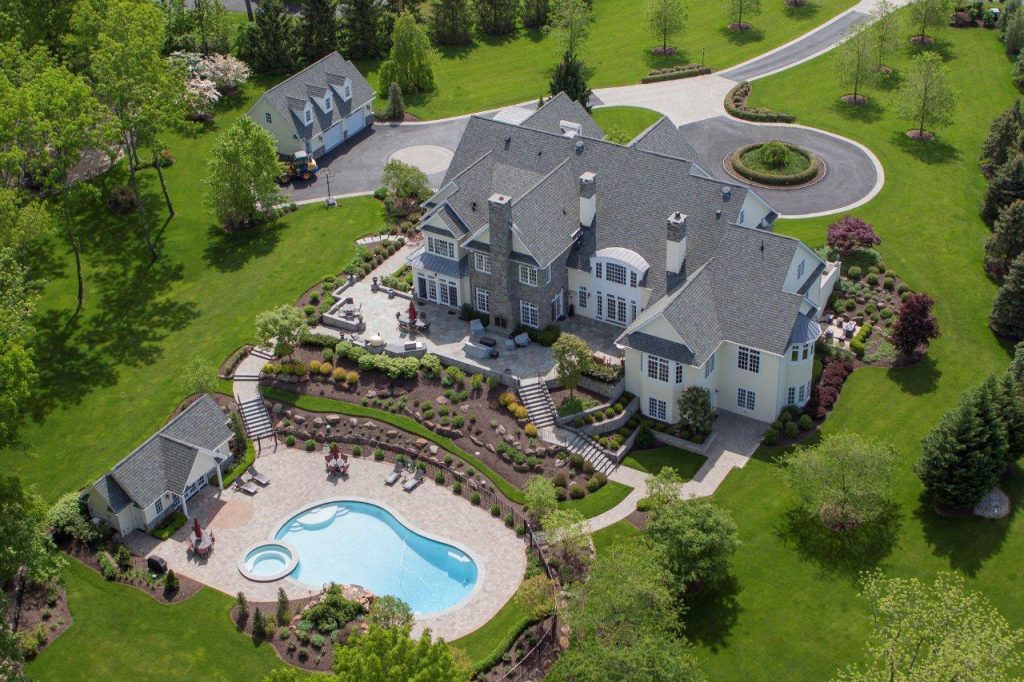
Each component of commercial lawn maintenance supports the others. Removing one weakens the entire system.
| Component | Primary Function | Long-Term Impact |
|---|---|---|
| Mowing | Controls growth | Promotes density |
| Fertilization | Supplies nutrients | Strengthens root systems |
| Aeration | Relieves compaction | Improves absorption |
| Overseeding | Fills gaps | Reduces weed pressure |
| Irrigation | Regulates moisture | Prevents stress cycles |
When these elements are aligned, turf becomes more resilient, requiring fewer corrective interventions over time.
Common Gaps in Commercial Lawn Maintenance Plans
We frequently see commercial lawn maintenance programs that look complete on paper but fail in execution.
The most common gaps include:
ⓧ Over-reliance on mowing without soil care
ⓧ Fertilization schedules that ignore seasonal biology
ⓧ Lack of aeration in high-traffic areas
These gaps create predictable issues: thinning turf, increased weed pressure, and rising maintenance costs.
The Long-Term Value of Professional Commercial Lawn Maintenance
Commercial landscapes are long-term assets. When properly maintained, they enhance property value, tenant satisfaction, and brand perception.
When neglected, they become a liability, both visually and functionally.
At The Lingo Group, we approach commercial lawn maintenance as part of a larger property lifecycle. From soil health to seasonal transitions, every decision is made with long-term performance in mind.
Our operational structure allows us to manage everything in-house, from turf care to irrigation and seasonal services, ensuring consistency across every phase of maintenance.
When to Reevaluate Your Current Plan
If your property is experiencing recurring issues, it’s usually not a single problem, it’s a system issue.
Signs that your commercial lawn maintenance plan needs adjustment include:
✓ Turf thinning year after year
✓ Increasing weed or pest pressure
✓ Poor drainage or standing water
These are indicators that one or more core components are missing or misaligned.
A structured evaluation helps identify the root cause rather than treating symptoms repeatedly.
If you’re seeing these patterns, it’s worth having a professional assessment. You can start that process through our contact page, where we evaluate existing conditions and build a plan based on how your property actually performs, not just how it looks.
Final Perspective
Effective commercial lawn maintenance is about doing the right things at the right time.
When mowing, fertilization, aeration, overseeding, and irrigation are aligned, turf becomes self-supporting. That reduces intervention, lowers costs, and creates a consistently high-performing landscape.
For commercial properties in Pennsylvania, especially in high-demand areas like Bucks County, that level of consistency is what separates a maintained lawn from a managed system.