
Snow removal responsibility in Bucks County almost never sits with one person. The lot, the walkways and the street out front can each belong to a different party, so snow removal responsibility in Bucks County turns into an argument in February. We would rather sort it out now, while there is still time to write it down.
Our yard is at 1170 Timber Lane in Chalfont, and we have worked in Bucks County since 1982. Every winter we get the same call after the first real storm. A tenant says the landlord owns the sidewalk. The landlord says the township does. Nobody salted the ramp by the front door, and somebody slipped on it.
Snow Removal Responsibility in Bucks County, Line by Line
Start with what you actually control. On most commercial sites that is the lot, the drive aisles, the walkways, the ramps and any private access road. Those are yours, and nobody else is coming to clear them.
The public street is a different story. If your property sits on a state route, PennDOT handles the travel lanes. That covers Route 611, Route 202 and Route 313, and PennDOT explains how it prioritizes those roads during a storm. Local streets belong to the borough or township. Your curb cut and apron, though, usually come back to you. That is why the pile at the end of the lot matters.
Then there is the sidewalk. Most Bucks County boroughs put sidewalk clearing on the adjoining owner. The clock usually runs in hours after the snow stops. That exact number is in your own ordinance, so pull it up before the season rather than after a complaint. Doylestown Borough and Chalfont Borough both read differently than Doylestown Township does.
What the Lease Says While You Are Reading It in a Storm
Leases decide most of this, and they are rarely as clear as people remember. A triple net lease often pushes snow onto the tenant. A common area maintenance clause usually keeps the lot with the landlord and bills it back. Multi tenant buildings get messier, because the sidewalk in front of unit four is not always a common area.
Read for three things. Who contracts the work, who pays for it, and who owns the walkways and entrances on paper. If those answers point at different people, you have a gap. Snow removal responsibility in Bucks County gets expensive at that gap. The first slip and fall claim is what finds it.
Boroughs, Townships and Why the Answer Moves
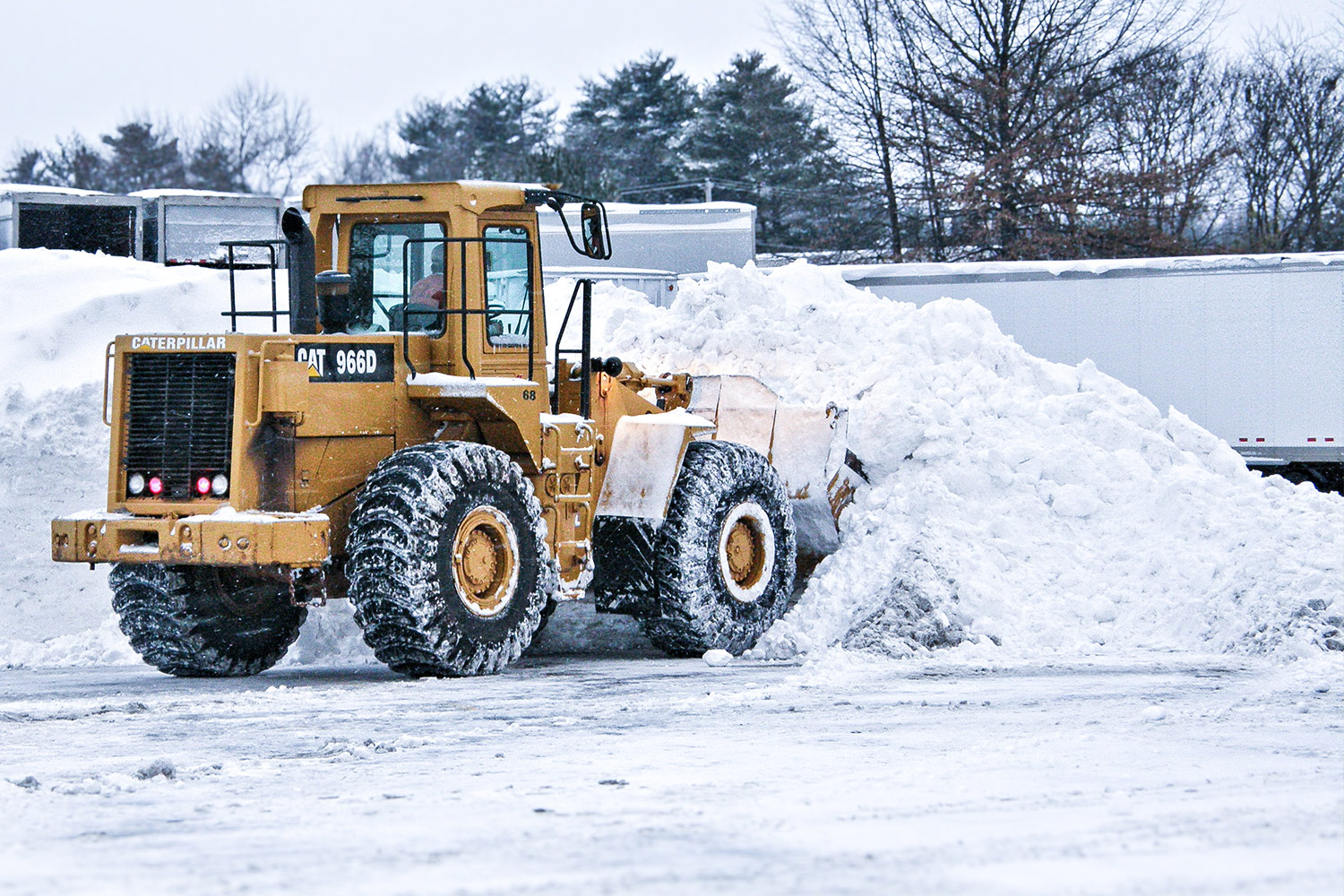
Bucks County is not one jurisdiction, and winter makes that obvious. Borough properties sit tight to the street, with narrow sidewalks, on street parking and nowhere to stack. Doylestown Borough, Perkasie and Sellersville all share that problem. Crews there spend as much time deciding where snow goes as they do moving it.
Township sites run the other way. Warrington Township along Route 611, New Britain Township and Buckingham Township have bigger lots and longer access roads. There is room to push, but there is also more pavement per property.
Weather here does not help either. Our storms often start as snow and flip to rain, then drop below freezing overnight. The National Weather Service office in Mount Holly covers Bucks County, and their winter products are worth watching. A lot that was clear at 4:00 PM can be a sheet of ice by 7:00 PM. That refreeze is still yours, even though nothing new fell.
HOA Boards and the Unit Owner Line
Associations have their own version of this. The declaration splits the property into common elements, limited common elements and unit owner responsibility, and snow follows that split. Private roads and drive aisles are almost always the association’s. Driveways and front walks depend entirely on the wording of the documents.
Boards get caught two ways. First, boards set the budget in the fall without reading the declaration. So the contract covers less than residents expect. Second, nobody assigns the walkways, so crews skip them. Snow removal responsibility in Bucks County communities belongs in the service agreement, in plain language. Do not infer it from a thirty year old document nobody can find.
Getting It On Paper Before December
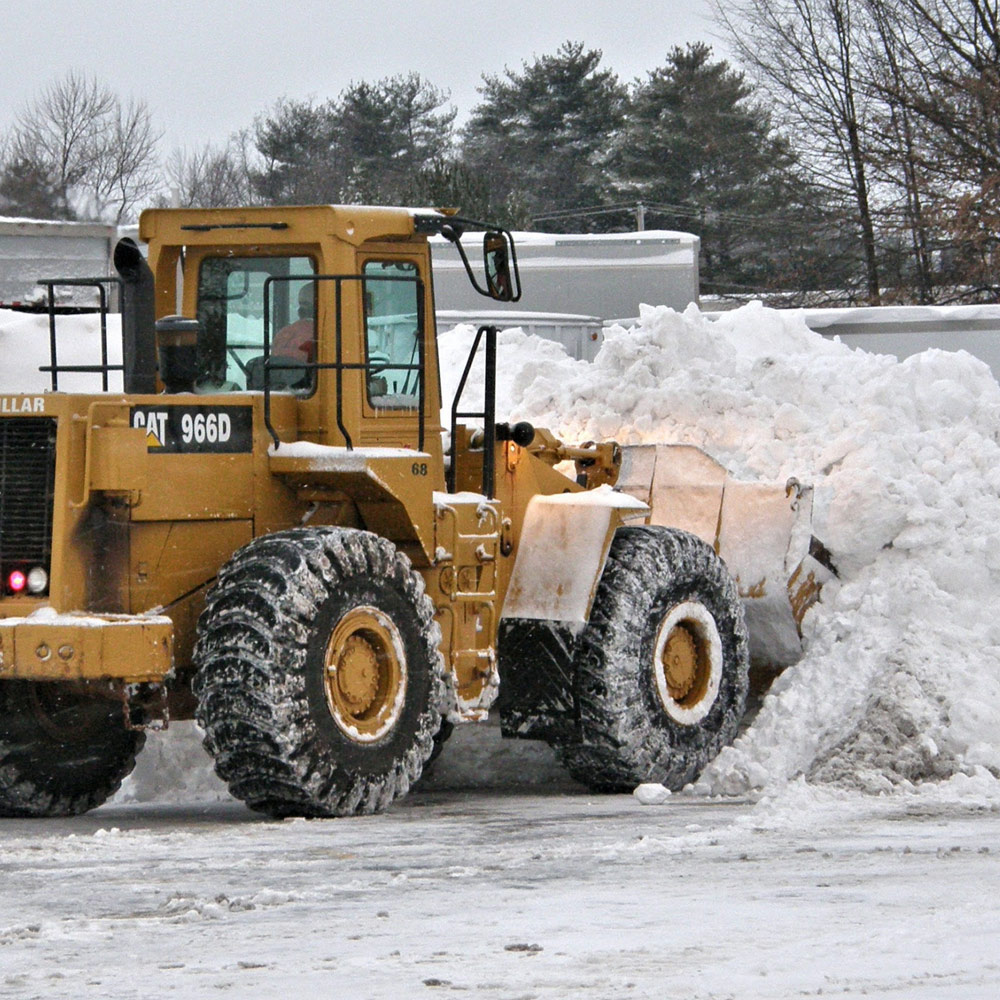
Every contract we write starts with the same three questions. What depth triggers a push? Who covers walkways versus the lot? And what level of ice management does the property’s exposure call for? Those answers set the service level and the cost, not a flat per visit number.
Most properties do better with a split trigger than one depth for the whole site. We usually set walkways and ADA ramps near half an inch for liability. The lot itself sits at an inch and a half for efficiency. Zero tolerance sites, like hospitals and round the clock retail, go down to a trace of ice. Standard industrial and office park contracts run up to two inches.
Write down the rest too. Who salts, and how often. Whether loading and hauling comes with it once the lot runs out of stacking room. Who inspects the site after. Snow removal responsibility in Bucks County belongs in the agreement by name, never by assumption. We also build routes around the properties that commit before the season, so November is late and December is later.
The Part Nobody Assigns Until March
Snow has to go somewhere, and where it goes becomes somebody’s problem later. Piles pushed onto turf islands and bed edges carry salt with them. Penn State Extension documents what that does to woody plants. Our clay soils hold the brine, so the damage shows up in April as dead edges along the curb.
Fire lanes and hydrants slip through too. So do dumpster pads, which tenants need cleared even when the lot is otherwise fine. We quote our walkway and sidewalk work separately from the lot for that reason. Hand and machine work on pedestrian surfaces is a different job than pushing pavement.
The Lingo Takeaway
Snow removal responsibility in Bucks County is a paperwork problem before it is a weather problem. Pull your lease or declaration. Mark the lot, the walks, the ramps, the aprons and the private roads, then name a party for each. Then hand that list to whoever is plowing. Gaps cost money, and the bill always arrives after someone gets hurt.
Common questions
Who holds snow removal responsibility in Bucks County, the landlord or the tenant?
Whichever one the lease names. There is no county default. Triple net leases usually push it to the tenant. Common area clauses usually keep the lot with the landlord and bill it back.
Does the township clear my parking lot?
No. Municipalities clear public streets, and PennDOT clears state routes. Private lots, drive aisles and access roads stay with the property.
Who is responsible for the sidewalk in front of a commercial building?
In most boroughs here it is the adjoining property owner. The window runs a set number of hours after the snow stops. Check your own borough or township code for the exact timing.
Do you offer emergency snow removal?
No. We do not run an emergency hotline and we do not guarantee an emergency response window. We service contracted properties on the schedule their trigger depth and priority tier set. Our office is open Monday through Friday.
Can one contract cover the lot and the walkways?
Yes, and it should. We price them separately because the work is different. But they belong in the same agreement, so nothing falls between them.
By town
Our commercial snow and ice routes run from Chalfont across central and lower Bucks County. These pages cover what we actually run into in each area.
- Commercial snow removal in Doylestown, PA
- Snow and ice service in Warrington, PA
- Commercial snow removal in Chalfont, PA
- Snow and ice service in Newtown, PA
- Commercial snow removal in Buckingham, PA
We also work in New Britain, Warminster, Perkasie, Sellersville and the surrounding townships. If your property is nearby and not listed, call and ask.
Ready to sort out who clears what before the first storm? Call us at (215) 343-7700, Monday through Friday, 8:00 AM to 4:00 PM, or send us a note through our contact page. Tell us the town and the property, and we will walk it with you.