
Office Park Snow Removal Bucks County: Before the Tenants Arrive
October 15th, 2026
Office park snow removal in Bucks County lives or dies on one short stretch of the morning. Tenants start pulling in around seven thirty. By eight the drive aisles, the visitor spaces and every entry door have to be open and treated. The snow usually stops hours earlier. Everything that happens between those two moments is what you are actually buying when you sign a winter contract.
We have handled commercial snow and ice for property managers, retail centers, medical offices, industrial parks and HOAs across the county for decades. Multi-tenant office sites have their own rhythm, so here is how we plan them.
Seven thirty is the deadline that matters
A warehouse can take a later start because the first trucks know the site. An office park cannot. You have accountants, delivery drivers and first-time visitors, all arriving inside a ninety minute window.
That shapes the whole plan. Crews take the main entrance and primary drive aisle first. Next come the bays closest to the doors, then overflow and the back rows. Walkways and door landings get cleared on the same pass rather than at the end. That is where a visitor steps out of a car onto pavement they cannot read.
Storms rarely cooperate. A mid-Atlantic system that ends at four in the morning gives us room to work. One still dropping at seven does not. Then the honest plan is a cleared path in, plus a second pass midmorning. We would rather tell a manager that in October than improvise it in January.
One number for the lot, another for the walks
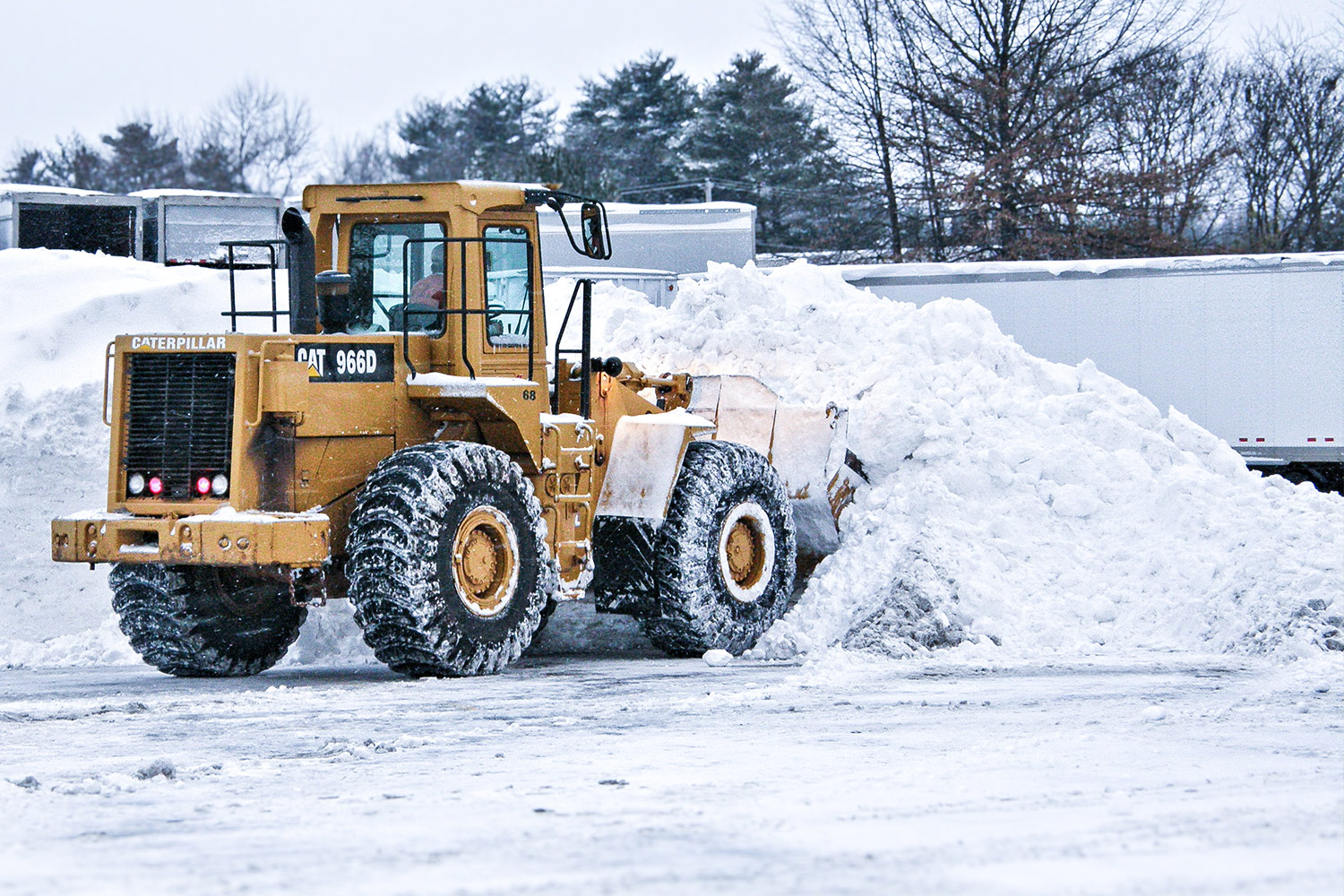
A trigger depth is the accumulation that dispatches crews. We build commercial contracts around four levels. Private office parks usually sit in the Standard Business tier, which is one and a half to two inches on the pavement.
Walkways are different. Sidewalks, entry landings and ADA ramps belong at a half inch to an inch, because that is where claims start. Running the whole site at one depth either overspends on acres of pavement or leaves the concrete short. Most office parks are best served by a split trigger, which we set during the site walk.
Ice management sits alongside both numbers. Anti-icing before a storm and de-icing after it are separate line items from plowing. The level a property needs depends on grade, shade and foot traffic. More detail on all of it sits on our snow and ice management page.
Office park snow removal Bucks County, measured site by site
No contractor can quote a multi-building office site over the phone. Five things drive the number, and all of them get measured rather than guessed.
- Cleared square footage. The paved area crews actually push, not the parcel size on the deed.
- Layout and stacking room. Tight sites with nowhere to pile snow need loading and hauling, which is the biggest cost escalator anywhere.
- Trigger depth and service level. A two inch contract may sit out a minor event entirely. A lower trigger dispatches more often.
- Walkway linear footage. Sidewalks, entryways and ADA ramps are hand or machine work, priced separately from the lot.
- Billing structure. Per event billing, a fixed seasonal price, or time and materials.
Per event costs less in a mild winter and more in a heavy one. A seasonal contract holds the same number either way, which is why managers running several buildings tend to choose it. Our breakdown of commercial snow pricing walks through the math behind both.
The pile you stack in December melts in February
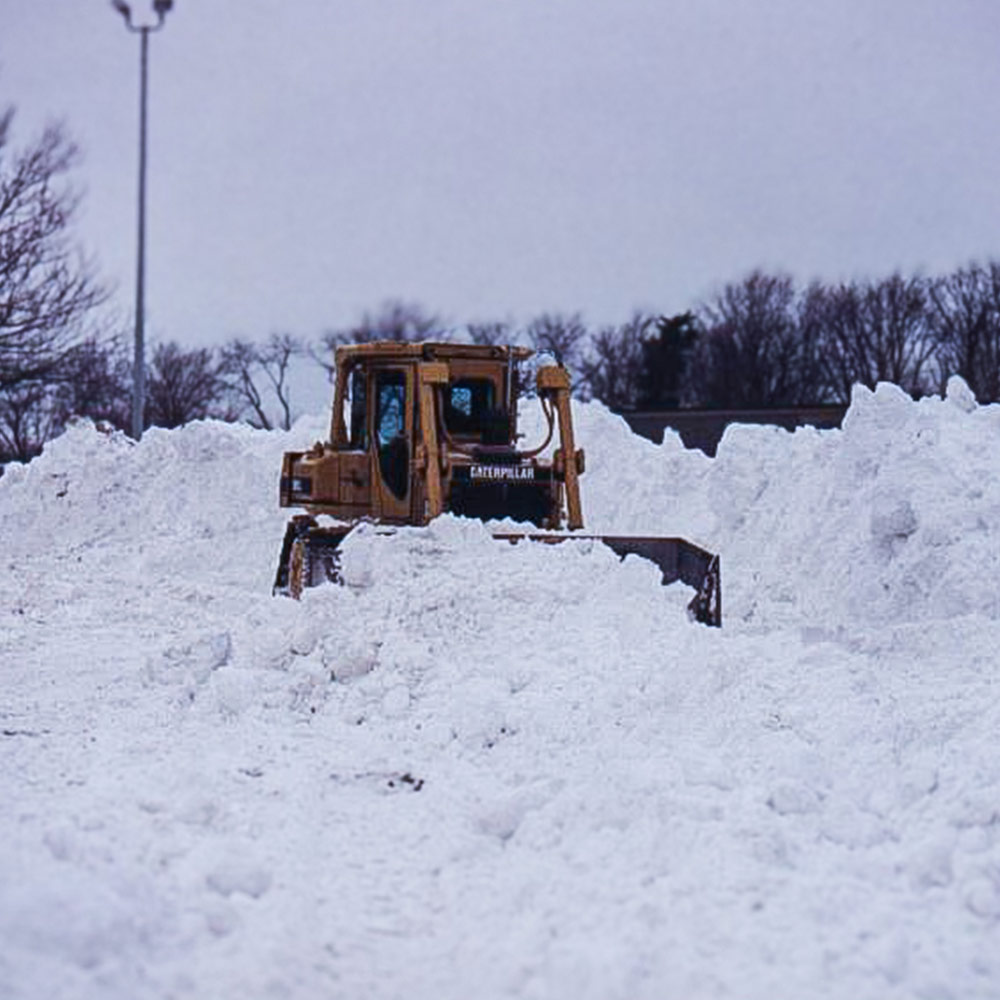
Office parks along the Route 202 corridor between Doylestown and Montgomeryville, and the sites off Easton Road and County Line Road, tend to share a problem. The pavement is generous. Still, the perimeter is landscaped, bermed or sloped toward a basin, so few places suit a pile.
Put one in the wrong spot and it costs you twice. A pile uphill of a walkway thaws through a sunny afternoon, runs across the concrete and freezes solid after dark. That ice came from the plow, not the sky. Pennsylvania courts treat an artificially created patch differently from a general storm. A pile in the wrong corner also blocks sight lines at an exit onto a state road. Worse, it swallows eight or ten spaces your tenants were promised in a lease.
So we map pile zones on a site plan before the season, around grade, drainage and the spaces you cannot afford to lose. When a lot genuinely runs out of room, we load and haul the excess off site instead of stacking higher.
Freeze and thaw does the quiet damage
Bucks County does not get one long freeze. It gets a cycle, and that cycle is harder on a property than the snow itself. Daytime melt runs across pavement and concrete. Overnight the temperature drops back below freezing. By six in the morning a glaze sits on every surface nobody salted.
North facing entries, shaded building corners and the base of any sloped drive aisle refreeze first. Downspouts and roof drains that discharge onto walkways are the other usual suspect. Those produce ice on a day with no snowfall at all. The National Weather Service office in Mount Holly posts the overnight lows that drive this, and we watch the same forecasts crews do.
Because of that, we inspect contracted properties during the season rather than only after a storm. The PennDOT winter operations pages explain how the same melt and refreeze pattern governs public road treatment, and private pavement behaves no differently.
Short runs from the Chalfont yard
Our operational hub sits on Timber Lane in Chalfont, which puts crews and equipment within roughly five miles of the county’s main commercial corridors. For a facilities director, that proximity matters more than any other single factor in how fast a site gets cleared.
We cover central and lower Bucks from that yard, including Doylestown, New Britain, Warrington, Warminster, Horsham, Montgomeryville, Hatfield, Lansdale, Perkasie, Sellersville, Buckingham and the surrounding townships. Sites that use us for grounds maintenance get an edge in winter too. The same crews already know where every curb, island and irrigation head sits. Industry groups like SIMA make the same point about documentation and continuity.
One thing we are straightforward about: we do not run an emergency hotline or guarantee an emergency response window. Contracted properties run on the dispatch schedule their trigger depth and priority tier set. Our office hours are Monday through Friday.
The Lingo Takeaway
An office park contract works when three things are settled in the fall. Start with the arrival window the site must be ready for. Next come the two trigger depths covering pavement and concrete. Last is the map of where snow may sit. Managers who answer those in October spend the winter checking invoices. Managers who wait spend it fielding tenant emails.
Common questions
What trigger depth suits a private office park?
Most land at one and a half to two inches on the pavement. Walkways and ADA ramps then sit at a half inch to an inch. We recommend a split after walking the site, since shade, grade and tenant mix all move the number.
Can one contract cover several buildings in the same park?
Yes, and it usually should. One agreement with one point of contact beats chasing separate contractors during an event. It also lets us sequence the buildings sensibly.
Who clears the sidewalks, us or the tenant?
Your leases decide, and they often differ building to building. Whatever the answer, we put it in the contract scope in writing before the season so there is no gap between the lot and the door.
When should we have this priced?
Now is the window. Routes are built around properties that commit before the season. Sites that sign in the fall get a place on a route rather than leftover capacity.
What happens when the lot has no room left?
We load and haul the excess off site. On a leased office property that often costs less than the alternative. Snow stacked on parking spaces takes revenue and goodwill you cannot get back.
Lining up the season
We are pricing commercial snow contracts for this winter now. Call (215) 343-7700 or use our contact form. We will walk the property, measure the pavement and the walkways, and map pile zones. Then you get a number your budget can hold.
By town
We price and route commercial snow work town by town. See commercial snow removal in Doylestown, Warrington, Chalfont, Newtown and Buckingham.