
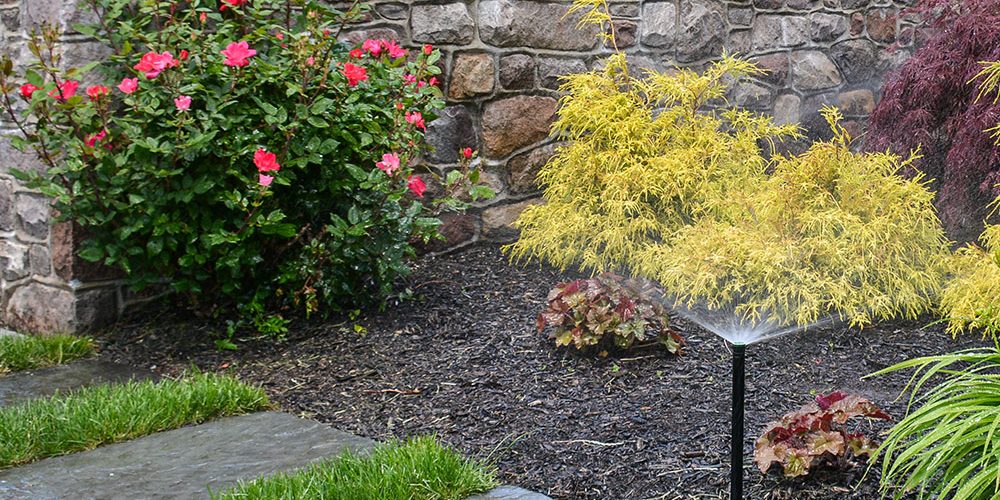
Sprinkler winterization in Bucks County is the one irrigation job that cannot wait for a convenient week. Water sitting in a lateral line freezes, expands and splits the pipe, so sprinkler winterization in Bucks County is really a race against the first hard overnight low. We have drained systems out of our Chalfont yard since 1982. The calls still arrive in the same order every fall. Careful owners call in early October. Hopeful ones call in November. The expensive calls come in April.
What a Freeze Does to a Line That Is Still Wet
Water expands by roughly nine percent as it turns to ice. It does that expanding inside a closed pipe with nowhere to give. PVC laterals split lengthwise. Poly pipe swells and lets go at the fittings. Brass and plastic backflow bodies crack across the casting, because that assembly sits above grade with no soil around it.
Depth decides the damage. Mainlines here belong below the frost line, which runs to about three feet in our region, so they usually ride out a normal winter. Lateral lines are different. They sit eight to twelve inches down, and heads sit shallower still. Both land in the layer of ground that freezes and thaws all winter. One cold snap after Thanksgiving can break a head that still held an inch of water.
None of that announces itself in December either. The system is off, nothing leaks, and the property looks fine until spring.
Sprinkler Winterization in Bucks County Follows the Forecast
Our average first freeze lands in the second half of October. Averages help very little on any particular night, though. A clear, calm night behind a dry cold front will drop a low spot in Buckingham or along the Neshaminy several degrees below the airport reading. Open ground also loses heat faster than a lawn ringed by houses. So we watch the National Weather Service office in Mount Holly instead of a date on the wall.
Penn State Extension draws the line between a light frost and a hard freeze clearly in its guide to frost and critical temperatures. Patchy frost at 32 degrees will not hurt buried pipe. A few hours in the mid twenties will. Because that second kind of night shows up with only a few days of notice, our route starts in the first week of October.
Going early costs nothing. Lawns need almost no supplemental water once the nights turn cool, and a late September rain usually carries everything through. Going late costs whatever the repair runs in April.
Sprinkler Winterization Bucks County: The Blowout, Zone by Zone
A shutdown is not just turning the water off. The sequence matters, and it runs the same way on nearly every property.
- Close the supply. The isolation valve feeding the system gets shut first, whether it sits in a basement, a pit or a well house.
- Relieve the pressure. Manual drains and the test cocks on the backflow open up, so the standing column of water has somewhere to go.
- Push air through each zone. Compressed air goes in downstream of the backflow, zone by zone, starting with the highest zone and finishing with the lowest.
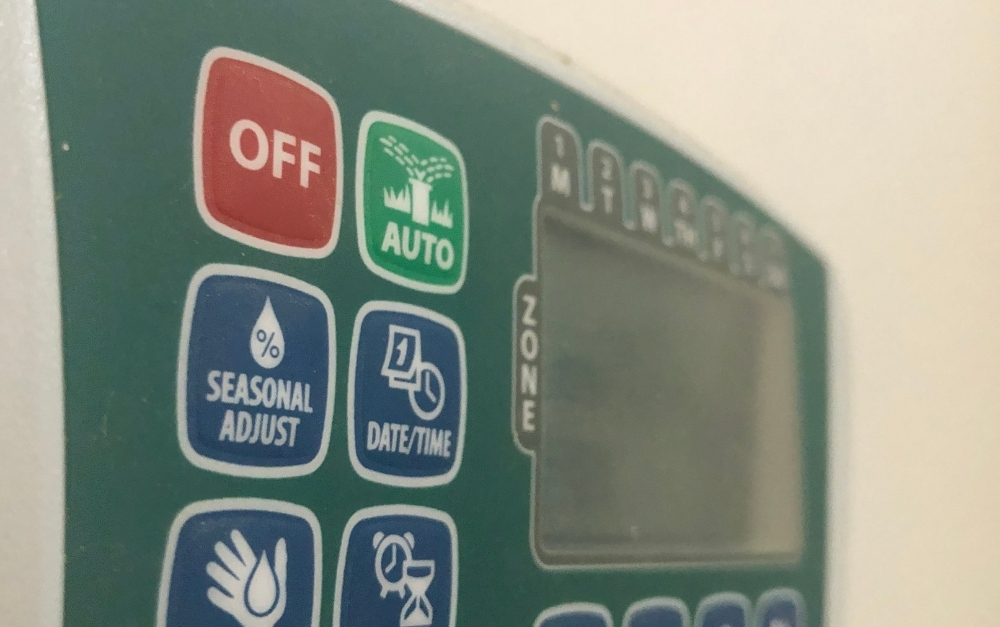
- Watch every head clear. Heads lift, spit water, then throw a short burst of mist. Once the mist turns to dry air, that zone is finished.
- Leave the system open. Drains stay open, the controller goes to off, and the backflow stays drained rather than sealed up wet.
Two details separate real sprinkler winterization in Bucks County from a quick pass. First, air pressure stays well under the pipe rating. High pressure does not clear a line any faster, and it does blow heads apart and cook seals. Second, no zone runs on air for long once it goes dry, because a spinning rotor without water is a rotor without lubrication.
Drip zones, filters and low-flow emitters get drained by hand. So do water feature pumps and basins. Those hold more water than people expect, and they sit completely exposed.
The Backflow Assembly Earns Its Own Attention
Every irrigation system tied to drinking water has a backflow preventer. On most properties around here, it is also the most expensive thing a freeze can break. The assembly sits above grade by design, so that it can be tested. That design leaves nothing but air around it when the temperature drops.
Draining it means opening the test cocks, letting the body empty, and leaving it open. Insulating a wet assembly accomplishes nothing, since insulation slows heat loss but never stops it. Commercial sites often run a double check or a reduced pressure assembly inside a hot box. Even then, somebody has to verify the drain by hand rather than assume it.
Controllers, Pumps and the Parts People Walk Past
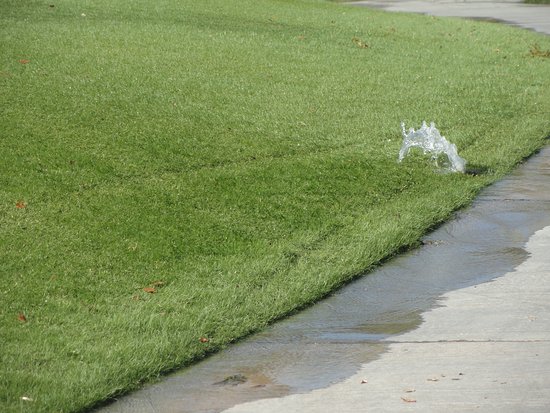
The controller is simple. Most models have an off or rain position that holds the programming while shutting the valves down, and we use it rather than cutting power at the breaker. Smart controllers usually hold a seasonal schedule too, which the EPA WaterSense program recommends adjusting through the year anyway.
Well systems need more. The pump, the pressure tank and the line out to the irrigation manifold all have to be handled, so a shutdown that ignores the pump house is only half done. Wells are common across Buckingham, upper Bucks and much of Doylestown Township. We covered how well capacity shapes a system in our piece on irrigation on well water.
Sleeves under driveways and walks deserve a last look as well. A sleeve holding a low spot will still hold water after everything else runs dry, and that is exactly where pipe tends to split.
What April Looks Like When October Gets Skipped
Skipped sprinkler winterization in Bucks County rarely shows up as one dramatic failure. Instead it shows up as a list. A soggy patch over a split lateral. Three heads that no longer pop. A backflow weeping at the bonnet. A valve box with standing water in it. Each item is a separate repair, and spring is the busiest stretch of the year for every irrigation crew in the county.
Most of those failures look like the ones in our guide to common sprinkler repair problems. A freeze simply creates several at once, usually in the same week the rest of the property wants attention.
The Lingo Takeaway
Winterization is cheap insurance. It is also part of the seasonal maintenance built into our irrigation and water features work, alongside spring start-ups and summer inspections. We have served more than 1,100 clients across the Delaware Valley, and the systems that reach twenty years are the ones blown out every single fall. Book sprinkler winterization in Bucks County before the forecast forces the decision, then forget about the system until April.
Common Questions
When is it too late to winterize a sprinkler system?
Once the ground has frozen hard and stayed frozen, the risk is already taken. A blowout still helps, because it protects against the rest of the winter. Any damage from that first deep freeze is done, though. Late October into the first week of November is the practical cutoff here.
Can I drain the system myself instead of blowing it out?
Manual and automatic drain valves help, though they rarely clear everything. Lines are never graded perfectly, heads hold water in the body, and a quarter inch left in a fitting is enough to crack it. Compressed air is what actually empties a system.
Does sprinkler winterization in Bucks County include the backflow preventer?
It should, and ours does. The backflow assembly is the most freeze-prone component out there, so draining it is not an add-on. Ask any contractor directly whether the assembly is included before booking.
What about a commercial property with irrigation and a snow contract?
Those two jobs fall within a few weeks of each other, which works out well. Irrigation gets shut down and drained, then the property moves onto the snow management side for winter. Heads and valve boxes near drive lanes get noted first, since a plow blade finds them quickly.
How long does a shutdown take?
A residential system with six to eight zones takes well under an hour. Large commercial sites run longer, especially with many zones, multiple connection points and drip. We schedule those as their own visit.
By Town
We handle sprinkler winterization in Bucks County from our yard at 1170 Timber Lane in Chalfont, which keeps the fall route tight. Details differ by town, and so does the work:
- Chalfont, PA is our home borough and operational base, so the route starts here.
- Doylestown, PA mixes borough properties with tight access and township developments on builder subsoil.
- Warrington, PA brings the Route 611 corridor and townhome communities on scheduled service.
- Newtown, PA has planned communities and HOA properties where consistency matters most.
- Buckingham, PA means acreage, long driveways and wells that need the pump house handled too.
We also work in New Britain, Warminster, Perkasie, Sellersville and the surrounding townships. If your property is nearby and not on that list, call and ask.
Get on the Fall Route
Call (215) 343-7700, Monday through Friday, 8:00 AM to 4:00 PM, or use our contact page, and we will put your property on the shutdown schedule. You can also read more about our irrigation system services in Bucks County, including start-ups, inspections and winterization. The Lingo Group, Inc., Pennsylvania Home Improvement Contractor PA027076.