
Lawn aeration in Bucks County, PA looks pointless while it happens and obvious six months later. Walk a property here in late October and you can usually see the case for lawn aeration in Bucks County, PA without a soil probe. Hard ground. Thin turf in the traffic lanes. Water sitting in the low corner two days after a rain.
The ground under most lawns in this county is not topsoil all the way down. There are a few inches of whatever the builder spread at the end of the job. Under that sits clay and weathered shale that was here long before the house. That layer decides how your grass does next July.
What Sits Under Four Inches of Topsoil
Central Bucks is shale and clay country. Dig a test hole off Lower State Road in New Britain, or in one of the Doylestown Township developments, and you hit dense orange-brown subsoil fast. On newer sites, loaders and delivery trucks packed that subsoil down for a year. Then it got four inches of topsoil and sod on top.
That packed layer is the reason lawn aeration in Bucks County, PA shows up on so many turf plans. Compacted ground does two things to turf. Roots stop going down, so the lawn lives in the top two inches and burns out the week August turns hot. Water stops going down too, so it runs sideways into the beds and the curb line instead of soaking in.
Older properties around Buckingham and the borough streets in Doylestown have a different version of the same problem. Construction traffic never touched that ground. But decades of mowing, parking and foot traffic do similar work on the top six inches.
Hollow Tines Versus the Shoes With Spikes
Core aeration pulls plugs of soil out of the lawn and leaves them on the surface. Penn State Extension is specific about the hardware. Use hollow core tines, three to four inches long and a quarter inch to three quarters of an inch wide. Skip solid tines and spikes, because they press soil sideways instead of removing any. Their season-by-season lawn guidance walks through the rest.
The soil also needs enough moisture for a tine to pull a clean plug. Bone-dry clay in a September drought gives you shallow scratches. Soaked clay after three days of rain gives you ruts. There is a window in between, and reading it on the day is most of the skill.
Once the plugs are down, leave them alone. They crumble back into the canopy within a couple of weeks and take some thatch with them. If thatch already runs deeper than an inch, that is a separate job on its own schedule. Penn State covers it in their guidance on thatch.
Lawn Aeration in Bucks County, PA, and the October Clock
Cool weather is the right window. The grass recovers fast while air temperatures stay mild and the soil holds its summer warmth. Late summer through early fall is the sweet spot across our part of Pennsylvania.
Seeding has a harder edge on the calendar. Penn State does not suggest seeding later than mid-October for most of the state. So by the back half of the month, new seed will not reliably establish before cold shuts it down. Aeration still helps. Seed thrown this week usually does not.
That distinction matters, because the two jobs get sold as one package. If a contractor offers you aeration and overseeding in November, the aeration is real work. The seed is mostly a line item.
Seed Now Or Wait For the Spring Window
While the seeding window is open, overseeding right after aeration is the best pairing there is. The holes give seed contact with real soil instead of a mat of old clippings. That contact is what germination needs. Grass type matters too, and Penn State keeps a plain list of turfgrass species that hold up in Pennsylvania.
Past mid-October there are two honest options. Aerate now and plan seed for the spring window. Or aerate now and dormant seed in late winter, so freeze and thaw cycles work the seed into the soil before growth starts. Either way, you deal with the compaction this fall instead of next July, when the lawn is already short on water and nobody wants holes in it.
We would rather tell an owner in Warrington that the seed can wait. Lawn aeration in Bucks County, PA earns its keep in October. Seed on frozen ground does not.
The Work That Follows the Plugs
Aeration opens the door. What you send through the door changes the lawn. One slow-release nitrogen application in late summer or early fall covers most of what a cool-season lawn needs for the year. The holes carry it to the root zone rather than leaving it on the surface.
Fall also suits lime better than spring on acidic Bucks County soils. Winter precipitation and our freeze-thaw cycles work limestone down into the profile. For phosphorus and potassium, get a soil test instead of guessing. A test tells you what the ground actually lacks.
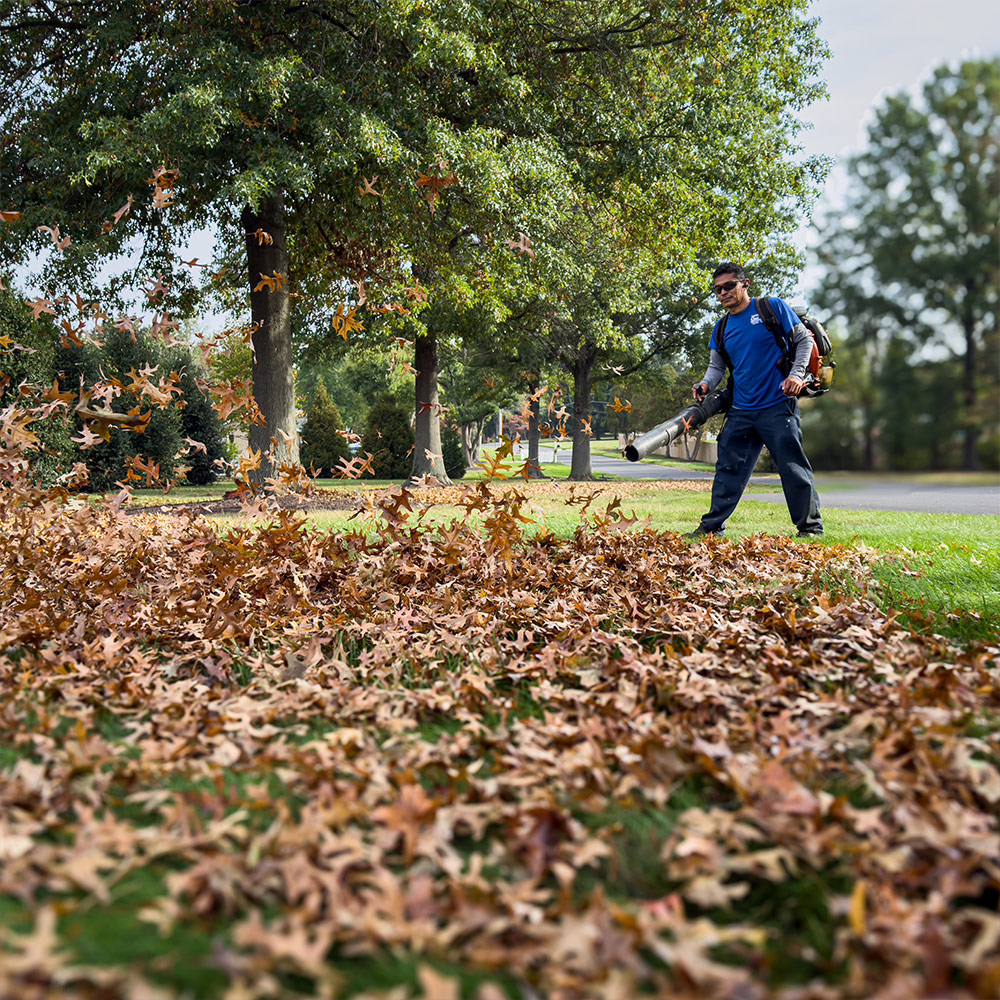
Two more things, and both are easy to get wrong. Keep mowing at two inches or higher while the grass still grows, which in this county often means into November. And keep leaves off the turf, especially over fresh plugs or new seed. A wet mat of maple and oak leaves smothers grass in about a week. Our fall cleanup walkthrough for Bucks County covers how that sequence usually runs.
Commercial Lawns, HOA Common Ground and Traffic Lanes
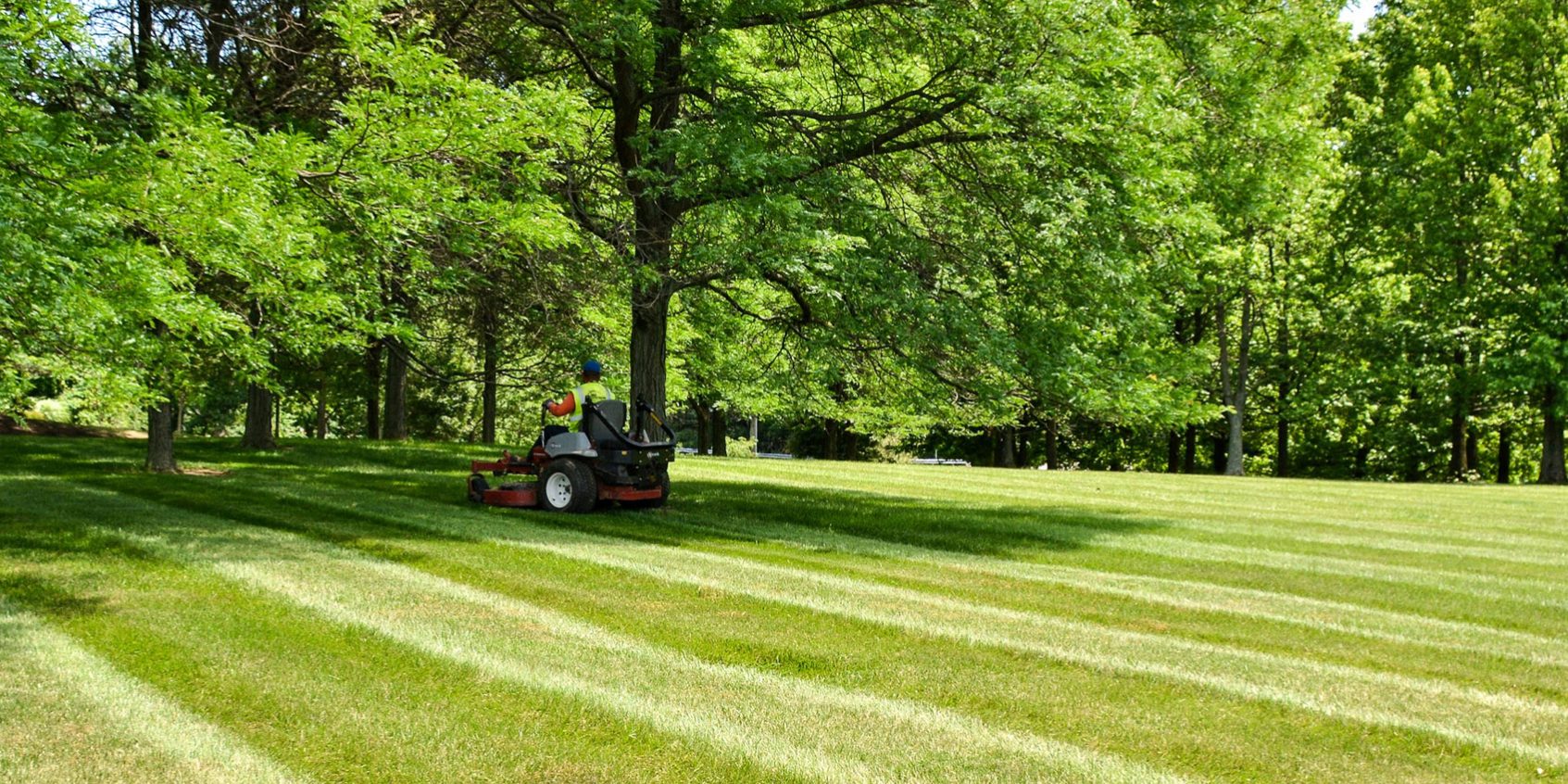
On commercial sites and HOA common areas, compaction maps how people move. The strip between the parking lot and the front door goes first. So does the shortcut across the corner everyone takes to the mailboxes. So does the band along the curb where plow spray and road salt land every winter.
Lawn aeration in Bucks County, PA pays off fastest on exactly those strips. Property managers along the Route 611 corridor in Warrington, and in the planned communities around Newtown, see the same pattern year after year. Those lanes are worth aerating on a schedule instead of waiting for them to go bare. Boards also find turf work easier to fund in the fall, while the budget conversation is already open.
Our turf management program builds the plan around the property, not a calendar template. We look at soil quality, grass type and sun exposure first. Then we set fertilization, weed and pest control, aeration and overseeding to match what that lawn actually faces.
The Lingo Takeaway
Lawn aeration in Bucks County, PA works because it treats the real problem. That problem is compacted clay subsoil, and you cannot see it from the driveway. Aerate in cool weather, with hollow tines, when the soil holds the right amount of moisture. Pair it with seed while the window is open, then be straight with yourself once the window closes. We have worked on lawns in this county since 1982. The properties that hold up through a hot July are almost always the ones where somebody dealt with the ground underneath.
Common Questions
How often does a Bucks County lawn need aeration?
Most lawns on clay subsoil do well with once a year. Lighter, better-draining ground can go every other year. High-traffic commercial turf and HOA common areas often need the worst lanes done more often than the rest of the property.
Is it too late to aerate in late October?
No. Aeration is a cool-weather job, and late October still qualifies. Seeding is the part that is past its window, since Penn State does not suggest seeding after mid-October here.
Should the soil plugs come off the lawn?
Leave them. They break down into the turf within a few weeks and take a little thatch along with them. Raking them off removes the soil you just paid to loosen.
Can I aerate and then put down lime and fertilizer?
Yes, and that order helps. The holes carry both toward the root zone. Base the lime and the phosphorus on a soil test, and keep nitrogen at the label rate.
Does lawn aeration in Bucks County, PA fix drainage problems?
It helps surface water soak in rather than run off. But it will not fix a low spot that collects water, or a downspout emptying onto the grass. Those are grading and drainage jobs.
By Town
We work on turf across central and lower Bucks County. Each town brings its own version of the problem, so start with the page for your area:
- Landscaping in Chalfont, PA, where our crews and equipment sit on Timber Lane
- Landscaping in Doylestown, PA, borough properties with tight access plus township lawns on builder subsoil
- Landscaping in Warrington, PA, the Route 611 commercial corridor and townhome communities
- Landscaping in Newtown, PA, planned communities and HOA common ground
- Landscaping in Buckingham, PA, acreage properties and open ground
We also work in New Britain, Warminster, Perkasie, Sellersville and the surrounding townships. If your property sits nearby and is not listed, call and ask.
Get the Ground Open Before Winter
If the lawn went into this fall hard and thin, now is the time to look at it. Call (215) 343-7700 Monday through Friday, 8:00 AM to 4:00 PM, or use our contact page. Tell us the town and the property. We will walk it, tell you what the soil is doing, and say honestly whether lawn aeration in Bucks County, PA this month or a spring plan fits your lawn better.