
Retaining wall cost in Bucks County rarely comes down to the blocks on the face. Most of the money sits below the wall, in excavation, base stone, drainage and the hours those three take. So two honest proposals for the same wall can land a long way apart.
We have been building and rebuilding walls across this county from our Chalfont yard since 1982. Along the way we have priced plenty of new walls. We have also priced repairs on walls that came in cheap the first time. Here is what actually moves the number.
What the Figure on the Proposal Covers
A retaining wall holds soil back, so it gets priced like a structure rather than like a finish. The face you see is the smallest part of the job. Underneath sits a compacted base, a drainage layer, clean backfill and often geogrid reinforcement running back into the slope.
Wall proposals generally break into five groups of work.
- Excavation and disposal. Digging the trench and the reinforcement zone, then hauling spoil off site.
- Base and backfill stone. Crushed aggregate under the wall, clean stone behind it.
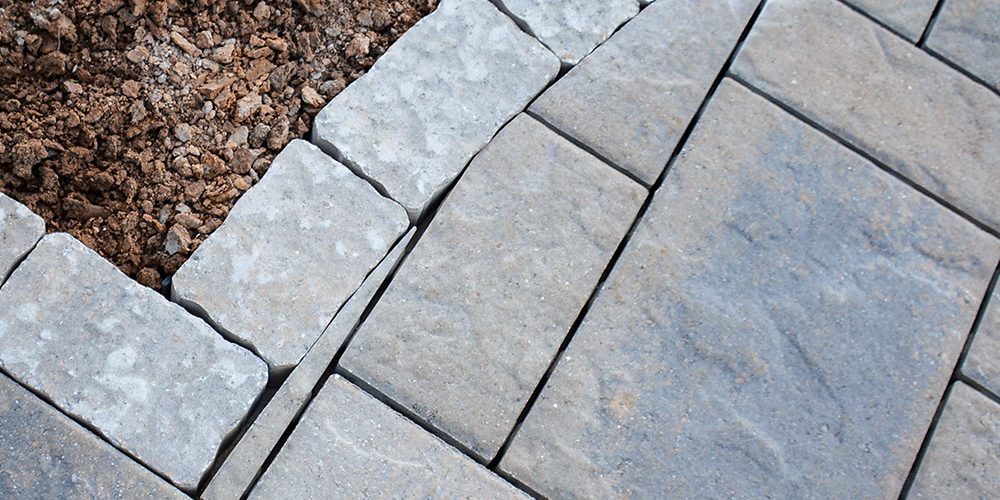
- Wall units. Segmental block, quarried boulders or dry-laid stone, plus caps and adhesive.
- Drainage. Perforated pipe, filter fabric and an outlet that actually daylights.
- Labor and machine time. Access, staging and the hours spent setting courses level.
Change the height or the soil, and several of those groups move together. That is why retaining wall cost in Bucks County tracks site conditions more closely than wall length.
Ground Conditions That Move the Number Here
Most of this county sits on silt loam over clay and shale. Penn State Extension is a useful starting point on how local soils behave. That profile drains slowly, so water backs up behind a wall instead of passing through it. Consequently, drainage carries more weight in a local proposal than it would on sandy ground. Retaining wall cost in Bucks County reflects that soil before it reflects anything else.
The frost line runs to roughly three feet here as well. Anything carrying a footing has to sit below it. That depth shows up twice, first in excavation hours and again in stone tonnage. Add a steep grade or a narrow access lane, and machine time climbs once more.
Then there is what sits above the wall. A lawn bank loads a wall gently. A driveway, a pool deck or a parking area presses on it constantly, and that surcharge changes the reinforcement schedule. Because of that, we walk the slope above a proposed wall before we price the wall itself.
Block, Boulder and Dry-Laid Stone Priced Side by Side
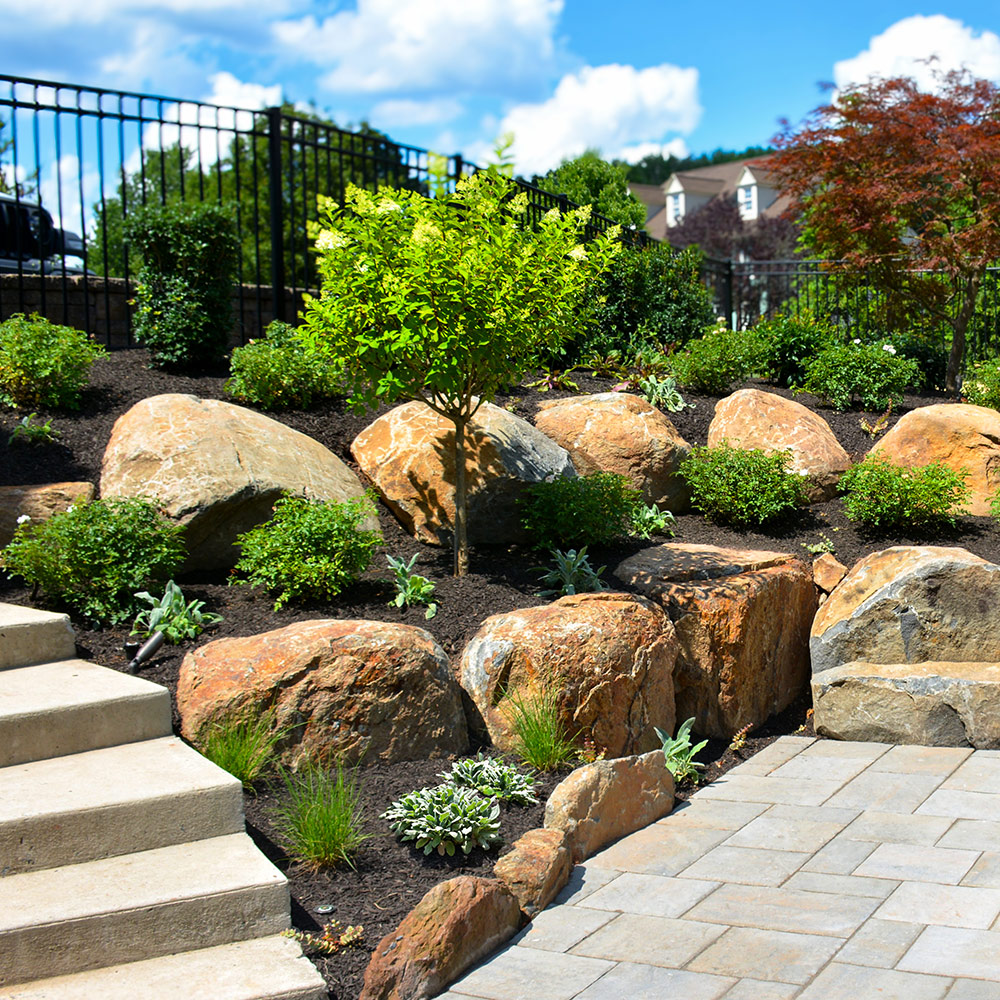
Three families of wall show up on most local properties, and they spend money differently. Segmental block is the most predictable. Units are uniform, the engineering tables are published, and a crew can set a lot of face in a day.
Boulder walls swap labor hours for machine hours. Fewer pieces go in, though each one needs an excavator and a practiced operator to seat it. Material delivery also costs more, since boulders arrive heavy and awkward.
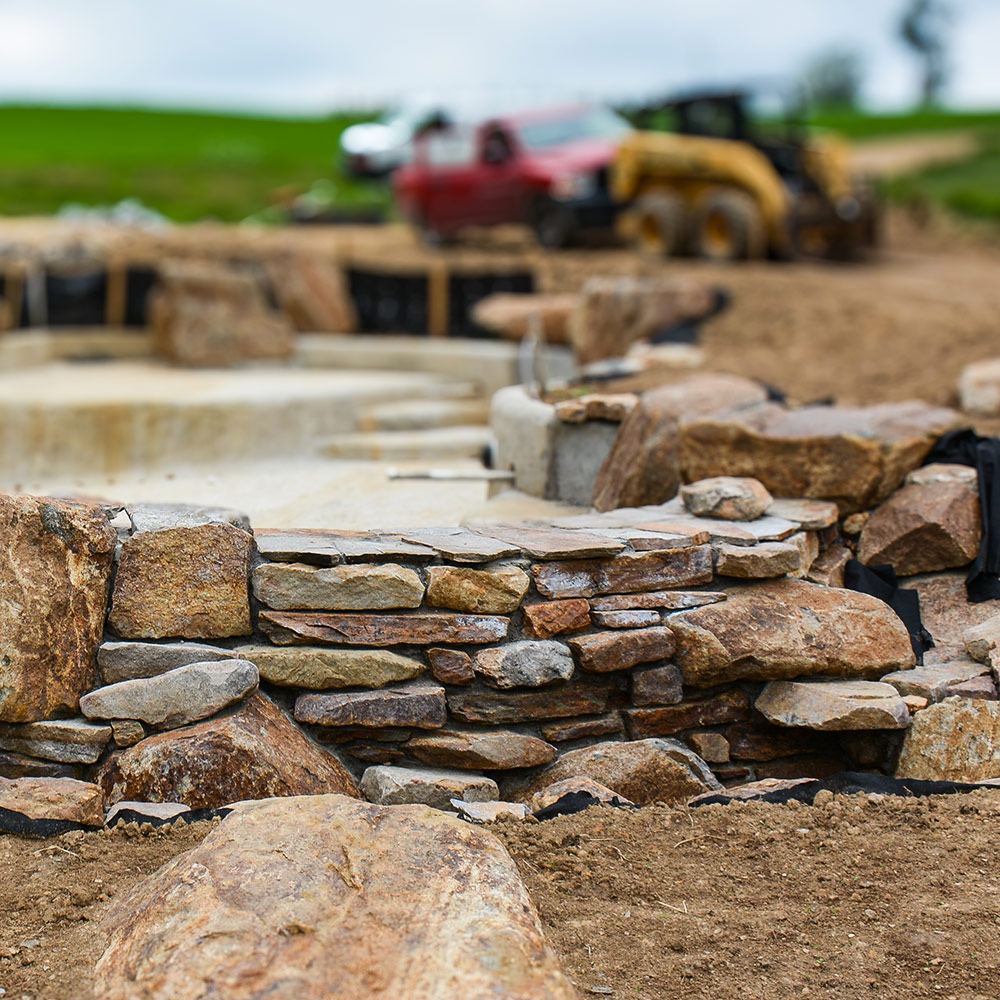
Dry-laid stone sits at the other end. Every stone gets chosen, turned and fitted by hand. So the wall is really built twice, once loose and once for good. It suits older farmhouse properties around Doylestown and Buckingham. Pricing follows the hour more than the pallet. Our guide to retaining walls in Bucks County walks through how each type behaves over time.
Height, Permits and the Four-Foot Line
Height changes a wall more than any other single decision. Load rises quickly with every course, so reinforcement, base width and drainage all scale with it. As a rule, walls above about four feet call for an engineered design and a municipal permit in Pennsylvania townships. Shorter walls carrying a surcharge often do too.
That engineering is a real line item, and it is money well spent. The Concrete Masonry and Hardscapes Association publishes the design manual most segmental wall systems follow. Meanwhile the Bucks County Conservation District sets out the rules for earth disturbance on smaller projects. Those rules matter once a wall job starts moving soil.
Your township is the other call to make early. Warrington, Doylestown Township and New Britain each review wall permits on their own schedule. A two week review can push a fall install into spring.
Where Retaining Wall Cost in Bucks County Turns Into a Rebuild
Nearly every failed wall we are called out to look at failed for the same reason. Water collected behind it and had nowhere to go. The wall itself was usually strong enough.
So the shortcuts are easy to name. Native clay gets shoveled back in instead of clean stone. The pipe goes in but never daylights. Geogrid gets left out because the slope looked gentle. Each of those trims a few percent off the first invoice, then costs the whole wall five years later.
Retaining wall cost in Bucks County looks very different once you price a rebuild, because a rebuild pays for demolition and disposal before a single new course goes down. We would rather spend that money the first time, underground, where nobody will ever see it.
How We Put a Number on Your Wall
Every proposal we write starts with grade and drainage and works up from there. First we walk the site and read where water arrives and where it needs to go. Then we measure the bank, check access for equipment, and look at what sits above and below the proposed wall.
After that you get an itemized proposal. The base, the drainage and the units all show up as separate lines rather than folded into one figure, so you can see where the retaining wall cost sits. Design, installation and maintenance are divisions of the same company. The person who drew the wall answers for what gets built. Hardscaping and masonry runs alongside landscaping and grading here, and consultations are complimentary.
The Lingo Takeaway
Retaining wall cost in Bucks County is decided by what happens below grade. Soil type, height, surcharge and drainage set the figure. The block on the face is close to the last thing that matters. So compare proposals on base depth, backfill material, drainage detail and reinforcement, not on the total at the bottom.
Ask any contractor one plain question. Where does the water go? A wall built on a good answer to that stays where you put it.
Common questions
Does retaining wall cost in Bucks County change by the foot or by the square foot?
Face area is the usual unit, because height drives the base, the reinforcement and the drainage together. A long low wall and a short tall wall of the same length price very differently.
Is a boulder wall cheaper than block?
Not reliably. Boulders cut the piece count but raise machine time and delivery weight. So the two often land close on the same bank.
Do I need a permit for a garden wall?
Low freestanding walls often sit under the threshold. Walls over roughly four feet, or walls under a driveway, usually need a permit and an engineered design. Your township makes the call, so check before you order material.
When is the best time of year to build?
Fall and early spring both work well, since the ground is workable and crews are not fighting summer heat. Retaining wall cost in Bucks County holds fairly steady across those windows. Design work is best done over the winter, because the walls drawn in January are the ones built in April.
Can you repair a leaning wall instead of replacing it?
Sometimes, though it depends on how far the wall has moved and why. We look at the drainage first. A wall leaning from trapped water keeps leaning until that water has somewhere to go.
By town
Grade, soil and access change from one township to the next. The pages below cover what we run into locally.
- Landscaping and hardscaping in Doylestown, PA
- Landscaping in Buckingham, PA
- Landscaping in Warrington, PA
- Landscaping in Chalfont, PA
- Landscaping in Newtown, PA
We also work in Yardley, Langhorne, New Hope and the townships in between. Crews and equipment run out of 1170 Timber Lane in Chalfont. That keeps drive times short across central and lower Bucks County.
Want a real number for your slope? Call (215) 343-7700 Monday through Friday, 8:00 AM to 4:00 PM, or use our contact page. We will walk the site, read the grade and put an itemized proposal in front of you.