
Zero tolerance snow removal in Bucks County is the service level where crews move at a trace of ice. They do not wait for an inch to pile up. Property managers ask us about zero tolerance snow removal in Bucks County every October, usually because of a close call last winter. It is the strictest trigger we write, and it is not right for every site. So here is how the trace line works and who actually needs it.
Zero tolerance snow removal in Bucks County begins at a trace
A trigger depth is the accumulation that has to fall before we dispatch crews. Most commercial contracts in the county sit at an inch or higher. Zero tolerance sits at the bottom of the scale instead. A trace to 0.01 inches of ice is enough to send equipment out.
These are the four levels we build commercial contracts around:
- Zero tolerance: trace to 0.01 inches of ice. Hospitals, emergency rooms and 24/7 retail.
- High traffic: 1.0 inch. Shopping centers, banks and medical offices.
- Standard business: 1.5 to 2.0 inches. Industrial warehouses and private office parks.
- Sidewalk specific: 0.5 to 1.0 inch. Pedestrian walkways and ADA ramps.
Notice that most properties do better with a split trigger. One number for the whole site rarely fits. Walkways and ADA ramps usually run at 0.5 inches for liability reasons. The lot itself runs at 1.5 inches for efficiency. We broke that math down further in our piece on choosing the right commercial snow removal trigger depth.
The properties that cannot wait for an inch
We have handled commercial snow removal for property managers, retail centers, medical offices, industrial parks and HOAs across Bucks County for decades. In that time a pattern has held. The sites that need a trace trigger are the ones where somebody arrives on foot at 3 a.m. and has no choice about it.
Picture an emergency room entrance off Route 611. Or a dialysis suite in a medical building near Route 202. Or a 24-hour pharmacy anchoring a center on Route 309. Nobody there checks the forecast first. Meanwhile a private office park in Warrington with a 7 a.m. first arrival sits comfortably at an inch and a half. There is time to clear that lot before the first car turns in.
So ask when the earliest person steps onto your pavement. Then ask whether that person has a choice about coming. If the answer is no choice and before dawn, zero tolerance snow removal in Bucks County is worth pricing out.
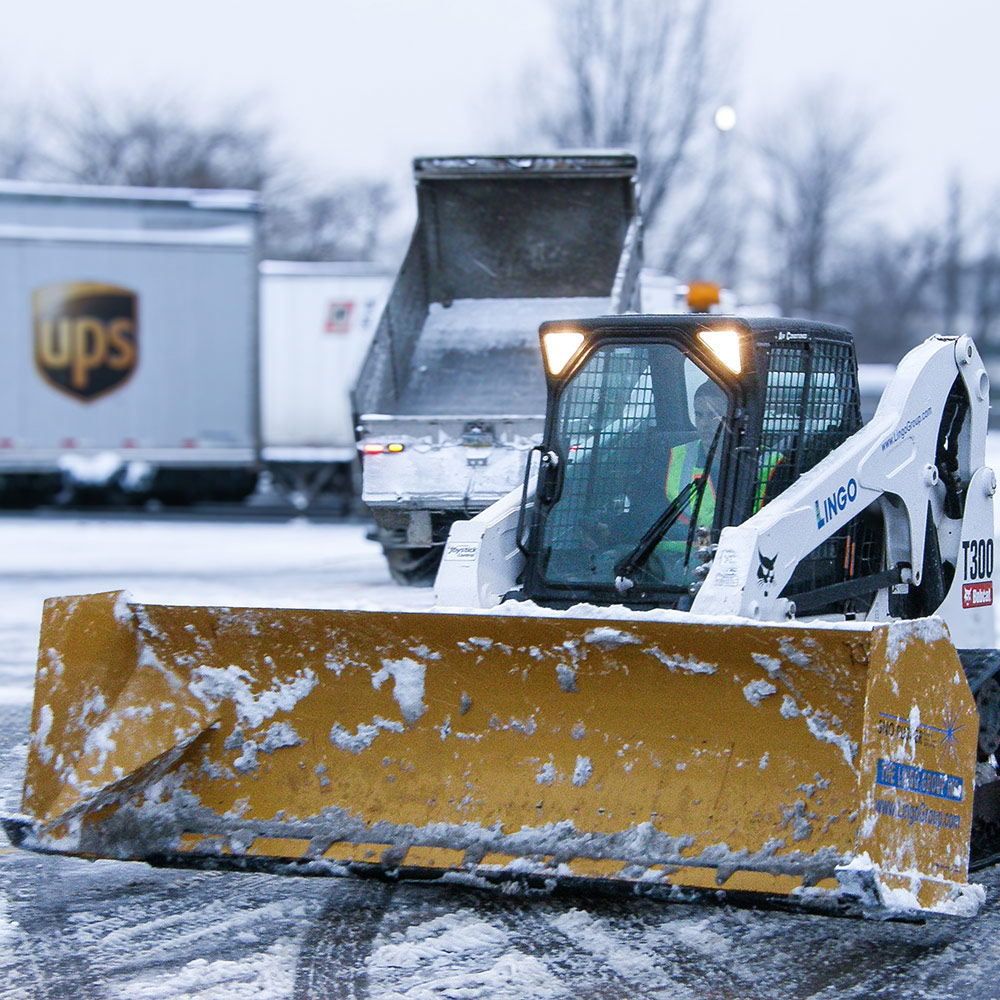
What the drive out of Timber Lane buys you
Our operational hub sits on Timber Lane in Chalfont. That puts equipment and crews within roughly a five-mile radius of the county’s main commercial corridors. The radius is the single biggest factor in how fast a lot gets cleared. After all, a trace trigger only means something if iron is close enough to act on it.
We also want to be straight about the limits, because plenty of contractors are not. Emergency snow removal is not a separate round-the-clock on-call service here. We do not run an emergency hotline. There is no guaranteed emergency response window either. Instead, contracted properties get serviced on the dispatch schedule their trigger depth and priority tier establish. That is why both settings get so much attention before anybody signs.
If your property needs coverage we cannot promise, tell us during the site walk. We would rather say so up front. The office line is (215) 343-7700, Monday through Friday.
Salt, brine and the refreeze nobody saw
Trace events here are rarely about volume. Usually they are about surface temperature. A quarter inch of rain falling at 33 degrees onto 28-degree pavement will glaze a lot fast. Four inches of dry powder never does that.
So our ice management work leans on anti-icing as much as de-icing. Treating pavement before a storm stops the bond from forming. That takes far less material than breaking ice loose afterward. Straight rock salt also loses most of its punch once pavement drops toward the mid teens. Timing and product choice carry real weight. The Penn State Extension guidance on winter salt use covers that chemistry well. We watch the National Weather Service office in Mount Holly for forecasts on our end of the Delaware Valley.
Refreeze is the other half, and it is exactly the kind of event zero tolerance snow removal in Bucks County exists for. A clear sky and a dropping dew point can turn a wet lot into a rink by 9 p.m. The plow is long gone by then. Our crews run property inspections through the season for that reason. We cover the salt side further in our article on de-icing services in Bucks County.
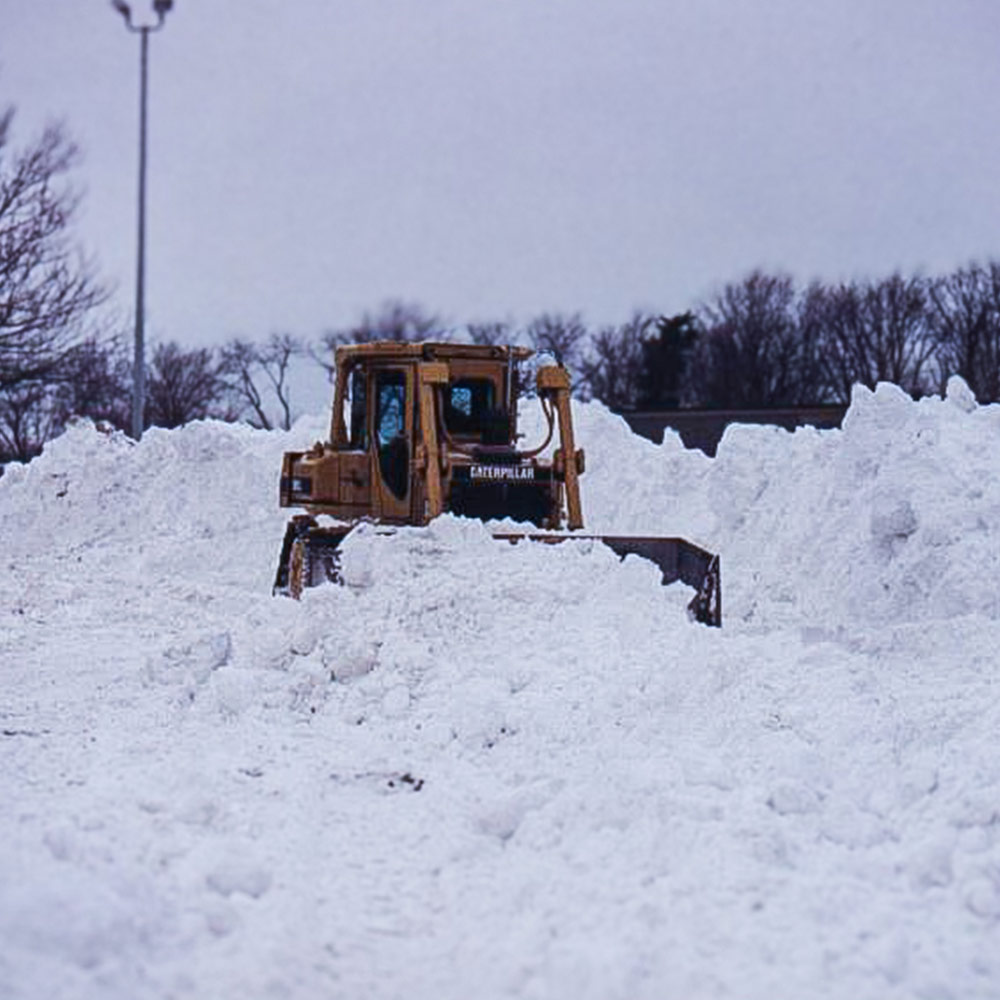
Where the money goes on a trace-trigger contract
There is no single county rate for this work. Any contractor quoting one over the phone has not looked at your property. Instead, pricing comes from measurable site conditions. Cleared square footage means the paved area actually pushed, not the parcel size. Site layout and stacking room matter too, since tight lots with nowhere to pile snow need loading and hauling. We price walkway linear footage separately from the lot.
Then there is trigger depth, which is where zero tolerance snow removal in Bucks County changes the arithmetic. A trace contract can dispatch several times during one storm. A two-inch warehouse contract might not dispatch at all in that same storm.
Billing structure also moves the number. Per-event billing costs less in a mild winter and more in a heavy one. A fixed seasonal contract costs the same either way and caps your winter budget. Most multi-property managers pick the seasonal route for that reason. Our walkthrough on snow removal bids you can compare shows how to line proposals up fairly.
The Lingo Takeaway
Zero tolerance snow removal in Bucks County is a liability decision wearing the clothes of a service level. You are not buying more plowing. You are buying away the window between ice forming and somebody walking on it. For a hospital entrance that window is the entire risk. For a warehouse opening at six, it is money spent on an empty lot.
So pick the trigger that matches who is actually walking. Then split it by surface: walkways tight, lot looser. That single choice saves more money and more claims than any other line in a snow contract.
Common questions
What does zero tolerance snow removal in Bucks County mean on a contract?
We dispatch crews at a trace to 0.01 inches of ice rather than waiting for measurable accumulation. It is the lowest trigger depth we write. We build it for hospitals, emergency rooms and 24/7 retail.
Does The Lingo Group offer 24/7 emergency snow removal?
No. We do not operate an emergency hotline, and we do not guarantee an emergency response window. Contracted properties are serviced according to their agreed trigger depth and priority tier. The office number is (215) 343-7700 during business hours.
Can I put walkways on zero tolerance and leave the lot higher?
Yes, and that is usually the smart build. Sidewalks and ADA ramps carry most of the slip-and-fall exposure. A tight walkway trigger with a looser lot trigger protects you without overspending on empty pavement.
Is a seasonal contract better than per-event billing at a trace trigger?
A seasonal contract fixes your winter budget regardless of snowfall. That tends to suit trace-trigger sites, because they dispatch often. Per-event billing is cheaper in a light winter and much more expensive in a heavy one.
What happens when the lot runs out of room to stack snow?
We load and haul the excess off site so the property stays usable. Hauling is the largest cost escalator in any contract. So we flag it during the site walk rather than after.
By town
We price and route commercial snow contracts separately from grounds maintenance. Routes are built around properties that commit before the season, and boards set budgets in the fall. Here is where to start for your town:
- Commercial snow removal in Doylestown, PA
- Commercial snow removal in Chalfont, PA
- Commercial snow removal in Warrington, PA
- Commercial snow removal in Newtown, PA
- Commercial snow removal in Buckingham, PA
We work from our Chalfont base throughout central and lower Bucks County. That includes Doylestown, New Britain, Warrington, Warminster, Horsham, Montgomeryville, Hatfield, Lansdale, Perkasie, Sellersville, Buckingham and the surrounding townships. The full service sits on our commercial snow management page.
Getting your trigger set before the first storm
Trigger depths are easiest to settle in October, while there is still daylight to walk and measure a property properly. Maybe your site belongs on a trace trigger. Maybe it does not, and somebody should tell you honestly. Either way, call the office at (215) 343-7700 or reach us through our contact page. We will walk the lot, measure the walkways, and quote zero tolerance snow removal in Bucks County only if your property genuinely calls for it.