
Snow removal bids in Bucks County arrive in September. Most property managers open three of them and find three numbers with almost nothing in common. That gap is rarely about greed. Snow removal bids in Bucks County follow site conditions, and every contractor measures those conditions differently. So fix the measuring and the comparison gets easy.
We have written commercial snow proposals from our Chalfont shop since 1982. We have also read plenty of bid requests that made a fair comparison impossible. So here is the buyer’s side of the process. What to send out, what to measure first, and how to line up the responses when they come back.
What Belongs in the Packet Before Anyone Quotes
Useful snow removal bids in Bucks County start with a useful request. A bid request that says “plow our lot, salt as needed” invites guessing. Each contractor then guesses differently, and the cheapest guess usually wins the job and blows up in January. Instead, send a packet that pins down the site.
At minimum, send a site plan. Mark the paved areas, trace the walkways and ADA ramps, and show where crews may pile snow. Then add your trigger depths, your billing preference and your insurance requirements. Also name a single contact and a response deadline. Once every bidder prices the same scope, the numbers become comparable instead of decorative.
One more line is worth adding, and almost nobody does. Ask each bidder what happens when the piles fill up. On a tight lot in Doylestown or Warrington, that question decides February.
The Measurements That Move the Number
Price follows measurable conditions, not property value or square acreage on the deed. Five things drive the figure on a commercial snow proposal.
- Cleared square footage. The actual paved area crews push, not the parcel size.
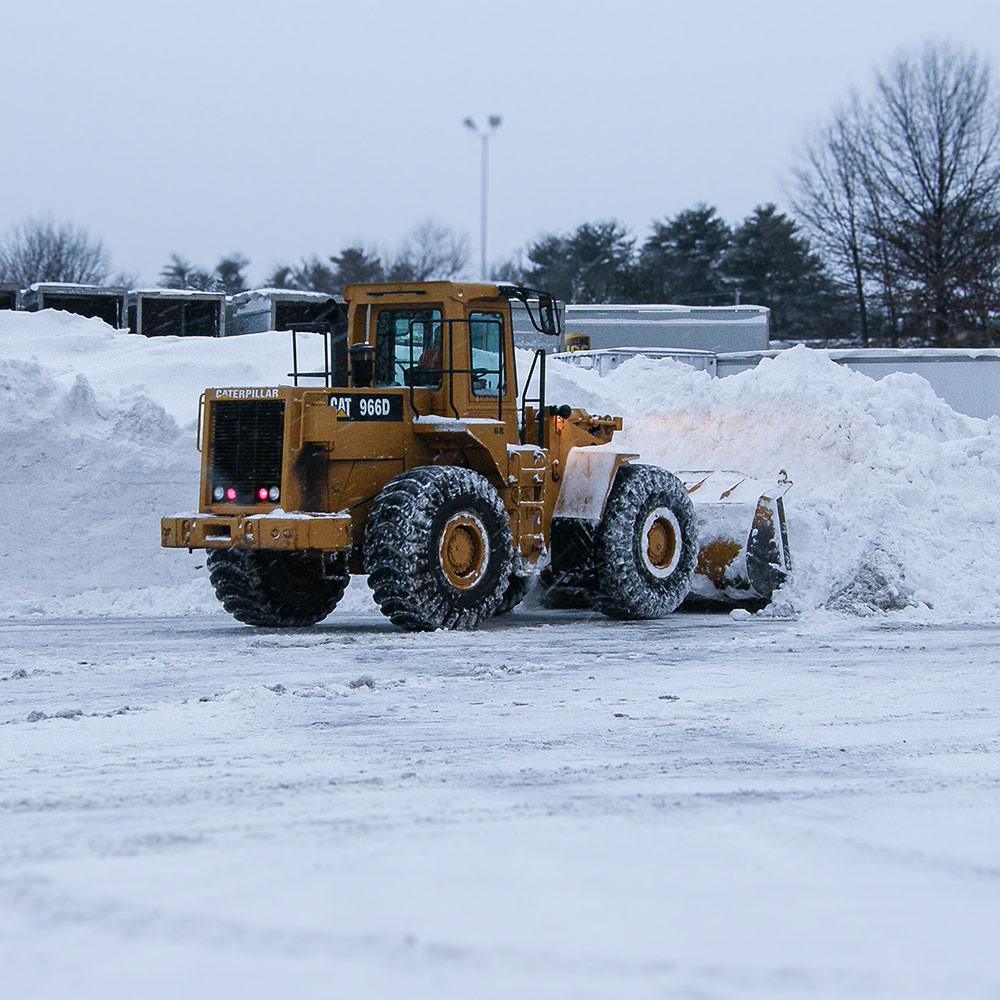
- Site layout and stacking room. Tight lots with nowhere to pile snow need loading and hauling, which is the biggest cost escalator on any property.
- Trigger depth and service level. A zero-tolerance site dispatches several times per storm, while a two-inch warehouse contract may not dispatch at all.
- Walkway linear footage. Sidewalks, entryways and ramps are hand or machine work, priced separately from the lot.
- Billing structure. Per-event, a fixed seasonal contract, or time and materials.
Measure those yourself before the snow removal bids go out. Say you already know the lot runs 64,000 square feet with 900 linear feet of walkway. You can then spot a bidder who never walked the property.
Where Snow Removal Bids in Bucks County Come Apart
Two honest contractors can quote the same retail center and land 40 percent apart. When snow removal bids in Bucks County spread that far, usually one of four things explains it.
First, the trigger depths differ. A one-inch trigger dispatches far more often than a two-inch trigger, so of course it costs more. Second, one bid includes ice management while the other treats salt as a separate per-application charge. Third, one bid assumes snow stays on site. The next one budgets for hauling. Fourth, one bid covers walkways and the other quietly leaves them to your maintenance staff.
None of that shows up in a bottom-line total. It shows up in the line items, which is why the packet matters more than the negotiation.
Lining the Responses Up Side by Side
Build a simple grid before you read anything. Put the bidders across the top and the scope items down the side. Lot trigger, walkway trigger, ice management, walkway method, snow relocation plan, hauling rate, documentation, insurance certificate and season dates.
Then fill it in from the proposals rather than from memory. Blanks are the useful part, because a blank marks a question you still need to ask. Work through the grid and the low bid usually turns out low for a reason you can name. Sometimes the high bid is the only complete one.
Our own proposals follow that structure on purpose. Commercial snow and ice management only works when both sides agree on scope in writing. Our guide to commercial snow removal contracts in Bucks County covers the language that follows. Read it before you sign anything.
Setting Triggers Before You Ask for a Price
Trigger depth is the accumulation that sends crews out automatically, with no phone call. Because it drives dispatch frequency, it drives cost more than any other single choice you make. We build commercial contracts around these levels.
- Zero tolerance. A trace of snow or 0.01 inch of ice, for hospitals, emergency rooms and 24/7 retail.
- High traffic. One inch, for shopping centers, banks and medical offices.
- Standard business. One and a half to two inches, for industrial warehouses and private office parks.
- Sidewalk specific. Half an inch to one inch, for pedestrian walkways and ADA ramps.
Most properties do better with a split trigger than with one number for the whole site. Walkways sit at half an inch for liability reasons. Meanwhile the lot sits at an inch and a half for efficiency. Put both numbers in the packet, and every snow removal bid you get answers the same dispatch pattern.
Why the Calendar Beats the Negotiation
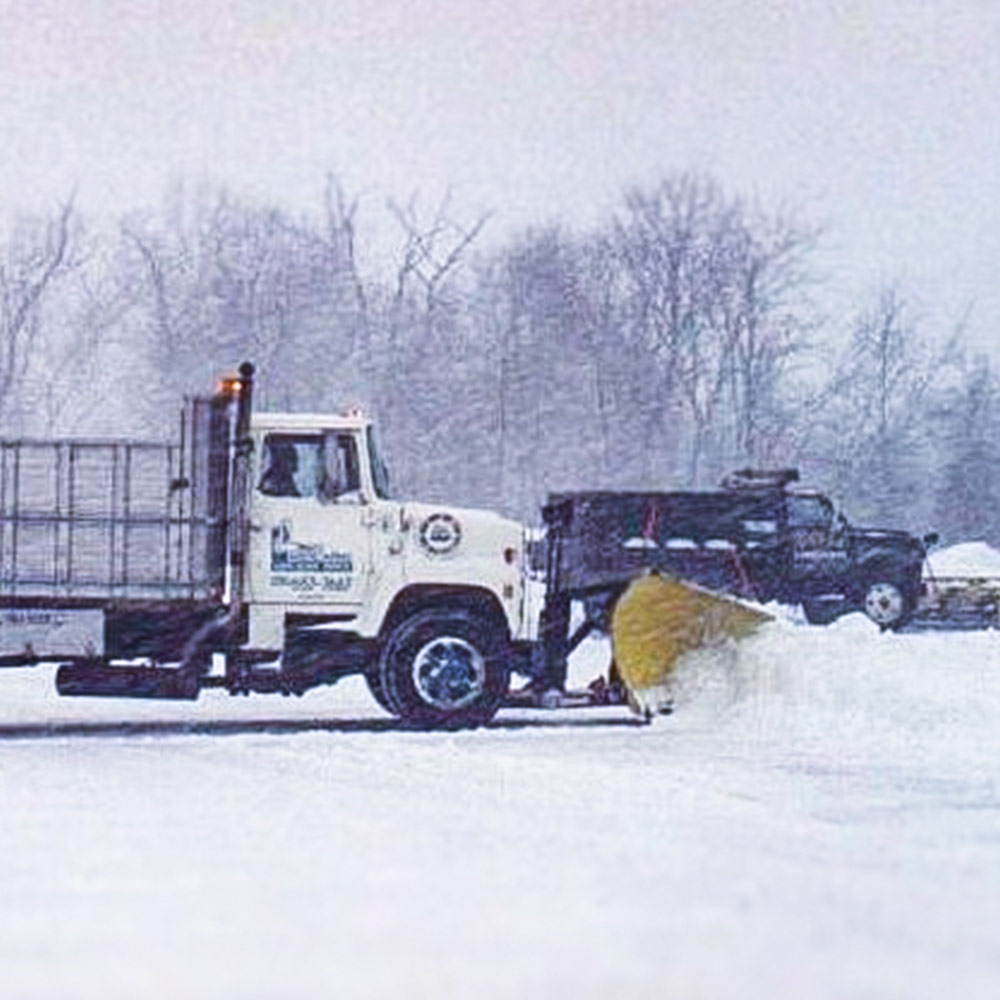
We build snow routes geographically so trucks move between nearby properties instead of crossing the county. Consequently, a property that commits in September gets a sensible place on a route. A property that signs in December gets whatever capacity remains. Boards and owners set winter budgets in the fall for the same reason.
The National Weather Service office in Mount Holly covers our region. Its winter outlooks land well before most managers finish a bid cycle. Meanwhile SIMA publishes industry guidance on site measurement and service documentation, which is worth reading before you write a packet. On the public side, PennDOT and township crews handle the roads. Your responsibility starts at the curb line.
The Lingo Takeaway
Snow removal bids in Bucks County get easier to judge when you do the measuring first. Send a site plan and state your triggers. Ask about stacking room and hauling, then require the same line items from everybody. After that, the spread between proposals stops being a mystery and starts being information.
We are straight about one thing up front, because plenty of bids are not. We do not run an emergency hotline and we do not guarantee an emergency response window. Contracted properties run on the dispatch schedule their trigger depth and priority tier establish. Our office answers at (215) 343-7700 Monday through Friday, 8:00 AM to 4:00 PM.
Common questions
How many snow removal bids should I collect?
Three is plenty when they price identical scope. Ten snow removal bids on a vague packet tell you less than two bids on a measured one.
When should snow removal bids in Bucks County go out?
Late August through September works best, because routes fill as contractors commit their equipment and drivers for the season.
Should the parking lot and the walkways share one trigger depth?
Usually not. We typically set walkways at half an inch for liability reasons. The lot goes to an inch and a half for cost efficiency.
Is a seasonal price or per-event billing the better ask?
A seasonal contract fixes your winter budget regardless of snowfall. Per-event billing costs less in a light winter and more in a heavy one.
What if my lot has no room to stack snow?
Then hauling belongs in the bid as its own line item. We load and haul excess snow off site when a lot runs out of room.
By town
We price and route commercial snow contracts separately from grounds maintenance. The town pages below cover what we run into locally.
- Commercial snow removal in Doylestown, PA
- Snow and ice management in Warrington, PA
- Commercial snow removal in Chalfont, PA
- Snow and ice management in Newtown, PA
- Commercial snow removal in Buckingham, PA
We also work in New Britain, Warminster, Perkasie, Sellersville, Hatfield, Montgomeryville, Horsham, Lansdale and the surrounding townships. Crews and equipment run out of 1170 Timber Lane in Chalfont. That keeps drive times short across central and lower Bucks County.
Ready to collect snow removal bids in Bucks County for your property? Call (215) 343-7700 Monday through Friday or use our contact page. We will walk the site, measure it and quote against the same line items you sent everybody else.