
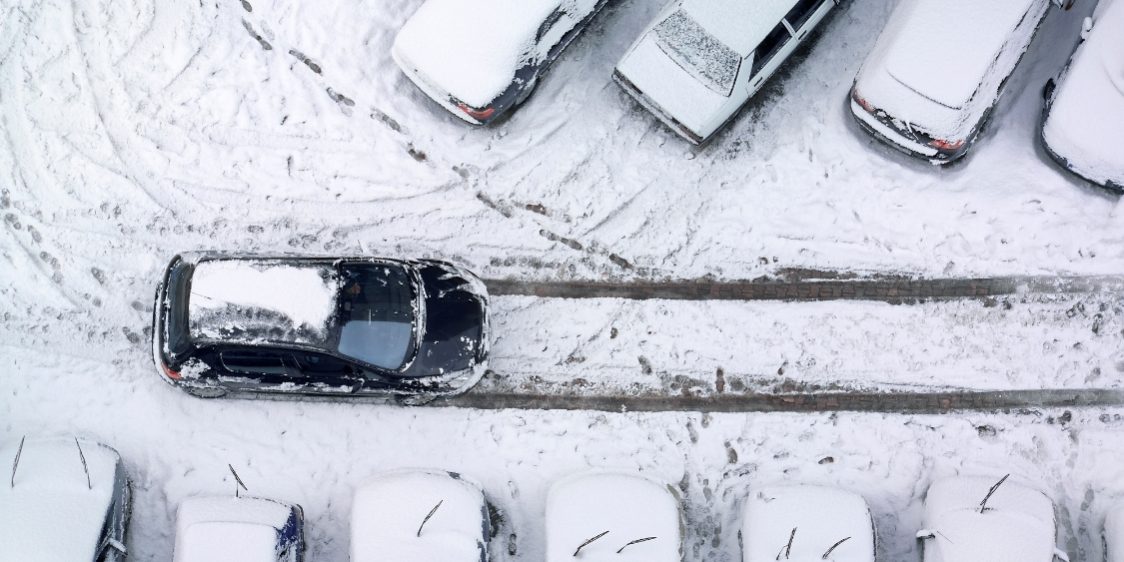
Snow plow damage in Bucks County rarely announces itself in January. It turns up in April. The piles are gone, somebody finally walks the lot, and the evidence is everywhere. A curb corner is sheared flat. The sod along the entrance island is torn in a neat arc. Two sprinkler heads sit lower than they did in November, and nobody can say which storm did it.
We plow and treat commercial properties here all winter. Then we mow, feed and rebuild those same properties in the spring. So the scrape marks and the repair bills land on one desk. That is a useful way to learn where a blade goes wrong.
Snow Plow Damage in Bucks County Starts Where the Pavement Ends
Almost every mark on a commercial site happens in the last two feet of pavement. That edge is where the operator has the least information. At three in the morning with six inches down, a curb line and a sod shoulder look like the same white stripe.
Local ground softens that edge further. Builder subsoil across New Britain, Warrington and Buckingham is compacted clay. Water sits at the lot edge instead of draining through. Then the edge heaves in a hard freeze and slumps in a thaw. A curb that sat flush in October can sit an inch proud in February. It is now directly in the path of a steel blade. The National Weather Service office in Mount Holly covers Bucks County, and those swing cycles are why the same corner gets clipped two winters running.
Curb Corners, Wheel Stops and Ramp Panels
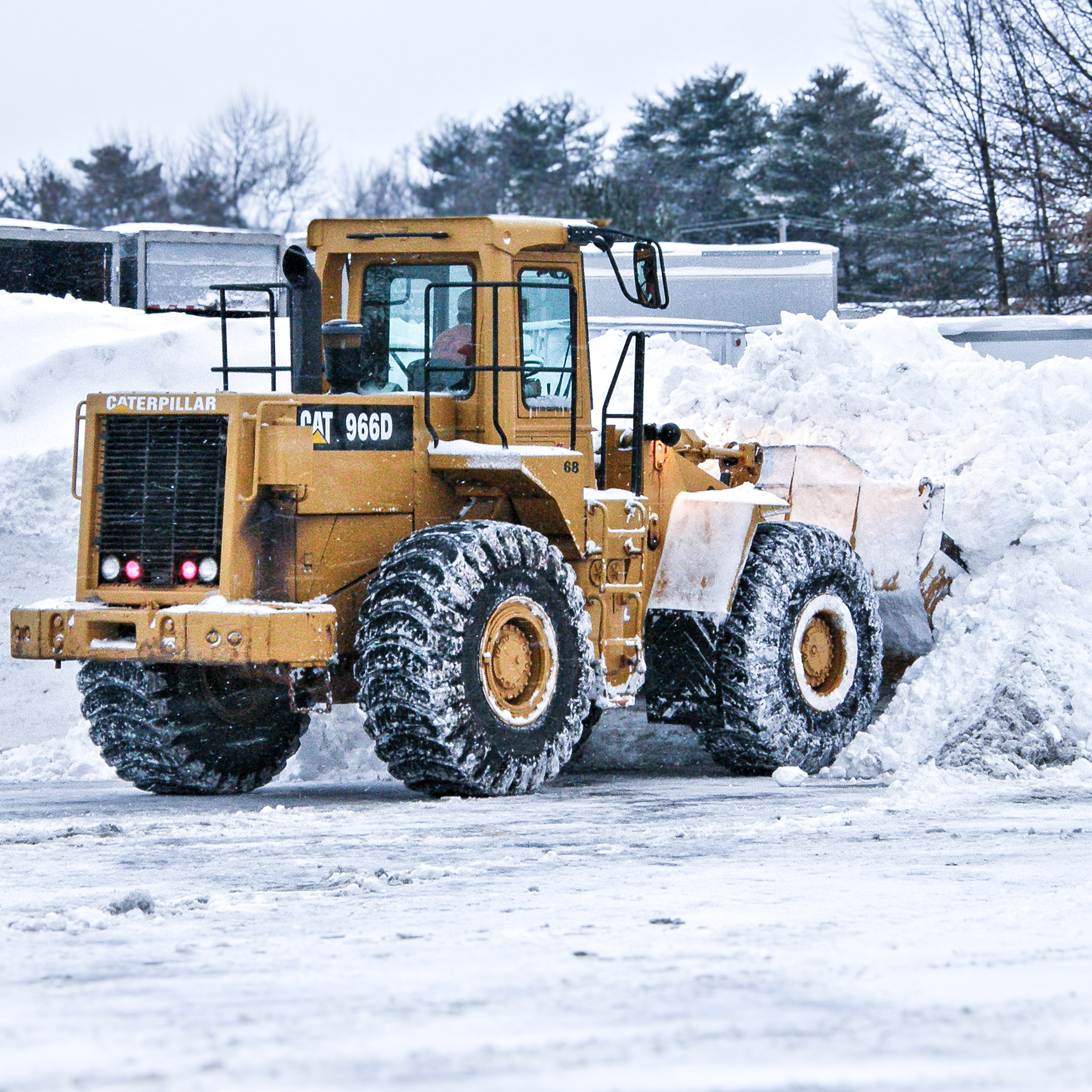
Hard edges take the first hit. Most snow plow damage in Bucks County starts right there. Cast curb corners at parking islands are the usual casualty. An operator squares the corner with a loader before the tires tell him where he is. Precast wheel stops are worse. They freeze to the pavement, a blade catches one end, and it breaks into three pieces. Those pieces then travel around the lot all season.
ADA ramps deserve their own note. The detectable warning panels are glued and pinned into a shallow recess. A blade corner lifts one edge. Water gets under the panel, and the next freeze pops it loose. Older borough streetscapes in Doylestown and Newtown raise the odds. Walks there sit tight against the curb with no shoulder to absorb a mistake. Repairs are cheap in April. They are not cheap after an inspection.
Sprinkler Heads Spend Winter Under the Pile
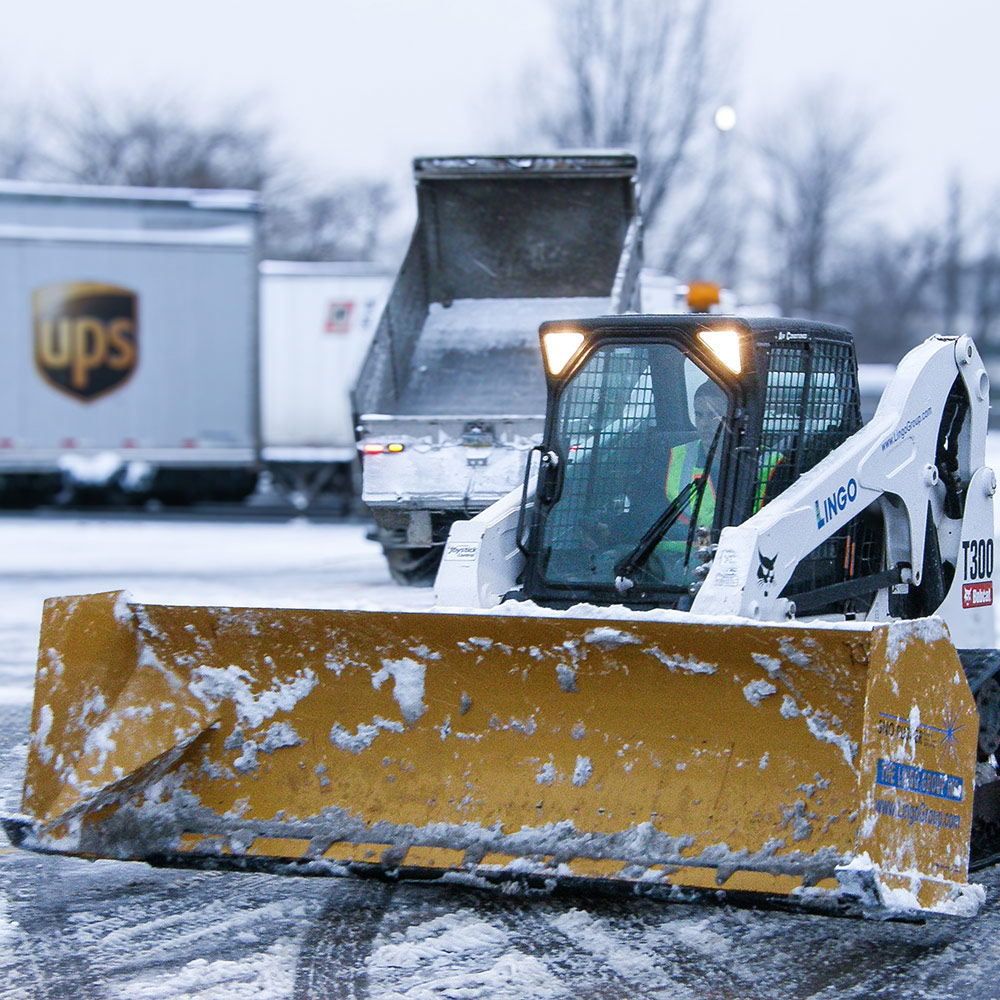
Irrigation is the quietest casualty of all. Heads within about 18 inches of pavement get sheared by a blade shoe. Others get crushed under a tracked machine. Valve boxes crack when a loader stacks eight feet of snow on the lid. None of it announces itself. You find it at spring startup, when a zone runs at half pressure and a geyser comes up through the mulch.
Timing helps here. A system that went into winter properly blown out holds up better under a pile. So sprinkler winterization and snow planning belong in the same conversation. Heads, valve boxes and backflow assemblies all sit on the irrigation and water features side of a property. Tell us where they are during the site walk. Then they stop being a surprise in May.
The Arc of Torn Sod Nobody Ordered
Turf tells the clearest story about snow plow damage in Bucks County. Mechanical damage leaves torn crowns and a scrape line in the soil. It usually shows as a curved band where a truck turned around. Salt burn looks different. It kills plants from the tip down and stops where the runoff stopped. Once you can tell those apart, you can separate a driver problem from a spreader problem in a minute.
Frozen turf is tougher than wet turf, though weight still compacts it. A loader that cuts the same corner every storm leaves a pan of hard clay. Seed alone never fixes that. Penn State Extension covers the wider picture of winter injury in turfgrasses and why spring recovery depends on February. Real repair means aeration, soil work and overseeding, which falls under turf management once the ground dries.
Pavers, Light Bases and the Sign at the Entrance
Entrances carry the most expensive materials on most sites. Paver aprons and bluestone landings sit where the shovel crew and the plow crew meet. Repeated scraping lifts units and washes out joint sand. A field that was flat in November starts rocking underfoot by March. Steps go first, since they get the heaviest hand with the shovel.
Lighting takes hits as well. Path fixtures and bollards vanish under a windrow, then take a direct pass. Low voltage runs sit shallow by design. So a bucket digging into a bed can part a cable, and nobody notices until a zone goes dark. Those fixtures sit under outdoor lighting and audio, while paver and wall work sits under hardscaping and masonry. Monument signs, bed walls and a head or two share one small patch of ground at the entrance. That is exactly where snow gets pushed, and snow plow damage in Bucks County gets expensive fastest at an entrance.
What the Site Walk Is Actually For
Preventing snow plow damage in Bucks County happens before the first flake. We walk the site, measure it and quote against what we find. That walk is where obstacles get written down. Staking and marking edges, heads and wheel stops before the season is standard practice across the industry. SIMA publishes best practices on how that work should be documented.
Pile placement is the other half. Snow stacked on a crown or over a bed sends meltwater straight through the root zone. A pile parked on a valve box is a slow crack. When a lot runs out of room, loading and hauling moves the problem off the property instead. Trigger depths matter too. A lot cleared at 1.5 inches sees fewer passes than one cleared at a trace, and every pass is another chance to catch a curb. Our snow management plans set those depths by surface before the season starts.
Photographs close the loop. Walk the lot in November and photograph the curb corners, ramp panels and paver fields. Date the file. Then walk it again in April with the same camera. That record settles most arguments before they become arguments.
By town
Every town here breaks a little differently, because lot edges and streetscapes are not built the same. Here is where we work:
- Commercial snow removal in Doylestown, PA, where borough walks sit tight to the curb and the 611 and 202 corridors carry heavy retail traffic
- Large lots and long entrance islands shape commercial snow removal in Warrington, PA, along with plenty of wheel stops
- Our Timber Lane yard sits minutes from commercial snow removal in Chalfont, PA
- Planned communities put walks, beds and parking within a few feet of each other during commercial snow removal in Newtown, PA
- Open frontage and long private drives give an operator no edge cues at all in commercial snow removal in Buckingham, PA
The Lingo Takeaway
Snow plow damage in Bucks County is a documentation problem before it is a driving problem. Three habits hold it down. First, mark and photograph the edges, heads and hard corners before the season opens. Second, decide where the piles go while the lot is still bare. Third, set trigger depths by surface, since fewer unnecessary passes mean fewer chances to clip a curb. Properties that do all three spend their spring budget on planting instead of concrete.
Common questions
Who pays for a curb a plow breaks?
That depends on the contract and on what either side can show. A documented pre-season walk usually answers it in a sentence. Without one, the discussion becomes two memories of a dark parking lot.
When should I look for snow plow damage in Bucks County?
Walk the property in early April, right after the last pile melts and before growth starts. Hard edges show up immediately. Irrigation waits for startup, so flag anything suspicious and check it again when the system charges.
Can plowing be done without touching the turf at all?
Not entirely, though the margin gets much wider with marked edges and a set pile plan. Operators work from what they can see. So anything that makes an edge visible at night lowers the risk.
Do you handle both the plowing and the spring repair?
Yes. We plow and treat properties through the winter. Then we mow, feed and build on the same sites the rest of the year. That overlap is usually how anyone connects a scrape line in the sod with a turn made in February.
Get the obstacles on paper before the first storm
Routes get built around properties that commit before the season. So the calendar matters as much as the plan. If you manage a retail center, medical office, industrial park or association property in Bucks County, call us at (215) 343-7700 during business hours. You can also use the contact page. We will walk the site, write down what can break and set the trigger depths while the pavement is still dry.