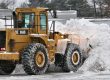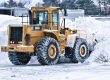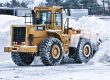

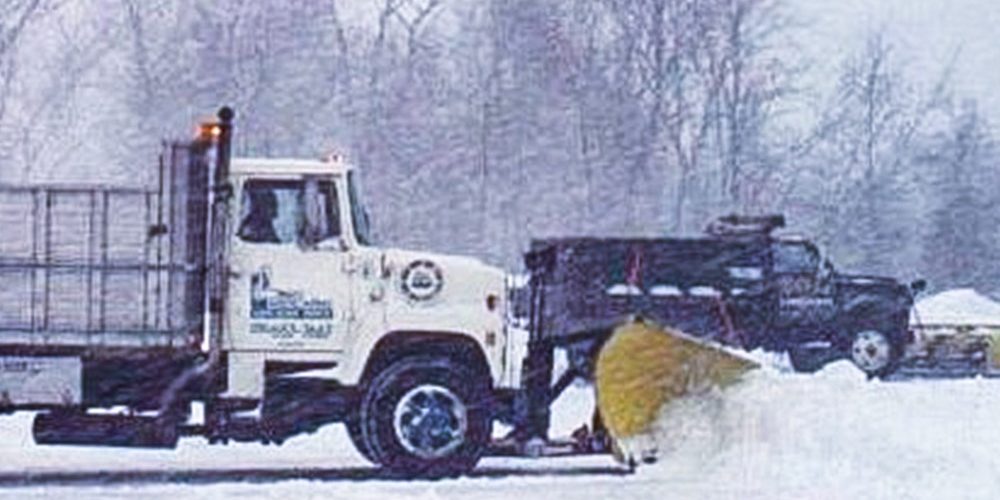
Private road snow plowing in Bucks County starts with a question most boards never ask. Who owns the street? If the community owns it instead of the township, then private road snow plowing Bucks County properties need becomes a line on your winter budget. It is not a public service. We have run equipment out of Timber Lane in Chalfont since 1982, and this detail catches new board members every year.
Plenty of neighborhoods in Warrington, Buckingham and New Britain have streets that look like township roads. They have curbs, storm inlets, street signs and mailbox clusters. But nobody ever dedicated them to the municipality. So no public truck carries them on a route. The plow passes the entrance sign and keeps going.
Where The Township Truck Turns Around
Every municipality keeps a list of the roads it maintains. That list is the plow route. Warwick Township, for example, publishes that it maintains roughly 60 miles of township roads. PennDOT covers the state routes running through those same towns. Newtown Township names its state roads directly, including the Newtown Bypass, Durham Road and Swamp Road.
Notice what both lists leave out. A street inside a condo community or a planned development belongs to the association that owns it. So the work falls to the board, and the board hires it out. That is why private road snow plowing in Bucks County shows up as its own contract line.
Boards sometimes ask the township to add the street anyway. Municipalities rarely agree without a formal dedication. Dedication means rebuilding the road to current municipal standards first. For most developments built in the 1980s and 1990s, the paving and drainage work alone ends the conversation.
The Order Trucks Actually Run In
Even public streets inside a development wait their turn. Warwick Township lists its sequence plainly. Snow emergency routes come first. Then streets with signalized or stop intersections, along with school bus routes. Residential development streets follow those. Commercial and industrial streets land last, and cul-de-sacs finish at the very end because they carry the least traffic. Newtown Township uses the same logic, moving from primary to arterial to secondary roads and saving cul-de-sacs for last.
Read that order again as a property manager. A public development street can sit untouched for hours after Easton Road is already wet pavement. A private street never enters the queue at all. So your contract is the only thing standing between residents and the storm.
Narrow Cartways And Nowhere To Stack
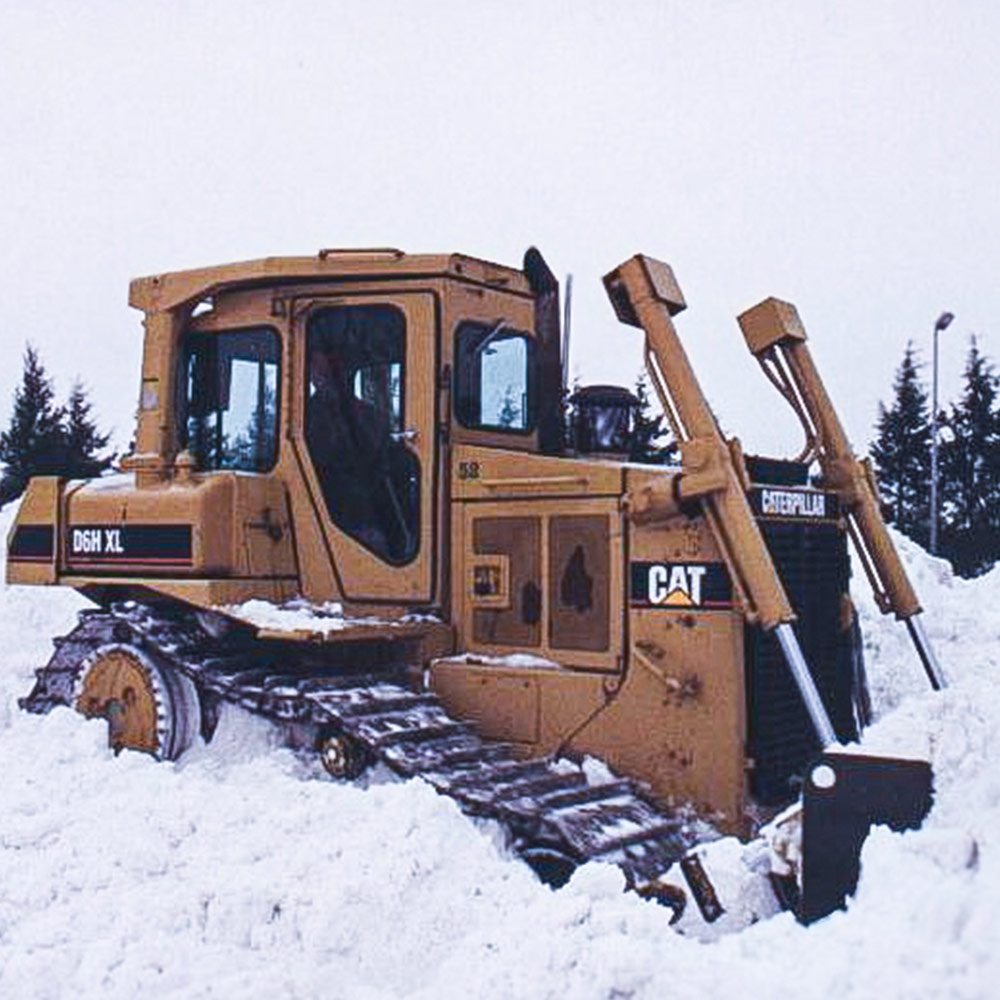
Private streets in Bucks County communities run narrower than township roads. Cars park along both sides overnight. Add a short cul-de-sac bulb, a bank of cluster mailboxes and a hydrant or two, and the usable width drops fast. A truck that clears a shopping center in four passes needs a different approach here.
Stacking room is the real constraint on private road snow plowing in Bucks County. On a parking lot, snow goes to an island or a back corner. On a private street, the only open ground is often the sidewalk, the hydrant pad or somebody’s front lawn. None of those work as a place to leave three feet of snow. So on tight sites we load the excess and haul it off the property. Our guide to snow hauling in Bucks County covers when that becomes necessary.
Picking A Depth For A Street, Not A Parking Lot
We build commercial contracts around trigger depths. A trigger depth is the accumulation that has to fall before crews roll. Our standard business tier sits at 1.5 to 2.0 inches and fits industrial warehouses and private office parks. High traffic sites run at 1.0 inch. Sidewalk specific work starts at 0.5 to 1.0 inch. Zero tolerance covers a trace of ice.
A private residential street usually lands in the middle. Residents leave for work between 6:00 and 7:30 in the morning. So a 2.0 inch trigger can mean cars sliding at the stop sign while the truck is still two communities away. Meanwhile the walkways and ADA ramps near a clubhouse or mailbox pad need a lower number for liability reasons. Most of our agreements therefore use a split trigger instead of one depth for the whole site. Our breakdown of snow removal trigger depth explains how we set those numbers.
What The Board Is Actually Signing
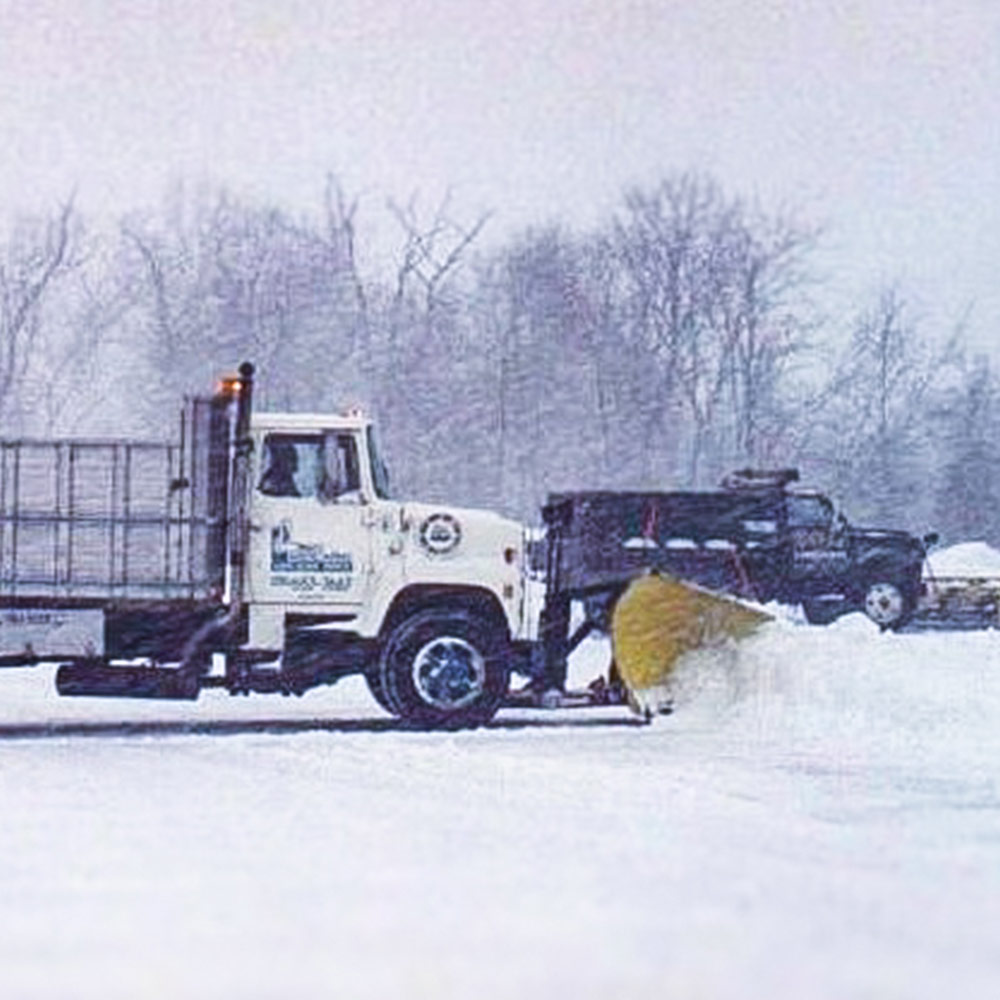
Three billing structures cover almost every agreement we write. Per event billing charges for each dispatch, so it costs less in a mild winter and more in a heavy one. A fixed seasonal contract costs the same no matter what falls. Boards working from an approved annual budget usually prefer that one. Time and materials sits in between.
Walkway footage prices separately from the street, because sidewalks, entryways and ramps take hand or machine work. We also inspect conditions through the season to catch refreeze early. One thing we say plainly: we do not run an emergency hotline, and we do not promise a guaranteed emergency response window. Your trigger depth and priority tier set the dispatch schedule. The office answers at (215) 343-7700 Monday through Friday. For the association side of this, read our article on HOA and condo snow removal in Bucks County.
Walking The Route Before December
A site walk decides good private road snow plowing in Bucks County, not a phone call during the storm. We measure the cartway and count the linear feet of walkway. Then we pick stacking areas with the board. We flag the hydrants, inlets and mailbox clusters that need clearance. After that we settle who clears the street versus the private driveways and front walks. That line causes more complaints than anything else all winter.
Residents get one request from us, and it matters. Park in the driveway, not along the cartway. One car left on a narrow private street forces the truck to leave a windrow. Overnight that windrow freezes into a ridge nobody can drive over. Townships ask their residents for the same thing, for the same reason.
The Lingo Takeaway
If your community owns its streets, nobody is coming unless you hire them. So treat private road snow plowing in Bucks County like the roof or the pool. It is a known annual cost, planned before the season, with the details written down. Set a split trigger. Agree on stacking areas while the ground is still bare. Decide in advance who handles walkways. Boards that sort this out in October answer almost no complaints in February.
Common Questions
These are the questions boards ask us most often about private road snow plowing in Bucks County.
Will the township plow our private street if we ask?
Almost certainly not. Municipalities plow the roads on their maintenance lists. Adding a street generally requires a formal dedication, which means bringing the road up to current municipal standards first.
How long can a public development street wait during a storm?
Longer than most residents expect. Warwick Township puts residential development streets third in its sequence, behind snow emergency routes and school bus routes. Cul-de-sacs come last.
Can one contract cover the street and the sidewalks?
Yes, and it usually should. We price the cartway and the walkway footage separately. Then we run them on different trigger depths so the walks clear sooner than the pavement.
Do you offer overnight emergency response?
No. We do not operate an emergency hotline or guarantee an emergency window. Service follows the trigger depth and priority tier in your agreement, and the office answers during business hours.
What happens when the street runs out of room for snow?
We load the snow and haul it off site. That comes up often on narrow private streets after a run of storms. We plan the haul route during the pre-season walk instead of improvising at 4:00 in the morning.
Private Road Snow Plowing Bucks County, By Town
Our commercial snow and ice routes run from Chalfont across central and lower Bucks County. These pages cover what we see in each area:
- Commercial snow removal in Chalfont, PA
- Commercial snow removal in Doylestown, PA
- Commercial snow removal in Warrington, PA
- Commercial snow removal in Newtown, PA
- Commercial snow removal in Buckingham, PA
Worth reading before your next board meeting: Warwick Township’s snow removal priorities, Newtown Township’s snow removal procedures and PennDOT’s winter operations overview.
Line Up Your Street Before The First Push
Routes fill before the season starts. Boards that commit early get the walk, the measurements and the stacking plan done while the pavement is still dry. Call the office at (215) 343-7700 Monday through Friday, 8:00 AM to 4:00 PM, or reach us through our contact page. Tell us the community and the street, and we will tell you honestly whether we are the right fit. You can also see what we include in our commercial snow management services.