
Hotel snow removal in Bucks County has one problem almost no other commercial property has. The lot is already full when the plow gets there. Guests parked at nine the night before, and most of those cars are not moving again until checkout. So a crew arrives to a site where maybe a third of the pavement is actually reachable.
That single fact changes the plan. A shopping center empties out overnight and hands a crew open blacktop. A hotel never empties. Add the arrivals that keep coming through a storm, the shuttle van and the six o’clock breakfast delivery, and hotel snow removal in Bucks County becomes work done in pieces while people are using the site.
Where the Guest Cars Sit at Five in the Morning
Start with the lot as it looks overnight, not as the site plan draws it. Hotels along Route 611 above Doylestown and off Street Road in Warminster fill the rows nearest the entrance first. The back rows usually stay open. Those open rows are where snow can go, while the full rows need hand work and a second pass later in the day.
A sequence that works on an occupied lot tends to run like this:
- Entrance apron off the road, so arriving cars and the shuttle can turn in without stopping on the highway.
- Canopy, main walk and ADA ramp, because that is where falls happen and where claims start.
- Drive lane from the entrance to the lobby door, cleared full width instead of one pass.
- Empty back rows, which also serve as the stacking area for the storm.
- Occupied rows last, cleaned up in sections as cars leave through the morning.
Night staff can help more than most managers expect. A note under doors at ten, asking guests to shift into two marked rows, gives a crew real room by five.
Hotel Snow Removal in Bucks County and the Front Door Clock
Breakfast starts early and checkout lands around eleven. Hotel snow removal in Bucks County gets judged against those two moments rather than against the storm total. Luggage cart wheels do not roll over packed slush, so the path from the canopy to the first row of spaces matters more than the far corner of the lot.
Front desk and housekeeping shifts also change before dawn. Those cars need somewhere to land. Opening a few staff spaces near the service door early keeps your own people out of the guest rows a crew just finished.
Half the Lot Full and Nowhere to Push
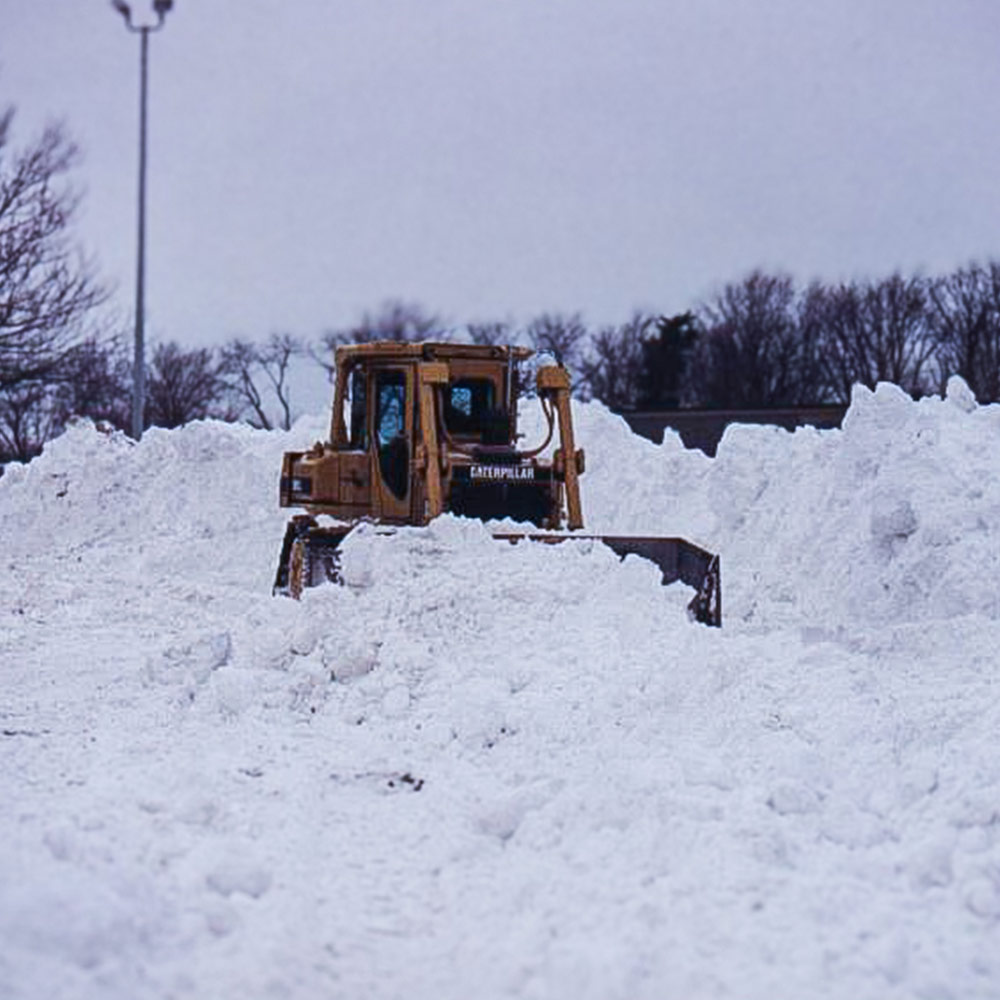
Stacking room decides how a hotel winter goes, and it shapes hotel snow removal in Bucks County more than horsepower does. One storm on a hundred space lot is easy. Then three storms land inside ten days, the back rows disappear, and the pile starts eating spaces you sell every night. Occupancy does not drop because the snow kept coming.
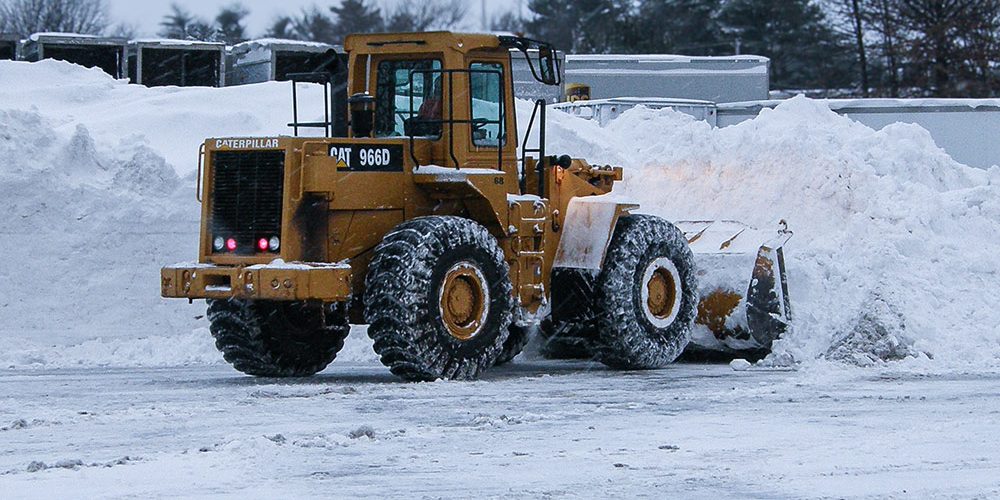
The Lingo Group loads and hauls excess snow off site for that reason. Hauling costs more than pushing, since it takes a loader and trucks instead of a plow. Still, a sold out Saturday with twenty spaces buried costs more than the haul does.
Pick the pile spot in October. Put it downhill of the building and away from the canopy. Never put it in front of a ground floor window, against the pool fence, or where meltwater crosses a walk. Water runs where the snow sits, so a pile above your entrance becomes an ice sheet by Tuesday.
Canopy, Curb Cut and Shuttle Lane
Hotels have three spots that refreeze after everything else has dried. The drip line under the entrance canopy comes first, because roof melt runs off warm metal onto cold concrete. The curb cut at the shuttle lane is second, since tires polish it smooth all day. Stair treads and the pool deck gate come third.
Timing beats volume on all three. Treating pavement before a storm keeps that first layer from bonding, and treating it again afterward handles what the plow leaves behind. Lingo’s commercial snow and ice management service covers de-icing and anti-icing treatments along with walkway service for sidewalks and ramps.
Product choice matters once the air gets cold. Rock salt slows down badly near twenty degrees, a limit Penn State Extension explains plainly. Overnight lows from the National Weather Service office in Mount Holly tell you which nights those three spots will glaze over. A cold snap calls for a different material instead of a heavier spread.
Two Numbers in the Contract Instead of One
Trigger depth is the accumulation that dispatches a crew. Lingo builds commercial contracts around set tiers, and hotels usually need two of them rather than one number for the whole site. High traffic sits at one inch, which fits a lobby entrance and the main drive lane. Sidewalk specific sits at half an inch to one inch for walks and ADA ramps.
Running the lot and the walk at one depth either overspends on pavement or leaves your front door unsafe. Split the two, and you stop paying for pushes nobody needed.
Price follows site conditions a crew can measure, never a number quoted over the phone. Cleared square footage, stacking room, walkway linear footage and billing structure all move it. Per event billing costs less in a mild winter and more in a heavy one. A seasonal contract holds steady either way, so managers running several properties tend to pick it.
What Overnight Coverage Really Buys
Here is the part worth being straight about, because plenty of contractors are not. The Lingo Group does not run an emergency snow hotline and does not promise an emergency response window. Contracted properties get service on the schedule their trigger depth and priority tier set. Calls come in at (215) 343-7700 during business hours, Monday through Friday.
So the way to protect a storm night is to set the priority tier at the site walk, before anything gets signed. Tell us the lot has to be open by six, and we will say honestly whether we can meet that at your address. Industry groups such as SIMA give the same advice about settling service levels in writing ahead of the season.
The Lingo Takeaway
A hotel lot stays full, stays busy, and gets crossed on foot by people wheeling suitcases. That combination rewards planning and punishes a one push contract. So clear the apron, the canopy and the ramp first, then work the empty rows and come back for the occupied ones. Choose the pile spot now, split your trigger depths, and settle the priority tier at the site walk. Good hotel snow removal in Bucks County is mostly decided in October.
Common questions
How do you plow a lot that stays full all night?
In sections, with a return visit written into the contract. Hotel snow removal in Bucks County usually runs as an early push on open pavement, then a cleanup pass once checkout frees up rows. Asking guests to consolidate into marked rows the night before helps a great deal.
What should be cleared first at a hotel?
The entrance apron, the canopy area, the main walk and the ADA ramp. Those are the surfaces every guest touches and the ones that generate claims. The far rows can wait an hour without anyone noticing.
Does the pile have to be hauled away?
Only when the lot runs out of room, which happens on tight pads after back to back storms. Loading and hauling gets priced separately from plowing, since it needs a loader and trucks. Many hotels budget one haul per season and never use it.
Can you guarantee the lot is clear before breakfast?
Lingo does not promise an emergency window, and there is no storm hotline. What gets set instead is a trigger depth and a priority tier at the site walk. So the dispatch order is agreed before winter rather than argued about at four in the morning.
Is a seasonal contract better than per event billing?
A seasonal contract fixes your winter number, which helps when rooms are priced months ahead. Per event billing wins in a light winter and hurts in a heavy one. Bucks County sees enough storms that most multi property operators take the fixed figure.
By town
Routes get built around properties that commit before the season starts, and hotel snow removal in Bucks County follows those same routes out of the Chalfont yard. If your property sits in one of the towns below, the town page explains how that route runs.
- Commercial snow removal in Doylestown, PA
- Commercial snow removal in Warrington, PA
- Commercial snow removal in Chalfont, PA
- Commercial snow removal in Newtown, PA
- Commercial snow removal in Buckingham, PA
Hotels sitting inside a larger retail center fall under that center’s contract, so it helps to read how shopping center snow removal gets sequenced across tenants. Standalone properties carry their own walkway exposure, and sidewalk snow removal is where that exposure begins. Township rules add another clock, and Bucks County links out to each municipality so you can check yours.
Lingo works out of Chalfont, minutes from the Route 202 and Route 611 corridors where most of the county’s hotels sit. That proximity is the whole point of hotel snow removal in Bucks County handled on a route. Call (215) 343-7700 during business hours or use the contact page. We will walk your site, measure it, and set triggers that match how your front desk actually runs.