
Gravel lot snow removal in Bucks County starts with a measurement that never shows up in the contract: the half inch of air between the plow blade and the stone underneath it. Plow a stone lot the way you would plow asphalt and you end up moving the lot instead of the snow. By March the owner has a thin surface, a berm of gravel sitting in the turf, and a repair bill bigger than the plowing was.
Plenty of working properties around here sit on stone. Contractor yards off Route 611, church overflow lots in Buckingham and Plumstead, farm market parking, township park lots, equipment storage behind light industrial buildings in Hilltown and New Britain. All of them plow fine. They just do not plow the same.
Stone Moves and Asphalt Does Not
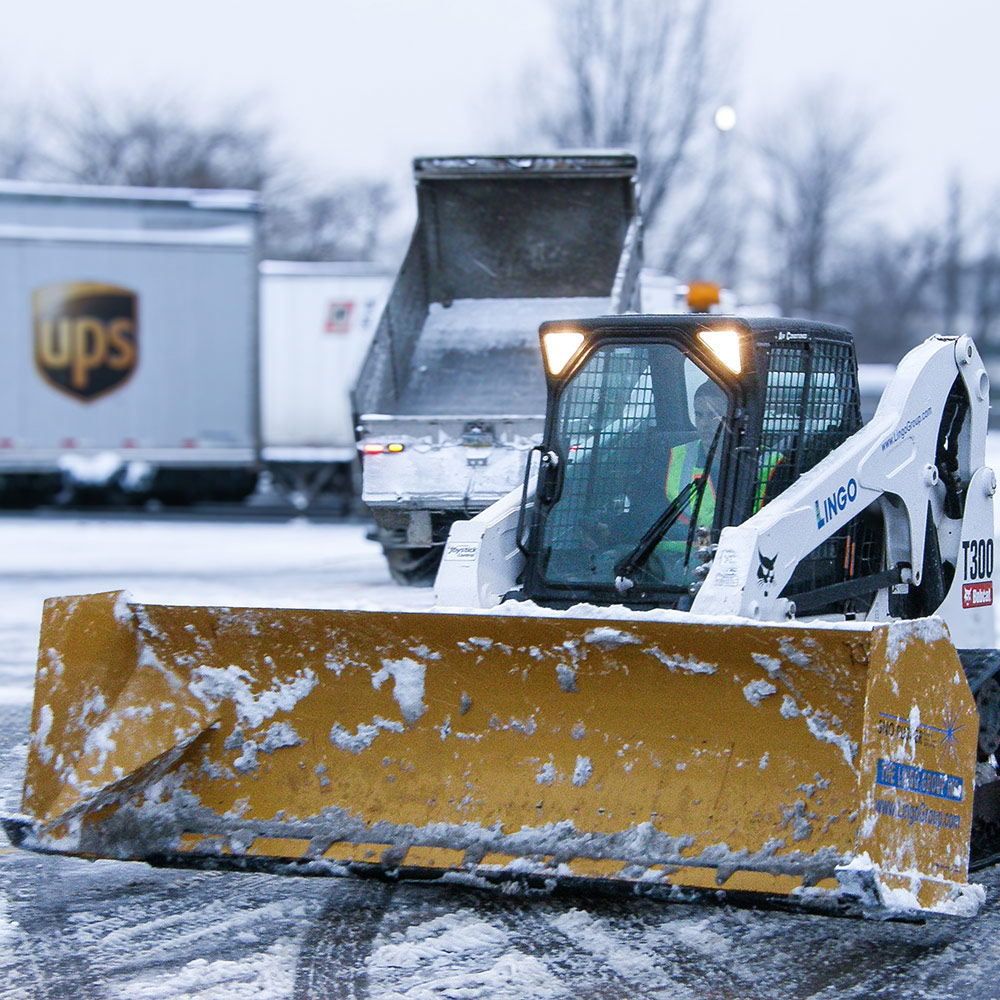
An asphalt lot is a fixed surface. Drop the blade, push, and the only thing that travels is snow. A gravel lot is loose material sitting on a compacted base, so the blade digs in unless something holds it up. That something is a pair of shoes or skids bolted to the moldboard and set to carry the cutting edge roughly half an inch off the stone.
Half an inch sounds like nothing. In practice it leaves a thin packed layer on the lot after every push, which is normal and perfectly safe. The alternative is a clean scrape down to bare stone that takes a chunk of the surface course along with it. Penn State’s Center for Dirt and Gravel Road Studies has spent years documenting how fast unbound stone surfaces shed material once they get disturbed, and winter work is one of the quicker ways to do it.
The First Hard Freeze Changes the Job
Timing matters more on stone than it does on pavement. Before the base freezes, a gravel lot is soft. Tires rut it, the blade grabs it, and whatever gets pushed comes up with stone mixed in. Once the base locks up, usually after a few consecutive nights in the low twenties, the lot behaves almost like pavement and crews can run tighter to the surface.
Bucks County rarely hands you one long cold stretch. The National Weather Service office in Mount Holly covers our forecast zone, and a normal winter here swings through freeze and thaw over and over. So the same lot can be rock hard on Tuesday and soft by Thursday afternoon. Blade height gets adjusted storm to storm rather than set once in November and forgotten.
Gravel Lot Snow Removal in Bucks County Runs on a Different Trigger
We build commercial contracts around four trigger depths. Zero tolerance covers a trace up to 0.01 inches of ice for hospitals and 24/7 retail. High traffic sits at 1.0 inch for shopping centers, banks and medical offices. Standard business runs 1.5 to 2.0 inches for industrial warehouses and private office parks. Sidewalk specific is 0.5 to 1.0 inch, since walkways and ADA ramps carry most of the liability.
Stone lots usually belong at the top of that lot range. Every push costs a little surface, so dispatching at one inch when the property could live with two adds a dozen or more passes across a season and a measurably thinner lot by April. Walkways stay where they are, though, because concrete gives nothing back to the blade. You can see how the rest of the contract gets built on our commercial snow management page, and the Snow and Ice Management Association publishes solid guidance on documenting triggers and service records.
Salt Behaves Differently on a Stone Surface
Gravel drains, which is half the reason people choose it, and that changes how de-icing works. Granular salt drops into the voids between stones instead of staying up top where it can do something, so you spend more product for less melt. Liquid brine laid down before a storm does better, because it coats what it lands on and keeps that first layer from bonding.
There is a traction argument too. A well graded stone lot gives tires something to bite even with packed snow across it, which blacktop never does. Many stone properties need less chemistry than their owners expect. Ice management covers de-icing and anti-icing either way, and we go further on product choice in our piece on de-icing services in Bucks County.
What the Lot Looks Like in March
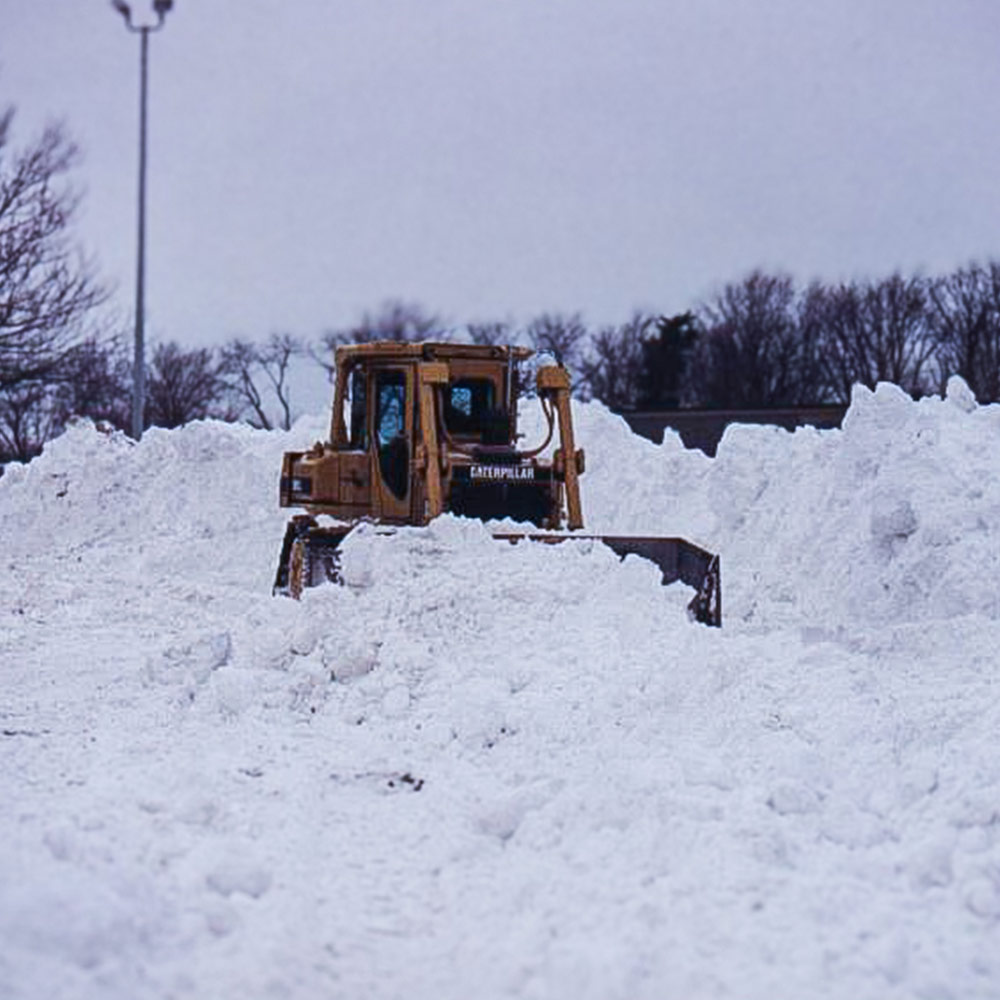
Every push throws a little stone toward the edges. Across a season that turns into a gravel berm in the grass, stone in the mulch beds, and low spots where the lot used to sit level. Add the usual winter casualties and there is a spring punch list waiting before anything greens up. Our write-up on snow plow damage in Bucks County covers the rest of that list.
The fix is a regrade. Pull the displaced stone back in, level the lot, then top dress anywhere the base is showing through. Properties that budget for it in the fall come out ahead of properties that discover it in April. Edges often need turf repair as well, since buried stone kills grass and chews up the first mow of the year. Gravel lot snow removal in Bucks County is a winter job with a spring bill attached, and the two belong in the same budget.
The Lingo Takeaway
A stone lot is a maintainable surface, not a liability. Set the blade high, accept a packed layer, push at a higher trigger than you would on asphalt, and put money aside for a spring regrade. Handle those four and a gravel lot runs cheaper through a winter than the pavement next door. Ignore them and you are effectively repaving in stone every couple of years.
Our yard sits on Timber Lane in Chalfont, close to the central Bucks commercial corridors. We walk every property before quoting, measure the cleared square footage, and set the lot and the walkways on separate triggers. If the surface is stone, say so during the walk. It changes the setup, and it changes the number.
Common questions
Can a gravel parking lot be plowed at all?
Yes. It needs shoes or skids on the blade, a slightly higher trigger depth, and an understanding that a thin packed layer stays on the lot between storms.
Will plowing ruin my stone lot?
Not with the blade set correctly. Damage comes from scraping down to bare stone, working a soft unfrozen base, and never putting the displaced material back where it belongs.
How much stone comes off in a season?
It depends on storm count, blade setup and how often the lot gets pushed. A regrade and a top dress in spring costs less than guessing at it.
Do you salt gravel lots?
Ice management is part of our commercial contracts. Stone surfaces usually take less product than paved ones, and pre-treatment does more good than a heavy granular application after the fact.
Is there 24/7 emergency coverage for a stone lot?
No. We do not run an emergency hotline or guarantee an emergency response window. Contracted properties get serviced on the schedule their trigger depth and priority tier set, and the office is reachable at (215) 343-7700 Monday through Friday.
By town
Gravel lot snow removal in Bucks County gets routed with the rest of the commercial work, and routes are built before the season starts. So a stone property is worth flagging early. That way the blade setup is right on the first storm instead of the third.
- Commercial snow removal in Doylestown, PA
- Commercial snow removal in Warrington, PA
- Commercial snow removal in Chalfont, PA
- Commercial snow removal in Buckingham, PA
- Commercial snow removal in Newtown, PA
If you manage a stone lot anywhere in central or lower Bucks County, call the office at (215) 343-7700 or use the contact page, and we will walk the property before the first push of the season.