
Snow Hauling in Bucks County, PA: When the Lot Runs Out of Room
September 24, 2026
Snow hauling in Bucks County, PA is the line nobody budgets in October and everybody asks about in February. A plow clears a lot quickly, but the snow never leaves the property. It moves to the edges instead. After the third storm those edges are gone. Then you are down two dozen parking spaces, the fire lane narrows, and meltwater runs back across the pavement every afternoon.
We have handled commercial snow and ice work across Bucks County for decades. Our clients include property managers, retail centers, medical offices, industrial parks and HOAs. Loading and hauling is the piece most managers learn about the hard way. So here is what the work involves, which sites need it, and how to price it early.
What snow hauling in Bucks County, PA actually involves
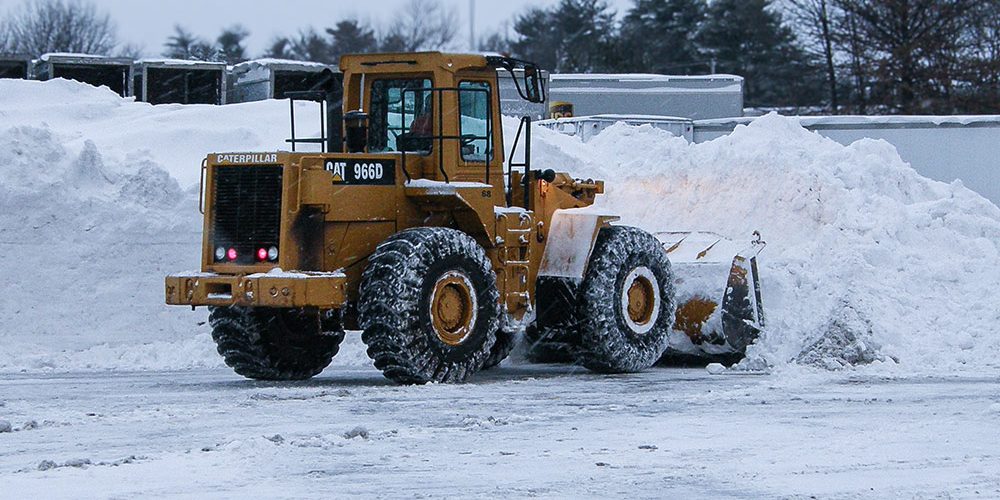
Plowing relocates snow. Hauling removes it. On our service list the work is snow loading and hauling. When a lot runs out of stacking room, we pull the excess off the property so the site stays usable. You can see where it sits inside the full scope on our snow and ice management page.
The trigger for hauling is not a depth. It is space. A campus with a back corner and a strip of unused lawn can absorb a whole winter of pushes. A tight retail pad with parking on all four sides cannot absorb much at all. That is also why we walk and measure a property before quoting it, rather than pricing over the phone.
Three storms in, the arithmetic turns
One six inch storm rarely forces the question. Two storms a week apart usually do, because the first pile never fully melted. Bucks County sits close to the freezing line for much of the winter. So piles here shrink, glaze over, then get taller again instead of disappearing. The National Weather Service office in Mount Holly tracks that pattern for our area.
Then the cost shows up in places that have nothing to do with plowing. A medical office off Easton Road loses the spaces closest to the door, which are the ones patients need. A shopping center along Route 611 in Warrington loses its end caps and its cart corrals. An industrial park near Route 309 in Hatfield loses truck turning radius at the dock. That stops freight, not shoppers. Meanwhile the pile keeps sending water across the lot each afternoon.
The pile is a drainage decision
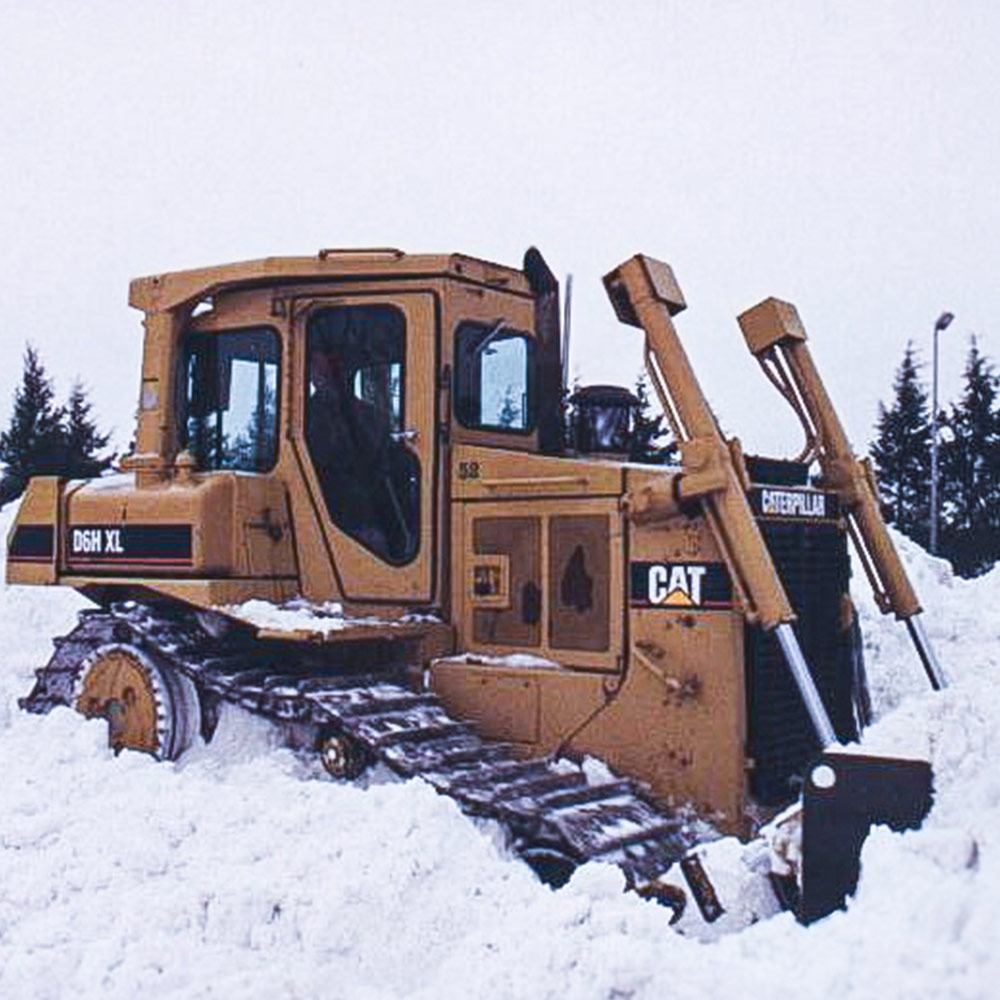
Where snow gets stacked decides what freezes later, and it decides where the melt goes. Pile uphill of a walkway and the runoff crosses that walk every warm afternoon, then locks up after dark. Pile over a storm inlet and the water has nowhere to go at all. Neither problem is visible during the storm. Both are visible at 7 pm on a clear night.
Plowed snow also carries everything the lot collected, including salt, sand, grit and oil. That is worth thinking about before a pile lands beside a planting bed or a basin. Penn State Extension covers the water quality side of winter materials in its guidance on watershed friendly deicing. Where a pile would drain through beds or turf, hauling it out beats replacing plants in April.
Counting spaces before you sign anything
You can estimate your own exposure in a September walk around. Start with the corners and islands where snow normally goes. Then ask what happens when a second push lands on top. Look at these first:
- Parking count you can afford to lose, and which spaces they are
- Fire lanes and drive aisle widths once piles encroach from both sides
- ADA spaces and access aisles, which cannot be a stacking zone at all
- Storm inlets, basins and swales inside the paved area
- Sight lines at exits onto a state road or a busy township road
- Dock aprons and truck turning space on industrial sites
Those answers belong in the contract as a stacking plan and a hauling threshold. The Snow and Ice Management Association publishes procurement standards for exactly this kind of detail. We agree with that approach. Write it down in the fall and nobody is improvising at 4 am.
Why it moves an invoice more than plowing does
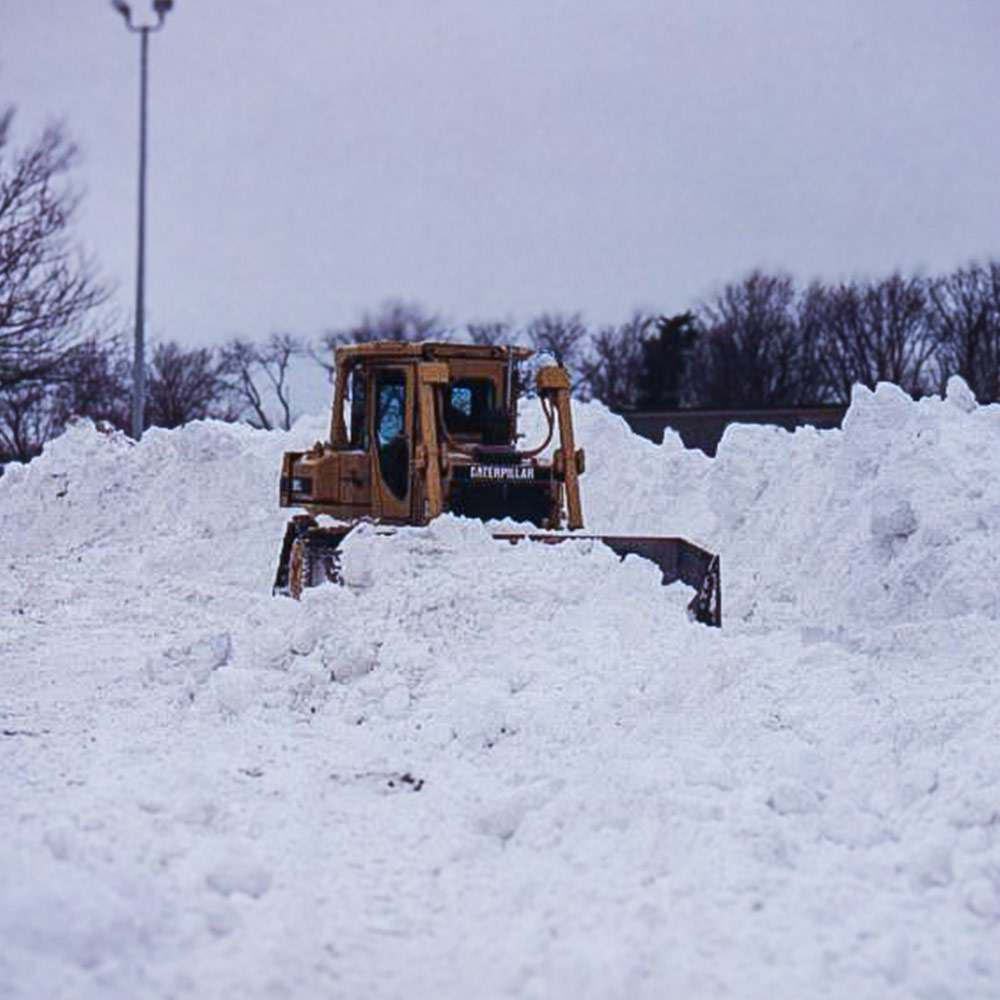
Site layout and stacking room are the largest cost escalator on any property we price. Plowing is one pass with one machine. Loading and hauling means filling trucks, driving them off site, and repeating the cycle until the lot is clear. So it gets priced against the property, never against a rate somebody quotes on the phone.
We measure the same variables that price the rest of a snow contract:
- Cleared square footage, meaning the paved area rather than the parcel
- Site layout and stacking room
- Trigger depth and service level
- Walkway linear footage
- Billing structure, either per event or a fixed seasonal contract
Per event billing costs less in a mild winter and more in a heavy one. A fixed seasonal contract caps the winter budget either way. That is why most multi property managers choose it. There is more in our breakdown of commercial snow removal pricing.
How it fits the rest of the winter scope
Hauling is never a standalone service. It sits behind the plowing, the walkway work and the ice management. Crews use it when the site runs out of room. Our snow management covers parking lots, driveways and access roads. Ice management adds de-icing and anti-icing treatments. Walkway service takes the sidewalks, entrances and ramps, and property inspections run through the season as conditions change.
Trigger depth still governs the dispatch. Zero tolerance sites move on a trace of ice, and high traffic sites at 1 inch. Standard business and industrial lots run 1.5 to 2 inches, walkways 0.5 to 1 inch. Most properties do better with a split trigger than one number for the whole site. Our guide to parking lot snow removal walks through the lot side of that.
One more thing, because contractors are vague about it. We do not run a 24/7 emergency hotline and we do not promise an emergency response window. Contracted properties are serviced on the dispatch schedule their trigger depth and priority tier set. Call the office during business hours, Monday through Friday, at (215) 343-7700.
The Lingo Takeaway
Snow hauling in Bucks County, PA is a space problem wearing a snow removal label. Your plow contractor can do everything right and you can still lose a quarter of the lot by mid January. So count the spaces you can give up. Then find piles that would drain the wrong way, and set a hauling threshold in writing. Sites that plan it in September spend less on it than sites calling for it during a storm.
Common questions
How do I know if my property needs hauling at all?
Walk it and look for stacking room outside the parking field. If every pile would sit on pavement you rent out or drive through, plan for hauling. Sites with a rear lawn edge or an unused corner often get through a normal winter without it.
Is hauling charged separately from plowing?
Yes, because it is separate work with separate equipment time. We quote it against your site after measuring the lot, the walks and the available stacking area. It can be written as a threshold in a seasonal agreement or billed when used.
When should we lock this in?
Late summer through early fall. Routes get built around properties that commit before the season, and a full route is full. Boards and facility managers are setting budgets now anyway, so this is the right window.
What happens to the snow once it leaves?
It goes to an approved off site location rather than onto a neighboring property or into a basin. Plowed snow carries salt and lot grit with it. So placement matters for hauled snow too.
Do you handle the walkways at the same time?
Yes. Walkway service, ice management and lot work go on one agreement with one point of contact. That way a plow crew is not windrowing a pile across a sidewalk another crew just finished.
By town
We price and route commercial snow and ice work town by town. See commercial snow removal in Doylestown, Warrington, Chalfont, Newtown and Buckingham. From our Chalfont base we also serve New Britain, Warminster, Horsham and Montgomeryville. Hatfield, Lansdale, Perkasie, Sellersville and the surrounding townships are on our routes too.
This winter’s routes are being built now
Do you manage a commercial property or a portfolio here? We will walk the site, measure the lot and the walks, and map where snow can go. Then you get a real scope on paper. Call the office at (215) 343-7700 or use our contact form. Then snow hauling in Bucks County, PA is a plan, not a phone call mid storm.