

Church parking lot snow removal Bucks County property committees plan for has one odd feature. The building sits quiet most of the week. Then two hundred people arrive inside the same twenty minutes on a Sunday morning. So the church parking lot snow removal Bucks County congregations need runs on that one window, not a weekday opening bell. If you serve on a property committee in Doylestown, Chalfont or Warrington, that single difference changes your trigger depth and your walkway plan.
We run commercial snow and ice work from our yard on Timber Lane in Chalfont. Usually the properties that go smoothly are the ones that got specific in October. Here is how we would think through a church lot before the first storm.
Sunday at nine is not Monday at seven
Most commercial routes in central Bucks County follow weekday mornings. Offices along Route 202, the medical buildings off Easton Road and the retail strips on Butler Avenue open by seven. A church needs the opposite. Its lot can sit untouched Friday and Saturday. Then it has to be fully usable before the first service.
Storms here rarely end on a convenient schedule. Say a Saturday evening system drops three inches and clears overnight. By four in the morning that lot has frozen hard. Meanwhile a storm still falling at eight on Sunday fills in the push you got at six. Both situations are normal in this county. So that is the first thing church parking lot snow removal Bucks County properties need written down.
We should also be straightforward about one thing, because plenty of contractors are not. There is no emergency hotline here. Nor do we guarantee an emergency response window. Contracted properties follow the dispatch schedule their trigger depth and priority tier establish. If your service times genuinely cannot move, say so during the site walk. Then we will tell you honestly whether we can meet that standard at your location.
The walk from the far corner of the lot
At a weekday office, almost everyone parks and walks thirty feet. At a church the overflow row fills and people cross the whole lot. Often in dress shoes. Often holding a child or a casserole dish. Many congregations also skew older, so canes and a slow pace across glazed asphalt are part of the picture.
Because of that, walkways deserve their own number. Our commercial contracts generally set pedestrian walkways and ADA ramps at a half inch to an inch. The lot itself sits higher for efficiency. Running both at one depth either overspends on open asphalt or leaves the sidewalk short. Walkways are where church parking lot snow removal Bucks County risk actually sits, since that is where a fall happens.
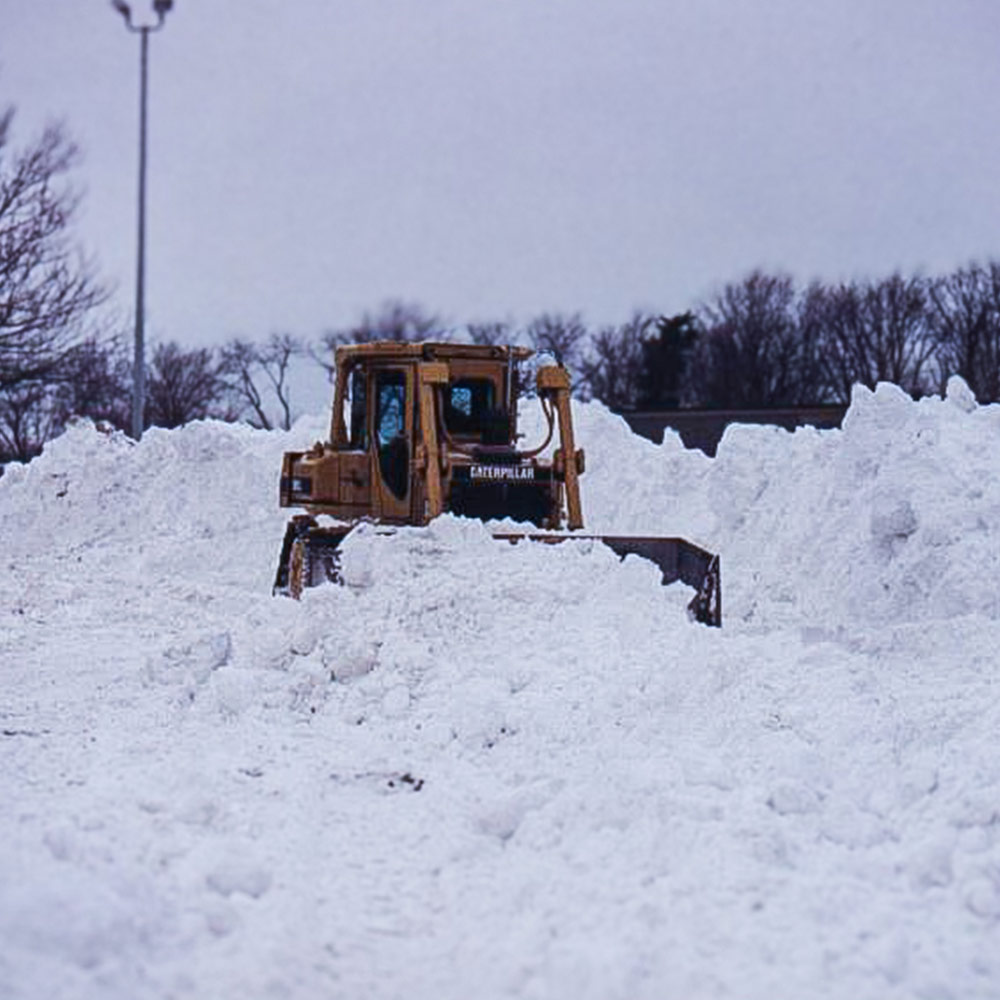
Walkway service is separate work from pushing the lot. Crews clear sidewalks, entry aprons and ramps by hand or with walk-behind equipment. That linear footage carries its own price. So count the real route people take, including the side door nobody mentions until January.
Picking a number that fits a three-day building
A trigger depth is the accumulation that has to fall before crews roll. We build commercial contracts around four levels. Zero tolerance starts at a trace of ice and suits hospitals, emergency rooms and round-the-clock retail. High traffic sits at one inch for shopping centers, banks and medical offices. Standard business runs an inch and a half to two inches for industrial warehouses and private office parks. Sidewalk specific covers a half inch to an inch for walkways and ramps.
Churches do not slot neatly into one level. A sanctuary used Sunday morning, Wednesday evening and for a Saturday funeral has busy days and quiet ones. Therefore good church parking lot snow removal Bucks County planning sets two numbers rather than one. A tighter walkway figure year round. A moderate figure for the lot. Plus a short list of service times that cannot move. Our piece on commercial snow removal trigger depth explains how those levels work.
Also decide now whether ice management rides along with plowing or stands apart. Anti-icing before a storm and de-icing after it are different jobs on different clocks. A cold rain that glazes a lot at daybreak beats four inches of powder for trouble. Our snow and ice management services page lists what each piece includes.
Nowhere to put it on a half acre of asphalt
Church lots here tend to be wide and flat, bordered by lawn, mature trees or a cemetery. That sounds easy. In practice the good stacking spots are often the ones you cannot use. A four-foot bank over a boxwood hedge or against a headstone creates a spring problem instead of a winter one.
Sight lines are the other catch. Plenty of churches sit on a two-lane township road with a tight exit, places like Old Dublin Pike or the smaller roads off Route 611. A pile near the driveway apron hides oncoming traffic. Drivers leaving after a service then have to guess. So we walk the property first and mark where piles go. When a lot runs out of room, we load and haul the excess off site.

Drainage deserves a look too. Where the melt runs Tuesday afternoon is where sheet ice forms Tuesday night. Usually the shaded north side of a stone building is the worst of it. Mark those spots in October.
Salt against stone steps and old mortar
Many church buildings here are genuinely old. Bluestone steps, brick walks and lime mortar that predates anyone on the committee. Rock salt is hard on all of it. It also punishes the beds and lawn edges where plow spray lands. Penn State Extension has a useful rundown on reducing deicer damage to plantings.
Product choice and placement both help. Treating before a storm with less material generally beats dumping more afterward. Keeping granular salt off historic stone and away from root zones protects what you cannot replace. We cover the trade-offs in our article on de-icing services in Bucks County. So if your building has masonry worth protecting, say so during the walk.
The member with the pickup and a plow blade
Almost every congregation has one. He is reliable, he is generous, and he has done it for eleven years. The trouble is not his work ethic. An unpaid volunteer plowing a property open to the public carries exposure the church may never have looked at. Usually there is also no record of when he cleared the lot or what he put down.
Church parking lot snow removal Bucks County insurers would recognize comes with a paper trail. A service log showing dispatch times, depths and materials is what answers a claim six months later. The Snow and Ice Management Association publishes industry standards covering how that recordkeeping should work. Mount Holly, the National Weather Service office for this region, also posts the winter weather criteria behind local forecasts.
The Lingo Takeaway
Church properties are not hard to service. They simply run on a different clock than the rest of a commercial route. That difference belongs in the contract, not in a phone call during the storm. So settle three things before December. The walkway number. The lot number. And which service times cannot move. After that, most of the winter takes care of itself.
Our Chalfont yard sits within a few miles of the main commercial corridors in central Bucks County. That proximity drives how fast any lot here gets cleared. Because we build routes around properties that commit before the season, October and November are when these conversations pay off.
Common questions about church parking lot snow removal Bucks County committees ask
How early should a church lot be clear for a Sunday service?
Work backward from your first arrival, not your first service. Volunteers, musicians and nursery staff usually show up ninety minutes early. So that is the hour the lot and walkways need to be usable.
What trigger depth suits church parking lot snow removal Bucks County properties?
Most committees set walkways at a half inch to an inch, with the lot between one and two inches. The right pairing depends on your grade, your shade and how far people walk.
Do you handle sidewalks and steps, or only the parking lot?
Walkway service is one of our commercial snow offerings and it covers sidewalks and walkways. We price it by linear footage, separately from the lot. So include it on purpose rather than by assumption.
Is a seasonal contract or per-event billing better for a church budget?
A seasonal contract fixes the number regardless of snowfall, which most committees on an annual budget prefer. Per-event billing costs less in a mild winter and more in a heavy one.
What happens when the lot has no room left for snow?
We load and haul the excess off the property. On tight sites that is the largest cost escalator in any snow contract. Better to plan for it than to meet it in February.
By town
We price and build commercial snow and ice routes separately from grounds maintenance. These pages cover the towns where we run them:
- Doylestown, PA commercial snow removal
- Chalfont, PA commercial snow removal
- Warrington, PA commercial snow removal
- Newtown, PA commercial snow removal
- Buckingham, PA commercial snow removal
If your committee is lining up church parking lot snow removal Bucks County winters demand, call us at (215) 343-7700 during business hours or use our contact page. We will walk the lot, measure the walkways and hand you a number for the board.