
Commercial snow removal in New Britain, PA runs on a short clock. That is good news for property owners here. Our yard sits on Timber Lane in Chalfont, so New Britain is about as close to home as our routes get. The borough is small and the corridors are familiar. The lots along them also hand us the same three problems every January.
New Britain Borough covers roughly 1.21 square miles and holds about 2,800 residents, so the commercial inventory is modest. You have offices and small retail along Butler Avenue, plus a few churches. Part of the Delaware Valley University campus sits inside the borough line, and so does Pine Run Elementary. Small does not mean simple, though. A tight lot with nowhere to stack snow costs more to clear than a wide open one. That comes up here constantly.
What 1.21 Square Miles Does To A Plow Route
Because the borough is compact, almost every commercial property sits within a few hundred feet of a residential street. That shapes the work more than people expect, and commercial snow removal in New Britain, PA has to plan around it. Crews cannot swing a loader through a lot entrance at 3:00 AM without waking a block. So the sequence matters. We push the lot first, then clear walks, then come back for stacking once the pile has somewhere to go.
The other effect is routing. New Britain shares a border with Chalfont, and Doylestown sits just up Butler Avenue. So one crew can cover all three in a single pass if the contracts allow it. That is why we price and route commercial snow contracts separately from grounds maintenance. A property that commits in October lands on a tight route. One that calls in during a storm does not.
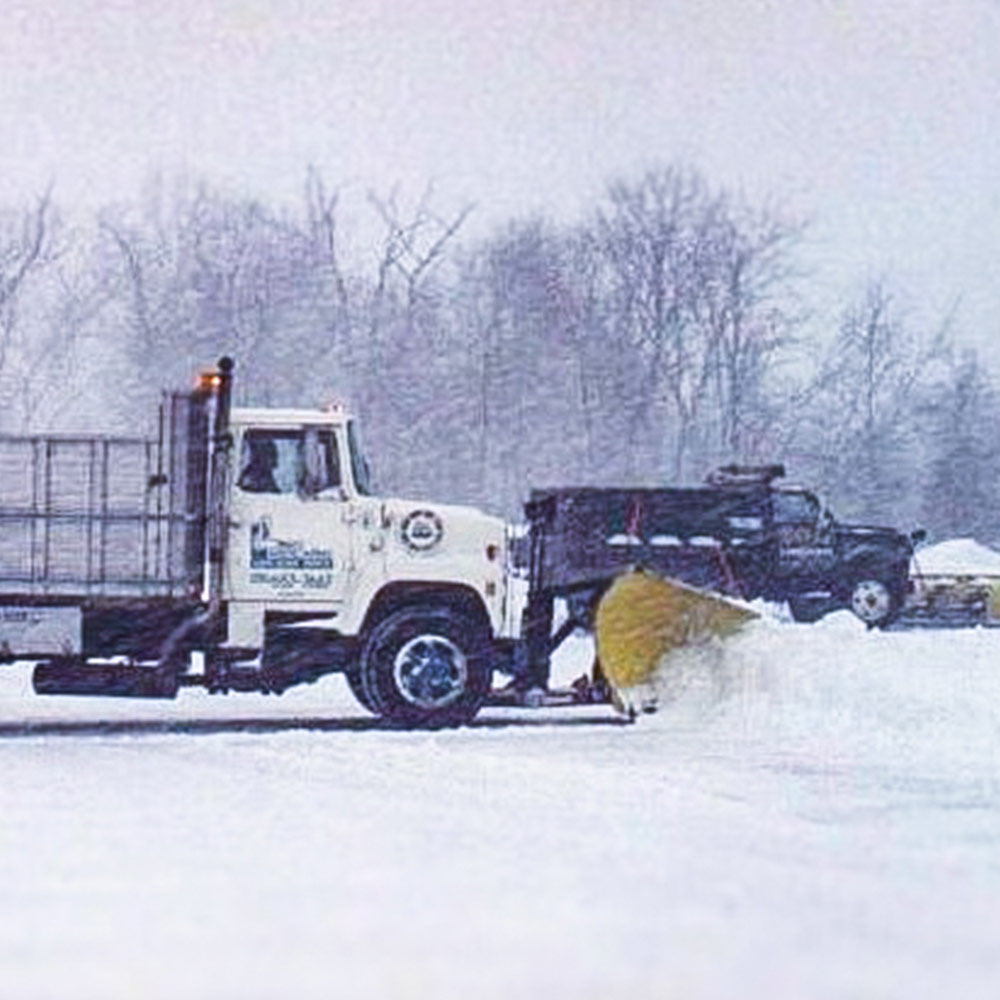
Butler Avenue Changes The Timing On Everything
Butler Avenue is U.S. Route 202 Business, and it runs southwest to northeast straight through the borough. PennDOT treats and plows it, not us. That sounds like a small detail. Then you watch what happens at a lot entrance after a state truck goes by. The plow throws a windrow across your apron. That apron is the first thing your tenants and your delivery drivers touch.
So we plan commercial snow removal in New Britain, PA around the state cycle instead of ignoring it. PennDOT runs continuous operations during a storm. It also focuses on keeping lanes passable rather than bare, as its winter operations overview explains. After the last state pass, aprons get reopened. Before that, reopening them twice is money spent on the same twenty feet of pavement.
SEPTA’s Lansdale/Doylestown line also stops in the borough, so foot traffic starts moving toward the station early. Properties on the walking route between Butler Avenue and the platform carry more pedestrian risk than their size suggests. Those walks earn an earlier trigger than the lots behind them.
Where The Snow Goes When The Lot Fills Up
Stacking room is the single biggest cost driver in commercial snow removal in New Britain, PA. Older lots here were striped for every space the parcel allowed. That leaves no dedicated snow storage. After one eight inch storm, the piles eat parking. After the second, they start blocking sightlines at the exit.
So we walk the property in the fall and mark stacking corners before anything falls. Good corners sit downhill from the pavement and away from the building entrance. They also sit clear of bed plantings that salt runoff would kill. Then, if the season runs long, we load and haul the excess off site. Hauling is the largest cost escalator on any property. We tell you up front whether your lot is likely to need it.

Two Numbers Instead Of One
Trigger depth is where commercial snow removal in New Britain, PA either works or costs you twice. A trigger depth is the accumulation that has to fall before crews get dispatched. Most property managers set one number for the whole site, and that choice costs them either money or safety. We build contracts around a split instead. Walks and ADA ramps run at 0.5 to 1.0 inch. The lot itself runs at 1.5 to 2.0 inches.
The reason is simple. Claims come from walkways far more often than from parking lots, so the walk earns the lower number. The lot, meanwhile, can take a little more snow before it stops functioning. Some sites need zero tolerance, which means a trace of ice triggers a response. We set and price that level separately. Our guide to trigger depth walks through how each one behaves across a real storm.
Salt, Brine And The Beds Along The Walk
Ice management here is mostly a timing question. Anti-icing means treating pavement before the storm so bonding never happens. De-icing means breaking a bond that already formed. The first takes less material and less labor. Still, it only works if somebody is watching the forecast. We track the National Weather Service office in Mount Holly, which covers Bucks County, and treat off that instead of a calendar.
Material choice matters just as much on a small site. Rock salt stops working as pavement temperatures drop into the teens. Meanwhile the chloride that washes off the walk lands in whatever bed sits beside it. Penn State Extension has a good rundown on minimizing deicer damage in plantings. On properties where the beds are the selling point, we adjust placement and rate. Broadcasting salt everywhere and apologizing in April is not a plan.
The Five Numbers Behind Commercial Snow Removal In New Britain, PA
There is no flat borough rate, and any contractor quoting one over the phone has not seen your lot. Five things drive the number. Cleared square footage, which means actual paved area rather than parcel size. Stacking room, or the lack of it. Trigger depth and service level. Walkway linear footage, since walks are priced apart from the lot. Finally, billing structure.
On billing you have three choices. Per event billing costs less in a mild winter and more in a heavy one. A fixed seasonal contract costs the same either way, which is why most multi property managers pick it. Time and materials sits in between. Boards and facilities directors usually want the seasonal number because they have to lock a budget early. October is when that conversation has to happen.
The Lingo Takeaway
Commercial snow removal in New Britain, PA is a routing and stacking problem more than a horsepower problem. We have served Bucks County since 1982. The properties that come through winter cleanest are the ones we walked in the fall. One more thing worth saying plainly. We do not run an emergency hotline, and we do not promise a guaranteed emergency response window. Contracted properties get serviced on the schedule their trigger depth and priority tier set. Call during business hours and we will tell you honestly whether we are the right fit for your site.
Common Questions
Do you handle residential driveways in New Britain?
No. Our snow work is commercial only. That covers office and retail lots, HOA and condo properties, industrial sites and medical offices.
How early should a board sign a snow contract?
October, if you can. Routes are built around properties that commit before the season, and boards generally set winter budgets in the fall.
Who clears the windrow PennDOT leaves at my entrance?
We do, as part of the lot service. We also time that pass after the state’s last run, so the apron does not get plowed shut an hour later.
Can walks and the lot really run on different triggers?
Yes, and they usually should. Walks at 0.5 to 1.0 inch with the lot at 1.5 to 2.0 inches is the most common setup we write.
What happens when there is nowhere left to pile snow?
We load it and haul it off site. That is the biggest single cost on a tight lot. So we flag the risk during the fall site walk instead of surprising you in February.
Which towns do you cover alongside New Britain?
Commercial snow removal in New Britain, PA runs on the same routes as Chalfont, Doylestown, Warrington, Newtown and Buckingham.
By Town
New Britain sits between our Chalfont yard and Doylestown. We run commercial snow removal in New Britain, PA on the same routes that cover the towns below. Here is where each town page lives.
- Commercial snow removal in Chalfont, PA
- Commercial snow removal in Doylestown, PA
- Commercial snow removal in Warrington, PA
- Commercial snow removal in Newtown, PA
- Commercial snow removal in Buckingham, PA
Our full snow management service page covers trigger depths, walkway service, loading and hauling, and property inspections in more detail.
Line Up Your Lot Before The First Storm
Ready to get commercial snow removal in New Britain, PA on the schedule? Call (215) 343-7700 Monday through Friday, 8:00 AM to 4:00 PM, or use our contact page. Tell us the property and the town. Then we will walk the lot, mark the stacking corners and quote against what we measured.