

A fire lane measures twenty feet across on the site plan, and about twelve after two storms. Fire lane snow removal in Bucks County almost never shows up as its own line in a contract, which is exactly how those lanes end up buried. Crews push toward the nearest open pavement, and the open pavement is usually the lane nobody parks in. By February, the lane is a snowbank with a sign in front of it.
Where the piles end up
Snow goes where there is room, and room gets scarce fast. On a full retail lot in Warrington or a medical office off Easton Road, the second storm of the week has nowhere good to go. The lane along the building is wide, flat and empty, so that is where the loader puts it. One convenient push closes the route the fire company was counting on.
Stacking room also drives what a property pays. When a lot runs out of places to pile, the snow has to be loaded and hauled off site, and hauling is the largest cost escalator on any commercial property. The easy choice in January becomes the expensive one in February. Picking pile locations before the season starts keeps both problems small.
Twenty feet, measured in February
Pennsylvania builds its Uniform Construction Code on the International Code Council family of codes, and the fire code in that family treats a fire apparatus access road as pavement that cannot be obstructed. Township ordinances around here repeat the same dimensions. Twenty feet of width is the common floor, with roughly fourteen feet of vertical clearance, and plenty of municipalities write the winter half straight into the ordinance. The owner keeps the lane clear of snow and ice.
Fire code officials can cite an obstruction on private property, and a plow windrow counts as one. So does a four-foot pile at the mouth of the lane. Nobody measures a fire lane in July. It gets measured after a storm, usually while something else has already gone wrong.
Hydrants go missing first
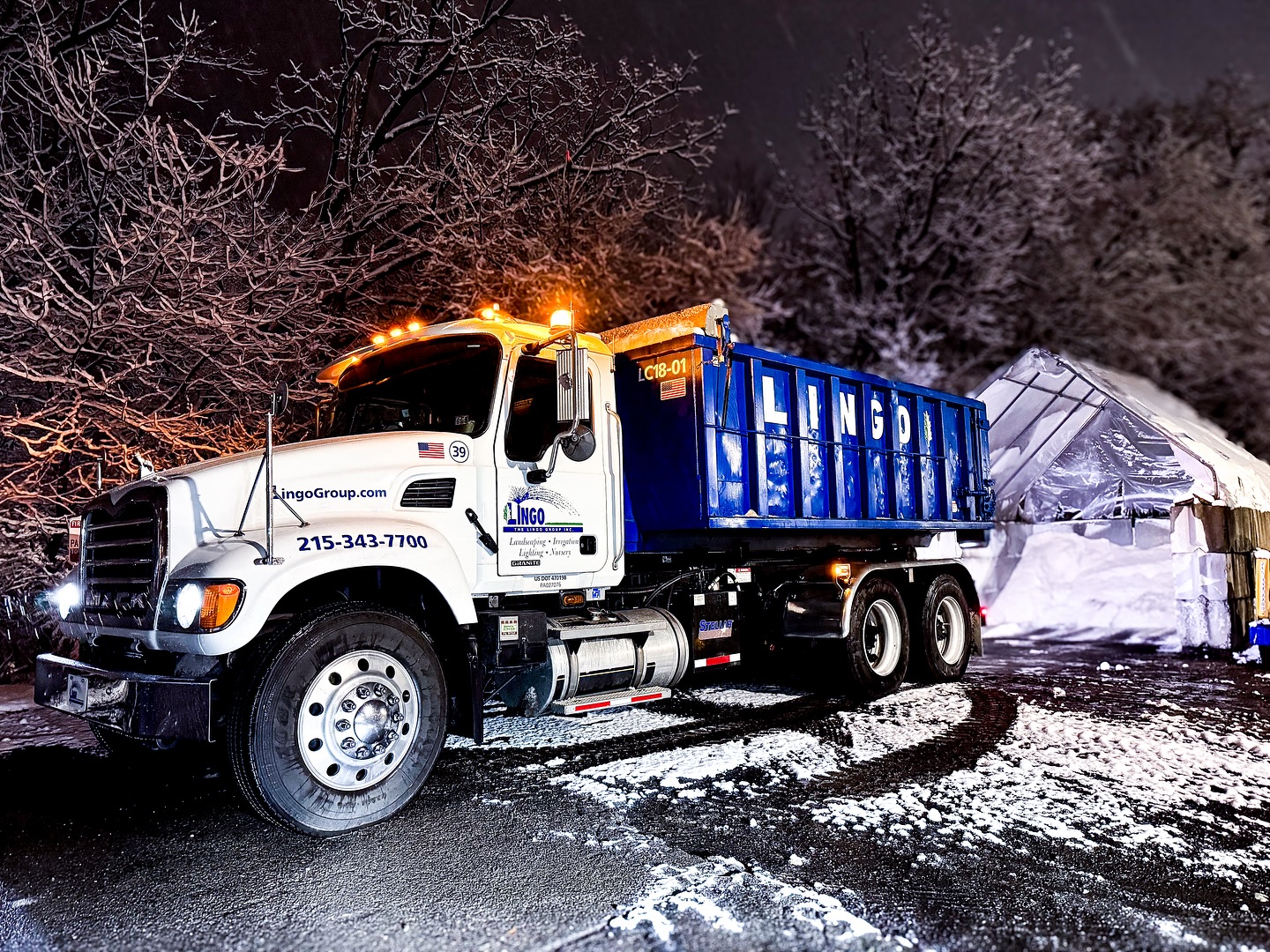
Fire codes call for roughly three feet of clear space around a hydrant. A plow throw buries that in seconds, and a hydrant sitting in an island between parking rows vanishes completely under a windrow. Private hydrants on commercial sites belong to the property, not to the township, so nobody else is coming to dig them out.
Stakes solve most of this. Mark hydrants, curb stops, drain inlets and sprinkler heads in the fall while the ground is still soft, then clear the hydrants by hand once the lot is pushed. It takes a few minutes per hydrant. Explaining a buried one to an adjuster takes considerably longer, which is the point of the paperwork habits we keep through the winter.
Fire lane snow removal starts on a dry day in October
The site walk is where all of this gets settled. We measure the paved area, mark the lanes and the hydrants, choose pile locations and agree on when piles get loaded and hauled instead of pushed again. That same walk sets trigger depths, which are rarely one number for a whole property. Walkways and ADA ramps usually sit around half an inch for liability reasons, while the lot runs at an inch and a half for efficiency.
Our yard sits on Timber Lane in Chalfont, which puts most of the county commercial corridors a short drive away. That proximity does more for a lot than any slogan about availability. To be straight about it, we do not run an emergency hotline and we do not sell a guaranteed emergency response window. Contracted properties are serviced on the trigger depth and priority tier in their agreement, and our full commercial snow and ice management service is built that way on purpose.
Doors, docks and the pavement between them
Access is more than the drive lane itself. Fire department connections, exterior stairs, gates and the turnaround at the end of a dead-end lane all have to stay usable. Dock aprons and the service aisles behind senior living buildings tend to get cleared last on a route, which is backwards when you consider who arrives there at two in the morning.
Ice is the other half of the job. Anti-icing before a storm and de-icing after it keep a cleared lane from glazing over by sunrise, and refreeze is the part most property managers underestimate. Meltwater runs across a lane all afternoon, then sets at dusk. Curb-to-curb clearing matters for the same reason, because a lane pushed to eighteen feet narrows again the first time a truck parks along it.
The Lingo Takeaway
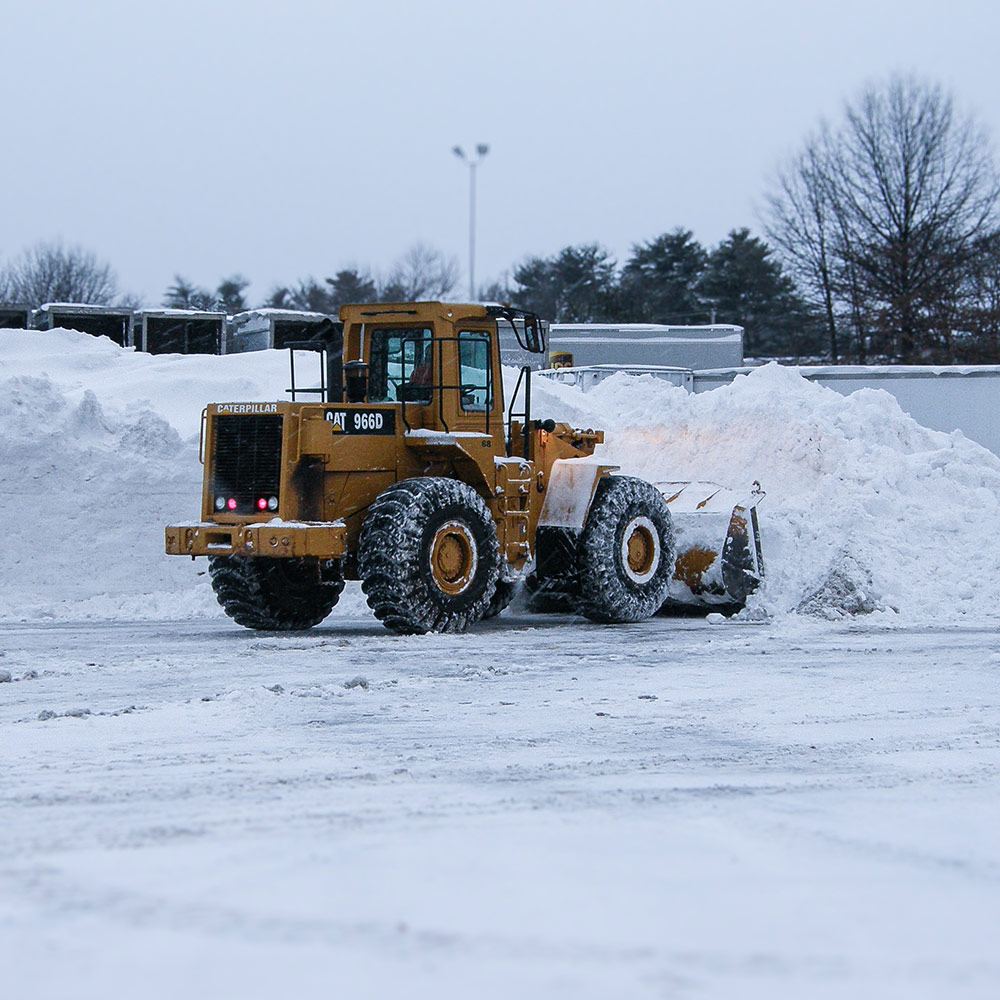
Fire lanes are the cheapest thing on a commercial property to protect and the easiest thing to lose. The fix is not more equipment. It is a map made in October that says where snow goes, who clears the hydrants, and what gets hauled once the corners fill up. We have handled commercial snow for property managers, retail centers, medical offices, industrial parks and HOAs across Bucks County for decades, and the properties that stay open all winter are the ones that answered those three questions before the first storm.
Common questions
Who is responsible for clearing snow out of a private fire lane?
The property owner, in nearly every case. Many township ordinances say so directly, and a fire code official can cite an obstruction on private pavement.
How wide does a fire lane have to stay after a storm?
Twenty feet is the common minimum in local ordinances, measured clear of piles and parked vehicles. Your township fire marshal is the final word on your specific site.
Can snow be piled at the end of a fire lane?
Not if it blocks the turnaround or the entry. Piles belong in locations chosen before the season, usually along islands and perimeter edges away from hydrants and inlets.
Do hydrants get cleared as part of a snow contract?
Only when the contract says so, which is worth checking now rather than in January. We clear hydrants by hand on properties where that work is written into the agreement.
Does a fire lane need a different trigger depth than the parking lot?
Often yes. Access routes and walkways are commonly set lower than the main lot, and ADA spaces and ramps follow the same logic.
By town
Routes are built around properties that commit before the season, and board budgets get set in the fall. These pages cover commercial snow and ice work town by town:
- Commercial snow removal in Doylestown, PA
- Commercial snow removal in Warrington, PA
- Commercial snow removal in Chalfont, PA
- Commercial snow removal in Newtown, PA
- Commercial snow removal in Buckingham, PA
For forecasts, the National Weather Service office in Mount Holly covers Bucks County. The National Fire Protection Association publishes the access and hydrant standards that local codes lean on, and Bucks County can point you to your township code office.
If you want your lanes and hydrants mapped before the next storm, call the office at (215) 343-7700, Monday through Friday, or reach us through the contact page. We will walk the property, measure it and show you where the snow is going to go.