
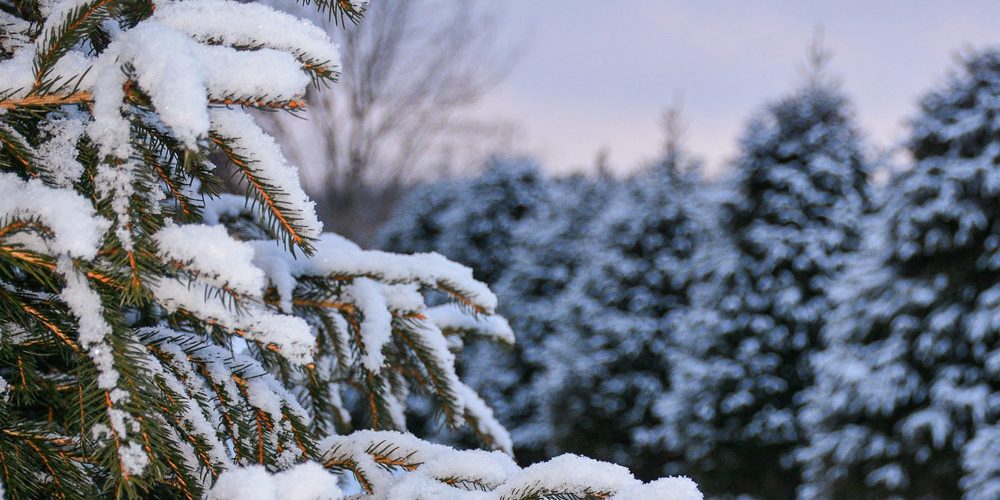
Winter lawn care in Bucks County is mostly a game of restraint. Grass here stops growing around the middle of November. From then until the ground warms in March, most of what happens to a lawn is done to it rather than for it. Salt, matted leaves, foot traffic over frozen crowns, snow stacked six feet deep in one corner of the yard.
We have worked out of our Chalfont yard since 1982. So we can say this plainly. The lawns that come back fastest in April got the right attention in November, then got left alone.
From December On, the Lawn Lives on What It Stored
Cool-season grasses cover most properties around Doylestown, Chalfont and Newtown. They do not die back in winter. They go dormant. Growth stops up top, but the crown and roots stay alive on carbohydrates the plant banked during fall. That reserve has to last until soil temperatures climb back into the fifties.
So the lawn you see in January is already finished being fed. Nothing applied between now and thaw changes the outcome much. What does change the outcome is how much damage the turf takes while it cannot repair itself. A dormant plant will not grow out of a wound the way it would in June.
That is the logic behind our turf management program. It weighs soil quality, grass type and sun exposure before anything goes on a lawn. For the feeding side of it, we covered the detail in our piece on lawn fertilization in Bucks County.
The Last Mow Sets Up the Next Five Months
Height is the one thing still under your control in late fall. Grass left long folds over and mats under the first wet snow. Matted turf then stays damp for weeks. Cut too short and the lawn loses insulation over the crown. Then it takes the brunt of February freeze and thaw swings.
We bring the last few cuts down gradually instead of scalping a lawn in one pass. Gradual works better because the plant is not shocked, and the clippings break down instead of sitting in a layer. Rutgers makes the same point about gray snow mold. It runs on long grass, heavy late nitrogen and deep snow cover.
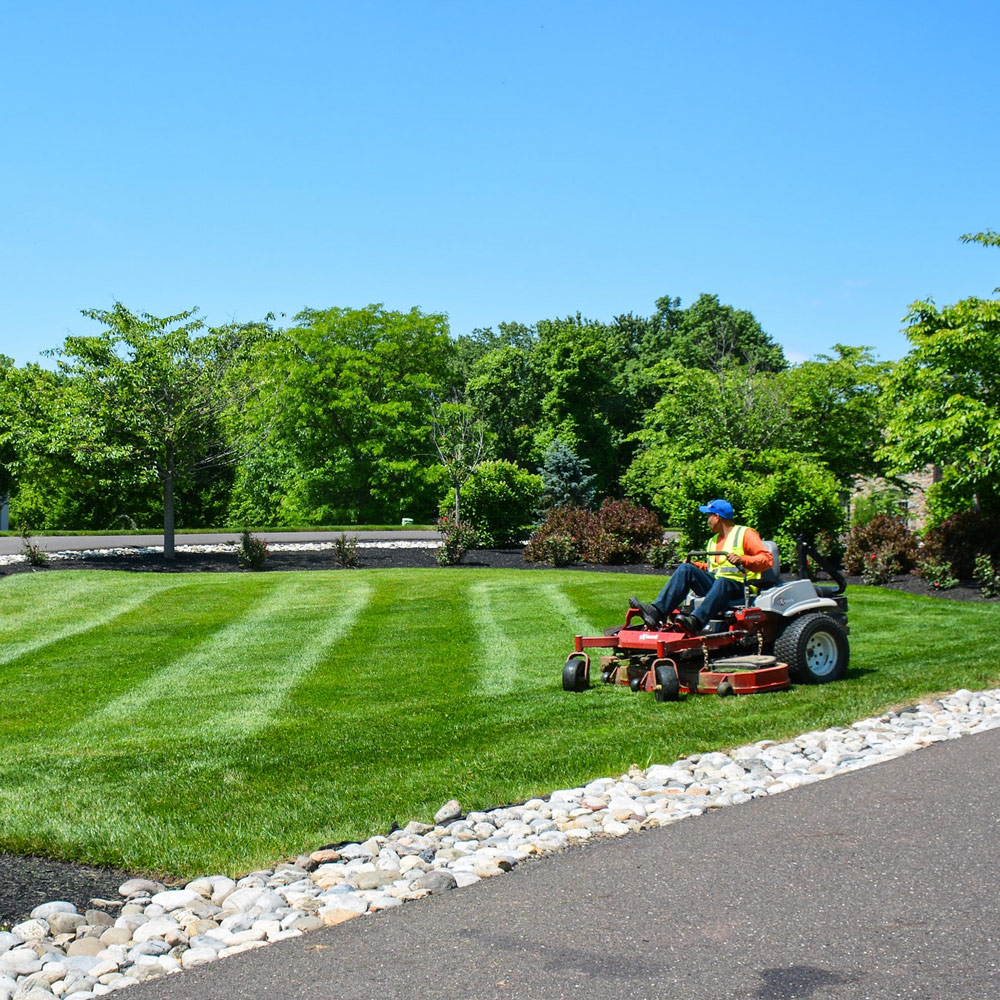
What Leaves Do Once Snow Settles On Top of Them
A thin scatter of shredded leaf is fine and always has been. A wet mat two inches thick is a different animal. Worst are the north and east sides of buildings, where sun never reaches in January. Those patches turn up bleached and flattened in March. They sit along the same foundation lines year after year.
Boroughs make this harder than townships do. In Doylestown and Perkasie, mature street trees drop well into December, long after most crews have finished their fall rounds. So the last load of leaf lands on dormant turf. That is why we schedule a late pass on properties with heavy canopy. Penn State Extension has solid background on the turf diseases that get going under that kind of cover.
Salt Reaches the Grass Before You Notice It
Property managers underestimate this one. Walk any shopping center or townhome community in March. You will find a dead brown stripe eighteen to thirty inches wide alongside every sidewalk and curb. That is salt, thrown there by shovels and spreaders, then carried further by melt water running downhill into the turf.
PennDOT notes that salt loses its bite below 25 degrees and that crews cut the rate further below 15. The same physics applies on your lot. Adding more product when it is that cold does not melt more ice. It just puts more chloride into the soil at the edges. We broke that down, repairs included, in our article on road salt damage in Bucks County.
Where snow gets pushed matters just as much. A pile stacked on the same corner all season leaves compacted, oxygen-starved soil. That ground will not green up until June, if at all. Choosing those stacking spots before the first storm beats arguing about them in February.

Frozen Ground Keeps a Record of Everything That Crosses It
Turf is most fragile frozen solid, or thawing over frozen subsoil. Crowns snap underfoot. The tracks show up as thin dead lines once the lawn wakes up. On commercial sites the culprits repeat themselves. Shortcuts across the grass between parking rows, plus delivery trucks cutting a corner.
Township developments take this worse than older properties do. Builders strip topsoil and compact the subsoil during construction. So there is less root depth to begin with, and the clay underneath holds water instead of draining it. Add winter traffic and the lawn needs core aeration and overseeding before it recovers.
Winter Lawn Care in Bucks County, Scheduled Rather Than Guessed
Our seasonal work is planned, not reactive. Fall preparation and spring revitalization are two ends of one program. The months between are when we note what is failing, so spring work lands in the right spots. Shaded corners, salt lines, pile locations, low areas holding water. All of it goes on the list.
That matters most on multi-site accounts. One manager is looking at five lawns and cannot walk them all after every storm. We would rather tell you in January that the north bed line will need sod than surprise you with it in May.
The Lingo Takeaway
Nothing you do to a dormant lawn in January will make it greener. Plenty of what happens to it will make it worse. Almost all of that traces back to salt, piles, mats and traffic. So winter lawn care in Bucks County comes down to four habits. Get the last mow right. Keep heavy leaf off the turf. Pick snow stacking spots deliberately, and keep people and vehicles off frozen grass.
Then spend the quiet months deciding where the spring repairs go. Four decades here have made that sequence pretty clear.
Common Questions
Should I fertilize the lawn during the winter?
No. Feeding belongs in fall while roots are still active. Anything applied to frozen or snow-covered ground tends to run off with the melt instead of feeding the plant.
My lawn has gray matted patches after the snow melted. Is it dead?
Usually not. Snow mold damages blades more often than crowns. Light raking to break up the mat and let air in is often enough. Patches still bare in late spring need seed.
Can I use ice melt near the lawn without killing it?
You can reduce the damage. Spread at the labeled rate instead of eyeballing it. Sweep up leftover product once pavement is clear. Keep the shovel from throwing everything into the same strip of turf.
When does winter lawn care in Bucks County turn back into spring work?
It follows the thaw rather than the calendar. Cleanup and assessment generally begin in March, with seeding and aeration timed to soil temperature.
Do you handle snow and the lawn on the same property?
Yes. Commercial snow management is one of our signature services. When the same company plows the lot and maintains the turf, decisions about where snow goes get made with April in mind.
By Town
Conditions shift noticeably across the county, so winter lawn care in Bucks County changes with the address. Start with the page for your area:
- Chalfont, PA, our home borough, where the crews and equipment sit on Timber Lane
- Doylestown, PA, borough properties with tight access and heavy street tree canopy
- Warrington, PA, the Route 611 commercial corridor and townhome communities
- Newtown, PA, planned communities and HOA common ground
- Buckingham, PA, acreage properties and open ground
We also work in New Britain, Warminster, Perkasie, Sellersville and the surrounding townships. If your property sits nearby and is not listed, call and ask.
Talk It Through Before the First Storm
Want the turf plan on paper before winter does its worst? Call (215) 343-7700 Monday through Friday, 8:00 AM to 4:00 PM. You can also use our contact page. Tell us the town and the property. We will say honestly whether winter lawn care in Bucks County needs anything from us now or can wait for spring.
Sources: Penn State Extension, turfgrass pests and diseases; Rutgers New Jersey Agricultural Experiment Station, gray snow mold; Pennsylvania Department of Transportation, winter services.