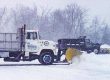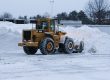

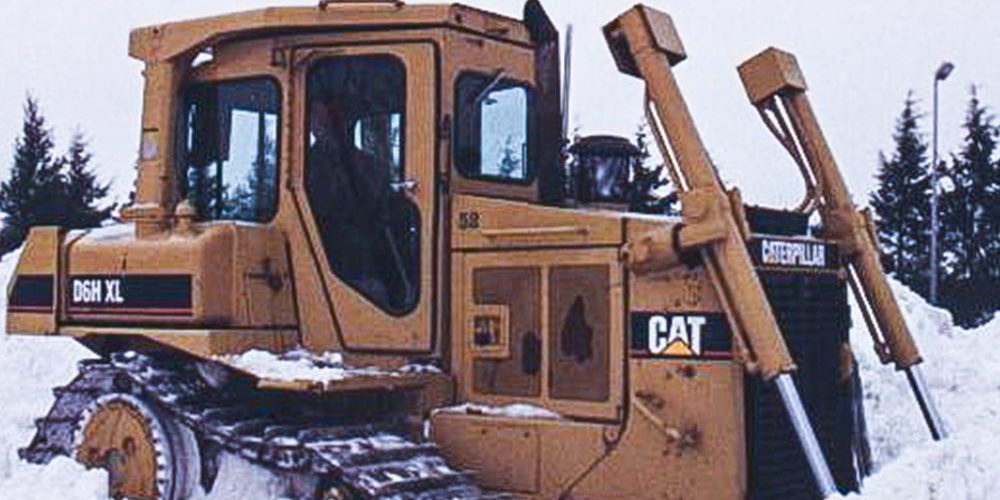
Road salt damage in Bucks County does not announce itself in January. It turns up in March. The last pile melts off the island at the end of the lot, and the grass under it comes back the color of a paper bag. By then the storms are over and the invoices are paid. Almost nobody connects that dead strip along the walk with the spreader that passed it eleven times.
We plow and treat properties here all winter. Then we mow, feed and rebuild the same properties all summer. So we see both ends of it, usually on the same site.
Road Salt Damage in Bucks County Starts at the Curb Line
Two sources feed the problem. The first is the road. PennDOT and the townships treat Route 611, Route 202 and Route 313 all winter, and traffic throws that spray well past the shoulder. Penn State Extension puts the reach at up to 1,000 feet from a treated roadway. That covers the entrance island, the sign bed and the first row of shrubs on most commercial sites in Doylestown or Warrington. Their guidance on deicer damage and salt tolerant plants is worth a read before you replant.
The second source is your own lot. Sidewalk salt gets swept into the bed beside the walk. Lot salt runs downhill with the melt and collects at the low corner. Plow piles are worse. Each one concentrates a season of chloride into a single spot, then releases all of it over about two weeks. That is why the damage looks so patchy. It follows water, not the property line.
Brown Edges That Were Green in November
Turf gives you the first evidence. Look for a band of dead grass six to eighteen inches wide along walks, curbs and lot edges. Then look at the spots where snow was stacked. Those usually come back thin and weedy. Crabgrass and knotweed move in by June, because they handle the salinity better than fescue and bluegrass do.
Plow scalping looks different. Scalping is mechanical, so it leaves torn crowns and often a scrape line in the soil. Salt burn leaves intact plants that died back from the tip. It also stops where the runoff stopped. Once you know the difference, you can tell a spreader problem from a driver problem in about a minute.
What Chloride Does Under the Grass
Road salt damage in Bucks County is chemistry before it is anything else. Sodium chloride splits in soil water. The chloride moves with that water and burns roots directly. Sodium is the slower problem. It takes the place of calcium, magnesium and potassium on the soil particles and pushes those nutrients out of reach.
Structure collapses after that. The soil tightens, water sits on top instead of moving through, and roots end up in something closer to concrete than loam. Local clay makes it worse, because clay holds sodium far longer than sand does. A heavy salt year here can still be measurable the following fall. That is also why the same fifteen feet of lawn fails every spring on some properties. The salt never actually left.
Spalling, Pitting and the Joint Sand That Went Missing
Hard surfaces take the second hit. Chloride pulls extra moisture into concrete. That moisture then freezes and expands inside the slab during our freeze and thaw swings. The surface flakes off in sheets, which is spalling, and the aggregate starts to show. Concrete poured within the last year is the most vulnerable. So new walks and new ADA ramps deserve a different treatment plan than the rest of the property.
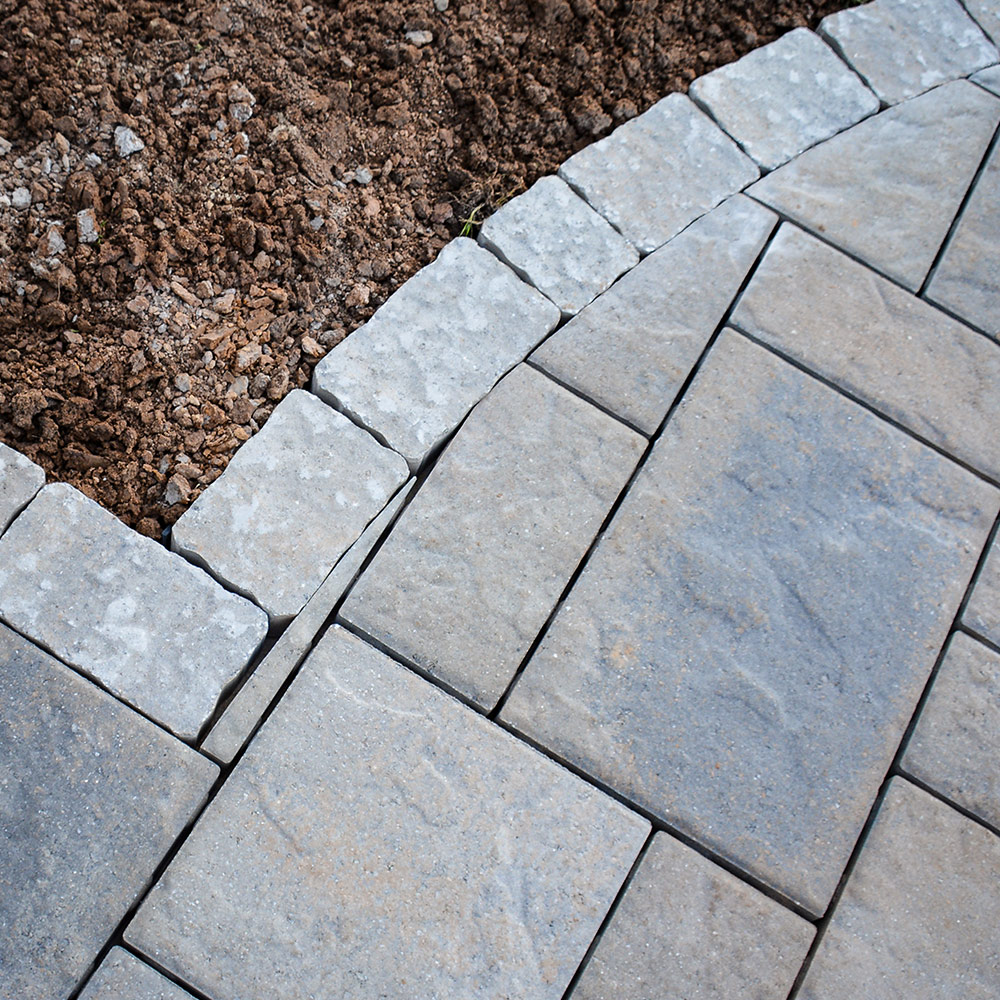
Pavers hold up better, since a paver field flexes instead of cracking as one slab. The joints still suffer though. Repeated wetting and salting washes joint sand out, units start to rock underfoot, and efflorescence leaves a white haze across the field. Steps and curbs go first. They get the heaviest hand with the shovel and the bucket. Our hardscaping and masonry work includes repairs to settled patios and failing walls we did not build. Plenty of those calls trace back to five winters of chloride rather than to bad workmanship.
Gypsum, Water and a Little Patience
Repairing road salt damage in Bucks County starts with flushing. Penn State Extension recommends drenching affected soil with roughly six inches of water, which leaches out about half the accumulated salt. Gypsum helps next, at about 40 pounds per 1,000 square feet. It displaces sodium without moving soil pH. April rain does some of this for you in a normal spring. Still, the low corners almost always need help.
After the flush, core aerate to open the profile, then overseed. Hold the fertilizer until the soil has actually drained. Feeding stressed roots in salty soil pushes growth the plant cannot support. Our turf management program covers the aeration, overseeding and soil assessment end of that work. The timing lines up with the spring lawn care sequence we follow anyway. Beds are simpler. Replace badly burned shrubs with something that tolerates the exposure, and pull the planting back from the curb line where the site allows it.
The Spreader Setting Is a Landscape Decision
Preventing road salt damage in Bucks County happens during the storm, not after it. Plow to pavement first, because salt spread over two inches of packed snow mostly disappears into the slush. Treat before the event where the forecast supports it. Anti-icing keeps the first snow from bonding, so the crew needs less material later. PennDOT works the same way on the highways, and their winter operations page walks through the approach.
Pavement temperature drives everything after that. Plain rock salt quits as the surface drops toward the upper teens. More of it on a cold night buys nothing except runoff in April. The National Weather Service office in Mount Holly covers Bucks County, and the refreeze window it flags is where most ice claims start. Pile placement matters just as much. Snow stacked on a crown or above a bed sends every dissolved pound through the root zone. Snow stacked on pavement that drains to an inlet mostly leaves the site.
Our snow management plans set trigger depths by surface before the season starts. Zero tolerance sites go at a trace of ice. Standard business lots go at 1.5 to 2.0 inches. Sidewalks run separately, at a half inch to an inch. Those numbers exist for safety first. They also decide how much chloride your landscape absorbs. The de-icing side of the plan covers material choices in more detail.
By town
Road salt damage in Bucks County looks different depending on where a property sits. Route position changes the exposure. Here is where we work:
- Commercial snow removal in Doylestown, PA, where the 611 and 202 corridors carry the heaviest state road spray
- Commercial snow removal in Warrington, PA, with big retail lots and long entrance islands
- Commercial snow removal in Chalfont, PA, minutes from our Timber Lane yard
- Commercial snow removal in Newtown, PA, where older streetscapes put walks tight against beds
- Commercial snow removal in Buckingham, PA, with private drives and open frontage
The Lingo Takeaway
Road salt damage in Bucks County is a budget item, not an act of nature. Three habits hold it down. First, plow to pavement before treating, so the material lands where it works. Second, move the piles off crowns, beds and anything draining toward turf. Third, flush and gypsum the known problem corners in April. That beats reseeding them every year and wondering why they keep failing.
Common questions
Will grass killed by salt come back on its own?
Sometimes it does, in a wet spring, along the thinner edges. Heavier areas usually need flushing, gypsum, aeration and seed. Otherwise the sodium stays put, and the new seedlings fail the same way the old turf did.
Is calcium chloride safer for my landscape than rock salt?
It works at lower temperatures, so crews often need less of it. Less total material means less load on the soil. It is still a salt though. Placement and quantity matter more than the bag you choose.
When should I look for road salt damage in Bucks County?
Walk the site in late March or early April. Go right after the piles finish melting, before growth starts. Photograph the bad spots then. That record makes the repair plan and next winter’s treatment plan much easier to write.
Can you handle both the snow and the spring repair?
Yes. We plow, treat, mow, feed and build on the same properties. That overlap is usually how anyone notices the link between a spreader pattern and a dead bed.
Get the plan written before the first storm
Routes fill by property and by geography. Once a run is full, it stays full for the season. So if you manage a retail center, medical office, industrial park or association property in Bucks County, call us at (215) 343-7700 or use the contact page. We will walk the site with you before the weather makes the decision for us.