
Snow removal response time in Bucks County is the first thing property managers ask about and the last thing most contractors answer clearly. A realistic snow removal response time comes down to four things you can see on a site plan: where your lot sits in the route, what depth sends a truck out, how long the storm runs, and what the roads look like between our yard and your property. None of that is guesswork. All of it gets settled in the fall, before the first flake.
The clock starts before the first truck moves
Crews do not wait for a phone call. Weather gets watched ahead of a storm, and contracted routes are already built, so work begins when accumulation hits the number in your agreement rather than when somebody notices the lot is white.
Anti-icing changes the math too. A treated surface keeps snow from bonding to pavement, so the first push moves more material and leaves less behind. Properties carrying ice management in their contract usually come clear sooner than properties carrying plowing alone, even when both sit on the same route.
Your spot in the route gets set in the fall
Routes are built around properties that commit before the season. Once a route is full, it is full, and a site that signs in January gets whatever room is left. So the biggest lever on your timing is the calendar, not the storm.
Distance helps as well. We run commercial snow and ice work from our yard at 1170 Timber Lane in Chalfont, which puts crews and equipment within roughly five miles of the county’s main commercial corridors. A site off Route 202 in New Britain sees a truck sooner than one at the far edge of the county, simply because of drive time. More on how the work itself is structured sits on our snow management page.
Trigger depth sends the truck, not the forecast
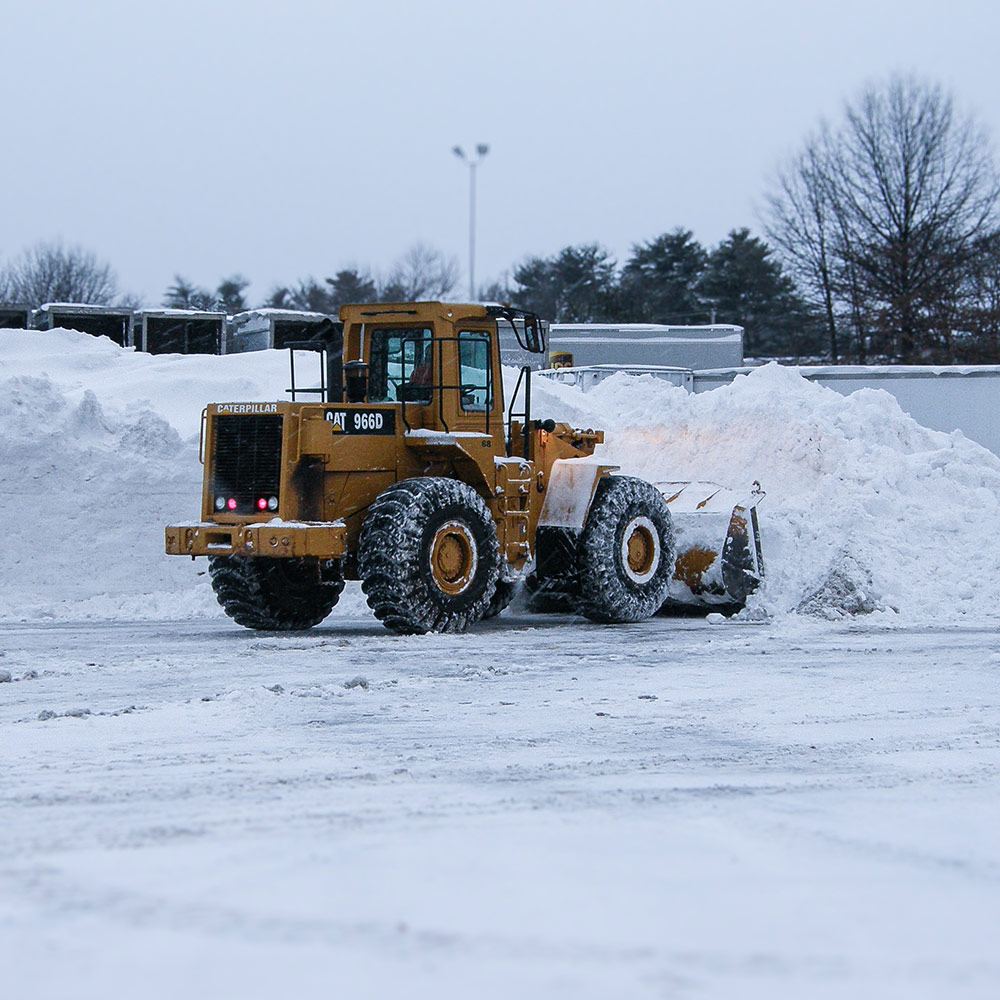
A trigger depth is the accumulation that dispatches crews to your property. Ours run from a trace of ice on zero tolerance sites up to two inches on standard industrial properties. Between those, high traffic sites such as shopping centers, banks and medical offices usually sit at one inch.
So two buildings can stand two hundred feet apart on Easton Road and get service hours apart, with both contracts followed exactly. If your snow removal response time in Bucks County feels slow, the trigger is the first place to look. Our breakdown of trigger depth walks through how that number gets chosen.
A long storm gets cleared more than once
Owners often expect one answer when there are really two. During a storm, crews make passes to keep lanes and entrances usable. After it ends, the site gets its full cleanup, including stacking, edges and the spots that filled back in.
A four inch event overnight is usually a single visit. A twelve hour event dropping ten inches is several, and the final pass comes after the snow stops rather than while it is still falling. Storm totals are easy to confirm later through the National Weather Service office serving the Philadelphia area.
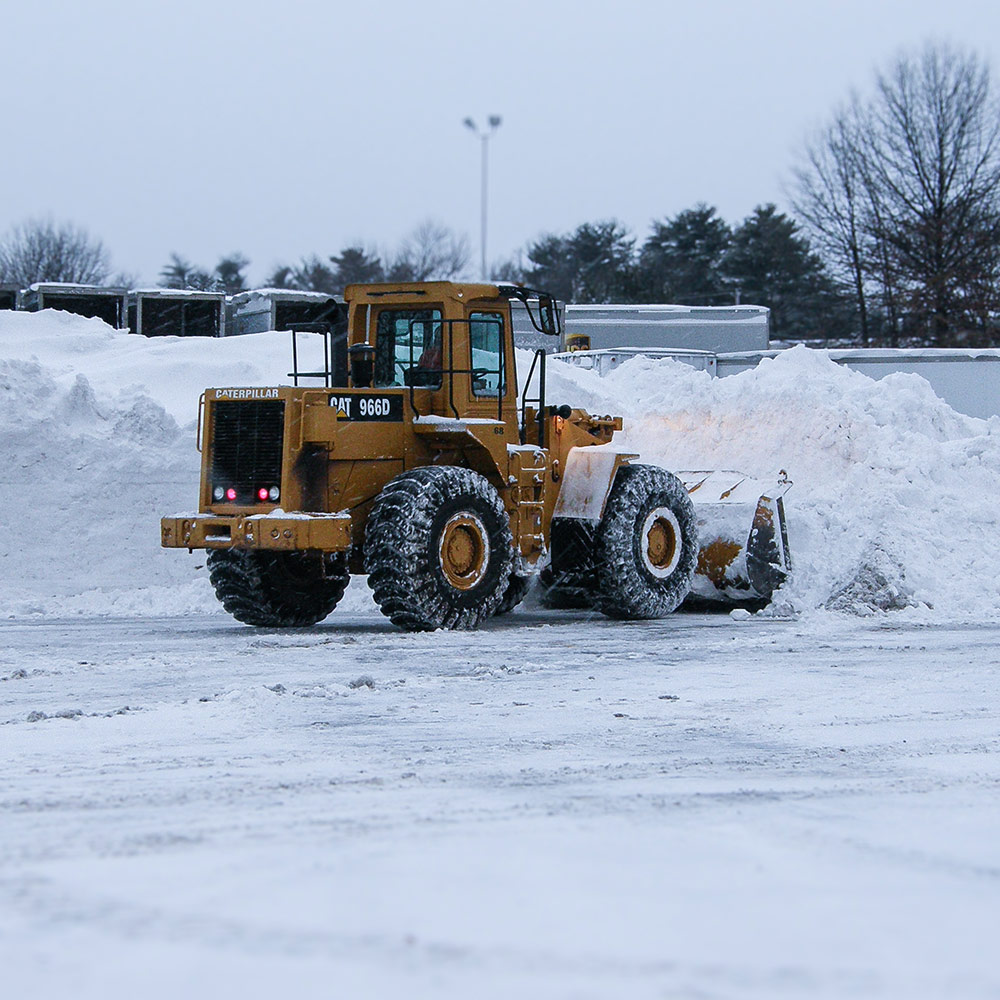
Walkways keep their own schedule
Most properties are better served by a split trigger than by one number for the whole site. Walkways and ADA ramps typically sit at half an inch for liability reasons, while the lot runs at an inch and a half for cost. That means the walk crew often arrives before the plow, which surprises owners who expect the lot first.
On shared properties the question gets more tangled, because an association, a tenant and an owner can each hold a piece of the pavement. We wrote about who clears what for exactly that reason.
What the roads do to the schedule
Crews cannot reach your lot faster than the roads allow. PennDOT and the townships run their own priority order, and the numbered routes get attention before the back roads. Early in a storm, Route 611, Route 202 and Route 313 move reasonably well while the township roads behind them do not.
Pennsylvania also posts speed and vehicle restrictions during heavier events, and those apply to commercial trucks. You can watch road conditions and active restrictions through 511PA. On the worst nights, the honest answer is that everybody in the county is moving slowly, including us.
Where the wait shows up around here
The office parks between Doylestown and Warrington put hundreds of people on the same three entrances within about twenty minutes of each other, so a morning event is unforgiving. Retail strips along Easton Road carry the same pressure with less room to stack snow. Meanwhile the association properties in Buckingham and New Britain spread the work across cul de sacs and shared walkways, which takes longer per acre than one open lot.
Local weather adds a second round. A sunny afternoon melts the pavement, then north facing edges refreeze overnight on ground that drains slowly. Clear blacktop at four o’clock can need ice work again by seven the next morning.
The Lingo Takeaway
We will be straightforward about one thing, because plenty of contractors are not. There is no emergency hotline here and no guaranteed emergency response window. Contracted properties are serviced on the dispatch schedule their trigger depth and priority tier establish, and the office is reachable at (215) 343-7700 during business hours, Monday through Friday. If your property genuinely needs round the clock coverage, say so during the site walk and we will tell you honestly whether we can meet that standard before you sign anything. The Snow and Ice Management Association publishes an ANSI approved standard practice covering procurement and documentation through SIMA, and it is worth reading before you compare bids.
Common questions
How fast will our lot get cleared after a storm?
Your trigger depth, your priority tier and your place in the route decide it. All three go in writing before the season, so the answer is known in advance rather than argued about in February.
Do you guarantee a response window?
No. We do not promise an emergency response window and we do not operate a hotline. Service follows the schedule your contract establishes.
Can we move up the priority list?
Priority is set when routes are built, so the fall is the time to ask. Zero tolerance and high traffic sites sit near the front because their triggers are lower.
Our sidewalk was done before the parking lot. Is that normal?
Yes, assuming a split trigger. Half an inch dispatches the walk crew while the lot waits for an inch and a half.
Does a longer storm mean a longer wait?
It means more visits. Crews keep lanes open during the event, then return for the full cleanup once the snow stops.
By town
Commercial snow contracts are priced and routed separately from grounds maintenance, and routes fill with properties that commit before winter.
- Commercial snow removal in Doylestown, PA
- Commercial snow removal in Warrington, PA
- Commercial snow removal in Chalfont, PA
- Commercial snow removal in Newtown, PA
- Commercial snow removal in Buckingham, PA
If you want your snow removal response time in Bucks County settled before the next storm, call us at (215) 343-7700 or use the contact page. We will walk the site, measure it and put the triggers and priorities in writing.