
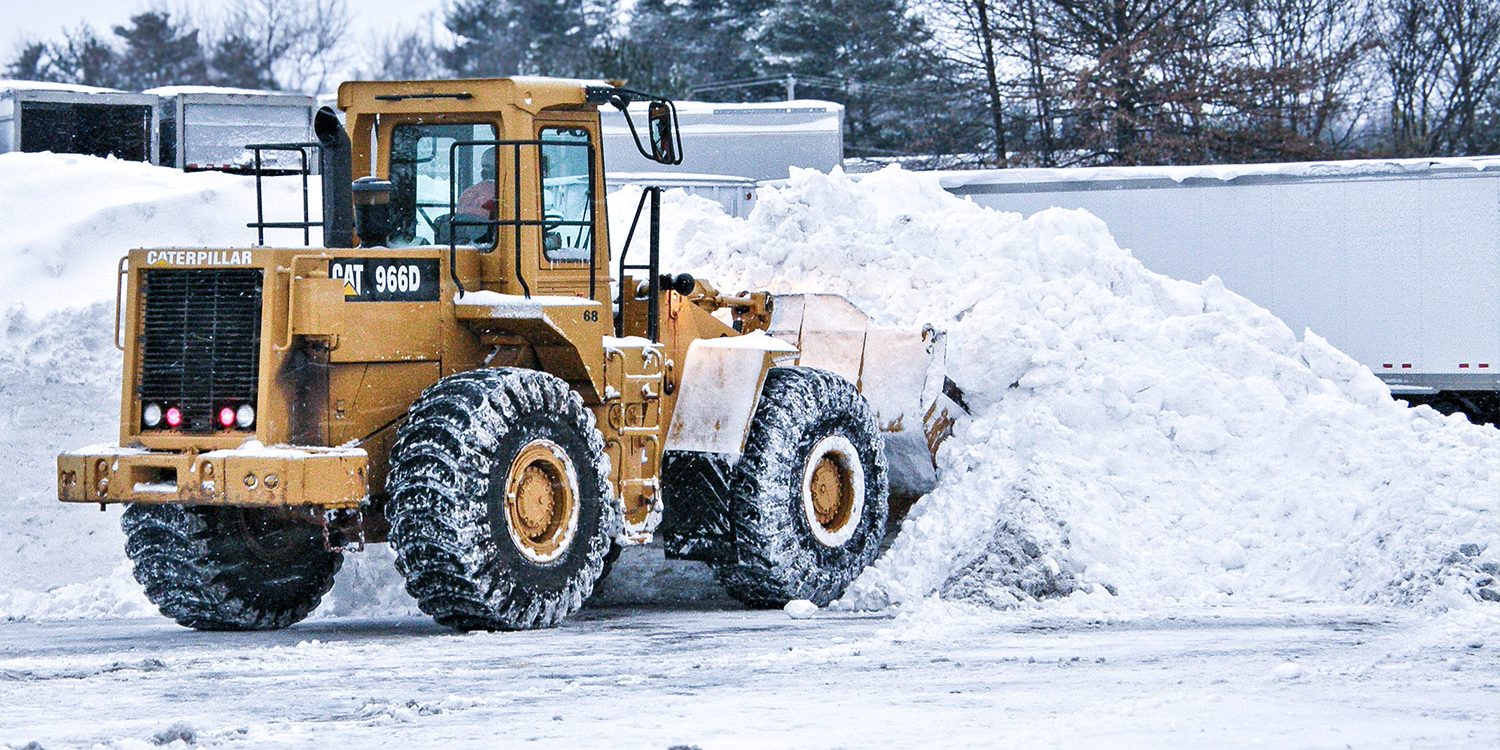
Gas station snow removal in Bucks County is a different job from clearing an office park, and the difference shows up in the first twenty minutes of a storm. A fuel stop on Route 611 or Street Road never really empties out, so gas station snow removal has to happen around moving cars, idling trucks and people standing at the pumps. There is no quiet hour when the lot belongs to the plow. That one fact changes the equipment, the route order and the ice program.
The Lingo Group runs commercial snow and ice management from a yard on Timber Lane in Chalfont, which keeps crews and equipment within roughly five miles of the county’s main commercial corridors. For a fuel station, that proximity counts for more than it does on a warehouse campus. Here is how the work tends to go, and what a site manager should be asking before the first storm.
A Lot That Never Clears Out
Convenience traffic spikes right before a storm. Everybody fills up, grabs milk and heads home, so the busiest hour at a fuel stop is often the hour the snow starts. Then the lot stays half full through the night.
Because of that, crews work a fuel site in segments instead of long clean passes. Approach lanes and the entrance come first, since one car stuck at the apron blocks everything behind it. After that comes the perimeter, then the spaces along the store, then the islands as vehicles cycle out. A property on Easton Road in Warrington or Route 309 near Sellersville also has to deal with what the state plow throws back across the driveway, and that windrow is its own pass. You can watch how the state roads are running during a storm on 511PA before you decide when to send a truck.
Bollards, Air Hoses and the Rest of the Obstacle Course
Pump islands are the tightest ground on any commercial property. Bollards sit a few feet apart, curbed islands run the length of the canopy, and around the edges you find vacuum stations, air machines, propane cages, ice coolers and trash corrals. A plow blade does not fit most of it.
So island work is hand work and compact machine work, which is slower and gets priced that way. Drains matter just as much. Fueling areas have containment grates and stormwater inlets that need to stay open, because a buried inlet turns the next thaw into a sheet of ice right where people walk. Crews clear those before anything gets stacked nearby.
What Comes Off the Canopy Edge
The canopy keeps snow off the islands, which helps. It also collects that snow, and the melt runs to the edge and drips in one straight line across the pavement. The drip line lands exactly where customers walk from the pump to the store door.
Overnight it refreezes into a ribbon of clear ice. Bucks County runs through freeze and thaw cycles all winter, with afternoon temperatures climbing above freezing and dropping back after dark, so the pattern repeats for days after the snow stops. The National Weather Service office in Mount Holly forecasts for this part of Pennsylvania, and overnight lows are how you decide whether the drip line gets treated again at four in the afternoon.
Salt and Brine Around the Fueling Area
Lingo’s ice management covers both de-icing and anti-icing treatments, and the second one is what saves a fuel station. Anti-icing means treating pavement before the storm so snow never bonds to it. The lot then scrapes clean instead of leaving a packed layer under the traffic lanes.
Placement near the islands takes some thought. Salt and brine travel with meltwater, so the pattern should follow the slope toward the drains rather than sitting where tires carry product straight into the store. Tracked salt is a slip problem inside the door as much as outside it. The Snow and Ice Management Association publishes guidance on application rates and service documentation, which is worth reading if you oversee several sites.
Setting the Trigger for Gas Station Snow Removal in Bucks County
A trigger depth is the accumulation that sends crews out. Lingo builds commercial contracts around four of them: a zero tolerance trigger at a trace to a hundredth of an inch of ice for round-the-clock retail, a one inch trigger for high traffic sites like shopping centers and banks, a one and a half to two inch trigger for industrial warehouses and private office parks, and a half inch to one inch trigger for walkways and ADA ramps.
Fuel stations usually land in the first two. The store is open when nothing else is, and the path between the islands and the door carries foot traffic all night. Most properties do better with a split trigger: a half inch on the walkway and the island approach for liability, a higher number on the back of the lot for efficiency. One depth across the whole site either overspends on the far corners or under-serves the part people actually walk on.
Where the Pile Goes on a Corner Site
Fuel stations tend to sit on corners, with two entrances and a short setback from the road. Stacking room is scarce, and the spots that look available are usually the worst picks. A pile at the corner blocks the sightline for drivers pulling out. Snow stacked near the islands melts across the pump approach and refreezes by morning. Bury the air and vacuum station and a revenue item sits out of service for a week.
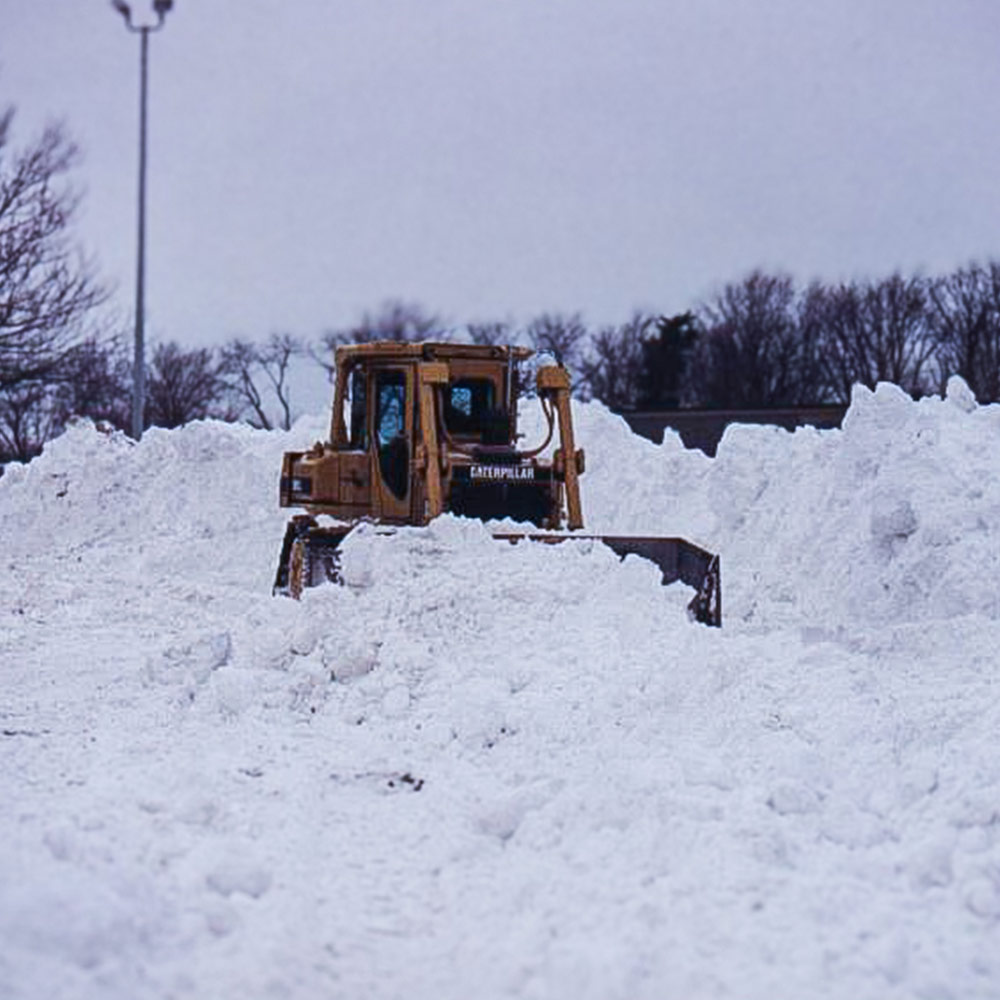
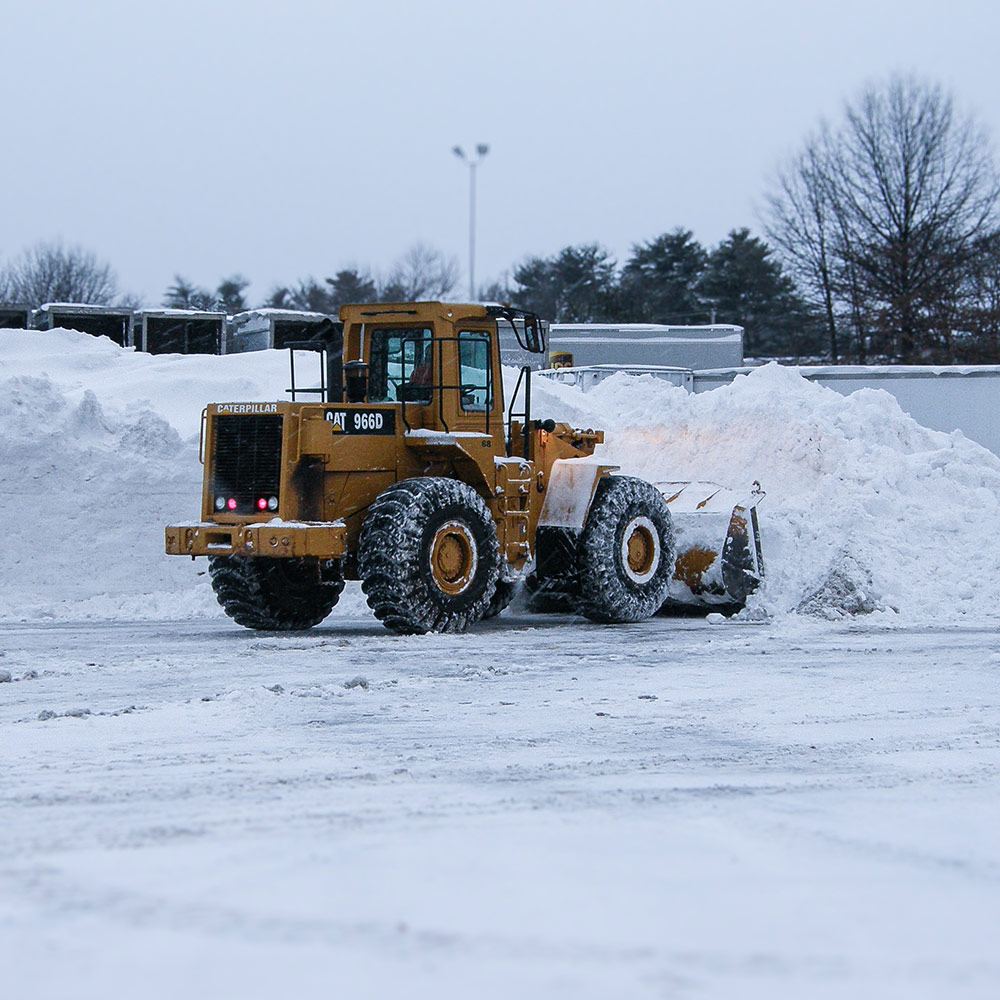
Once a lot runs out of room, Lingo loads and hauls the excess off site. On a tight fuel property that call often comes earlier than owners expect, sometimes after the second storm rather than the fifth. Site layout and stacking room are among the largest cost drivers on any property, which is why a real quote follows a walk of the site instead of a phone estimate.
The Lingo Takeaway
Gas station snow removal is bought on sequence, not horsepower. The approach, the walkway and the drip line under the canopy are where the risk sits, and all three need a lower trigger than the back of the lot. Get the split trigger and the stacking plan written into the contract, and the rest of the winter mostly handles itself.
Common questions
When should a Bucks County fuel station line up snow service?
Before the season, in the fall. Routes are built around properties that commit early, so a site added in January gets placed around existing stops rather than designed into the route.
Does Lingo run a 24/7 emergency snow line?
No. There is no emergency hotline and no guaranteed emergency response window. Contracted properties are serviced on the schedule their trigger depth and priority tier set. To reach the office, call (215) 343-7700 Monday through Friday.
Why does a fuel site cost more than a plain lot of the same size?
The hand work is the reason. Islands, bollards and walkways get cleared by hand or with compact equipment, and walkway footage is priced separately from the lot. Add tight stacking room and the hauling that follows, and the per-storm number moves.
Can snow be hauled off a small corner lot?
Yes. Loading and hauling is part of the snow management service, and on constrained fuel sites it usually gets used at some point in a heavy winter.
Who clears the sidewalk along the road?
That depends on the township ordinance and on your lease, and the two do not always line up. Settle it in writing before a storm rather than after a fall. Our piece on snow removal responsibility in Bucks County walks through who typically owns what.
Commercial snow and ice, by town
Snow contracts are priced and routed separately from grounds maintenance, and routes fill up before the first storm.
- Commercial snow removal in Doylestown, PA
- Commercial snow removal in Warrington, PA
- Commercial snow removal in Chalfont, PA
- Commercial snow removal in Newtown, PA
- Commercial snow removal in Buckingham, PA
If you run a fuel station, a convenience store or any commercial property in Bucks County, call (215) 343-7700 Monday through Friday or use the contact page to set up a site walk. That walk is what produces a number you can budget against.