
Senior living snow removal in Bucks County runs on a tighter clock than most commercial work. A retail center can open an hour late, but senior living snow removal in Bucks County has to clear a 6 AM shift change, a transport van at 7, and residents who will walk out for the mail no matter what fell overnight.
So these properties get planned in October, not during the storm. Below is how a care campus usually gets set up, what the triggers look like, and what a facilities director should settle before signing. Our commercial snow management page lists the full service set.
Ambulances Do Not Wait For A Second Pass
On a care campus the parking lot is rarely first. The drop-off canopy comes first, then the fire lane, then the straight run from the main road to the front doors. Transport vans need a lane wide enough to open a side door and roll a stretcher. A plowed tire track does not count.
So the site map matters more here than almost anywhere. We mark the portico, the emergency entrance, the staff lot and the resident lot in priority order. Then we build the route so the top priorities get cleared first and get checked again before the shift change. Kitchen and linen deliveries come next, because those trucks arrive early.
Curb cuts and ADA ramps are the third piece. A ramp that gets plowed but never salted is worse than one left alone. The pile at the bottom of it freezes solid by 4 AM.
Senior Living Snow Removal In Bucks County Starts With Split Triggers
A trigger depth is the accumulation that has to fall before crews get dispatched. Most properties do better with two or three numbers instead of one. We build commercial contracts around four levels, and a care campus usually borrows from several.
- Zero tolerance: a trace to 0.01 inch of ice. We use it for hospitals, emergency rooms and 24/7 retail.
- High traffic: 1.0 inch, built for shopping centers, banks and medical offices.
- Standard business: 1.5 to 2.0 inches, written for industrial warehouses and private office parks.
- Sidewalk specific: 0.5 to 1.0 inch, for pedestrian walkways and ADA ramps.
In practice the walks and ramps sit at the sidewalk number. The entrance drive lands near the high traffic number. The back staff lot can hold at the standard business depth. One depth across the whole site either overspends on the far lot or leaves the walks short. Our piece on choosing a trigger depth works through the math.
Refreeze Is The Quiet Problem On A Campus
Bucks County winters rarely hand us one clean 8 inch storm. Instead we get a few inches, a thaw, a wet afternoon and a hard overnight drop. The north wall of a building stays frozen longest. So does a shaded courtyard, or a walk tucked under a dense arborvitae hedge.
Ice management covers that gap. Anti-icing goes down before the storm so snow does not bond to the pavement. De-icing handles what sticks and what refreezes later. Timing is the whole game. We watch the forecast from the National Weather Service office in Mount Holly rather than a phone app, because the refreeze window is often only a few hours wide.
Salt carries a cost past the invoice. Heavy applications along bed lines burn boxwood and arborvitae, and Penn State Extension covers the damage that shows up in March. On a campus where the beds are part of the tour, that matters. So we set rates by surface instead of salting everything the same.
Where The Piles Go On A Full Site
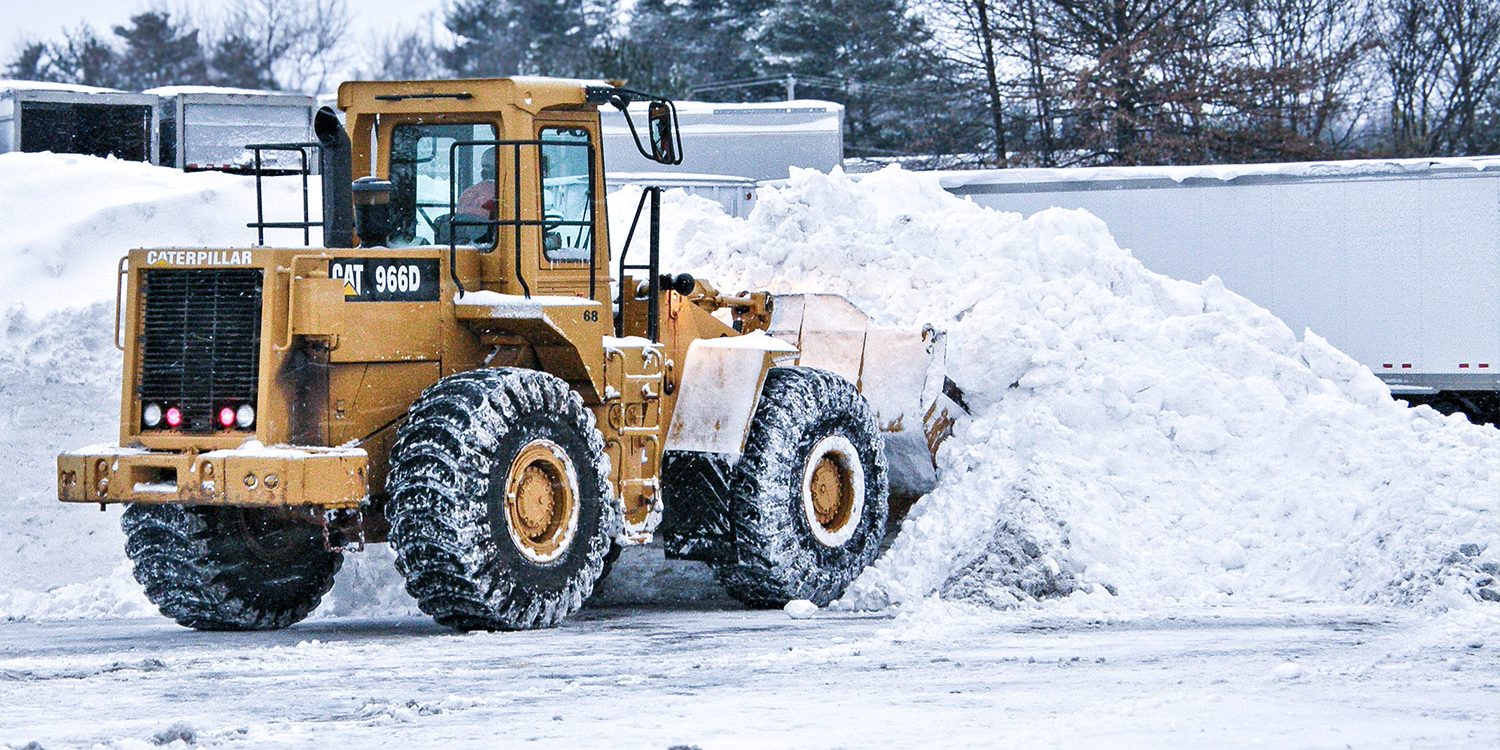
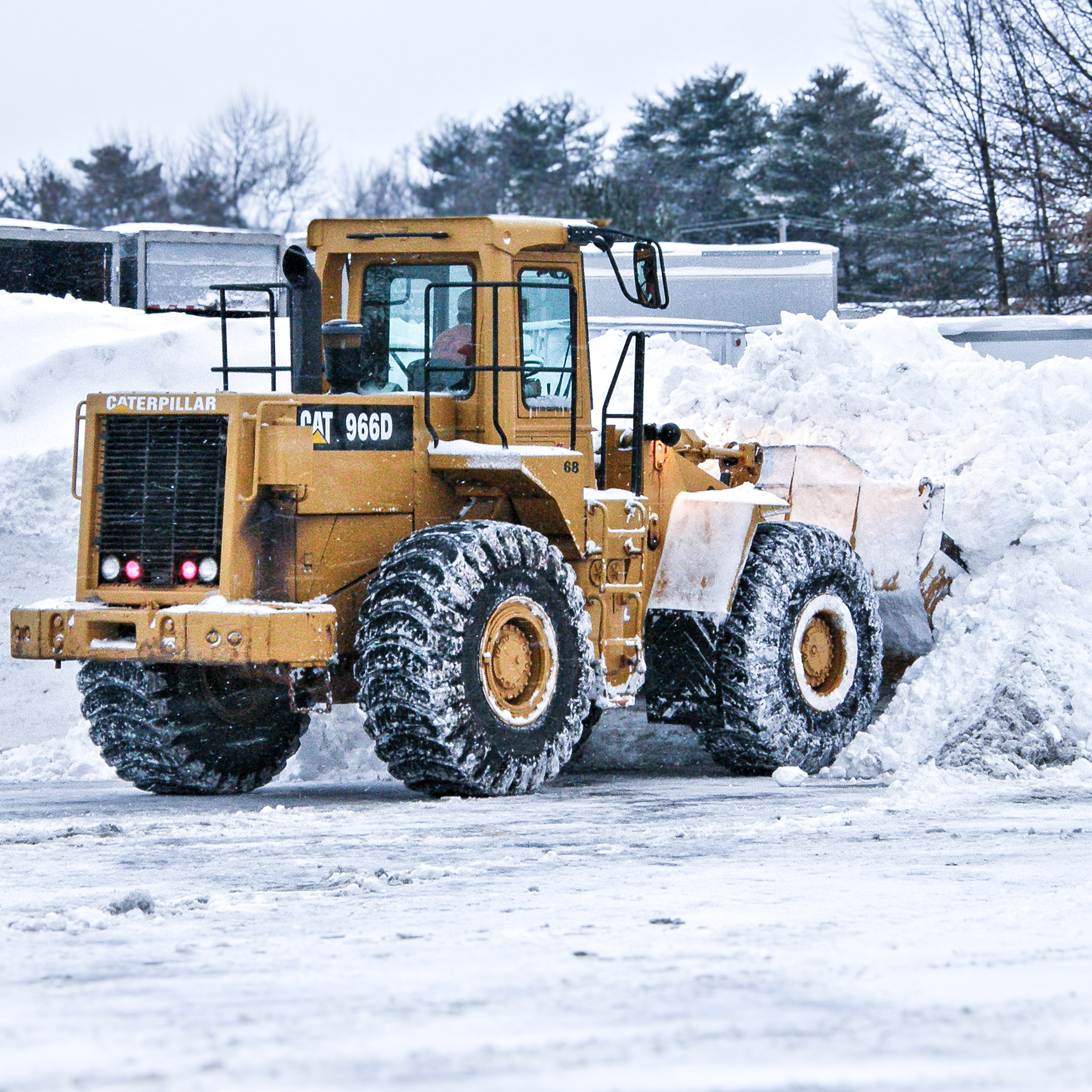
Senior living properties tend to be built out to the line. Islands, courtyards and long curb runs leave less room than a plain retail lot. Stacking space runs out fast, which is the part of senior living snow removal in Bucks County that surprises owners. Once it does, a pile at the end of a row blocks sightlines at a crosswalk. Then it melts across the walk by afternoon and freezes in the same spot that night.
That is when loading and hauling earns its keep. We load the excess and take it off site. The lot keeps its parking count, and the walks stay out of the melt path. Our article on snow hauling in Bucks County covers the pricing.
Pile placement gets decided on the site walk, never during the storm. Generators, dumpster enclosures, hydrants and propane fills all have to stay reachable. A staging spot that works in December can be useless by February.

The Walk-Through That Sets The Number
There is no single county rate for senior living snow removal in Bucks County. A contractor who quotes one over the phone has not seen the property. We measure cleared square footage, walkway linear footage and stacking room. We also set the trigger level each zone needs. Then we quote against those numbers.
Billing comes in three shapes. Per event costs less in a mild winter and more in a heavy one. A fixed seasonal contract caps the budget no matter what falls, so most multi property managers pick it. Time and materials sits in between.
Property inspections run through the season too. Conditions change between storms, and a hazard that forms on a Tuesday thaw should not wait for the next dispatch. The approach resembles what we laid out for medical office snow removal, with longer walkway runs and more entrances.
The Lingo Takeaway
Senior living snow removal in Bucks County is won on the walkways and entrances, not on lot speed. Set split triggers. Decide where the piles go before the season starts. Plan the ice work around refreeze instead of snowfall totals. Then write all of it down while the ground is still bare. We have run commercial snow and ice from our Timber Lane yard in Chalfont for decades. The seasons that go smoothly are always the ones settled in the fall.
Common Questions
What trigger depth should a senior living campus use?
Usually more than one. Walks and ramps commonly sit at 0.5 to 1.0 inch. Entrance drives land near 1.0 inch. A back staff lot often holds at 1.5 to 2.0 inches. The mix depends on how much foot traffic the property has overnight.
Do you offer 24/7 emergency snow service?
No. We do not run an emergency hotline, and we do not guarantee an emergency response window. Contracted properties get serviced on the dispatch schedule their trigger depth and priority tier set. Our office line is open Monday through Friday, 8:00 AM to 4:00 PM.
Is a seasonal contract better than per event billing?
A seasonal contract fixes the winter budget regardless of snowfall, so boards tend to prefer it. Per event billing costs less in a light winter and more in a heavy one.
Who clears the walkways, our staff or the contractor?
Either arrangement works, but it has to be in writing before the season. Split responsibility is where most claims start. So we settle walks, ramps and entries in the contract rather than assuming.
How early should we line up senior living snow removal in Bucks County?
Fall. Routes get built around properties that commit before the season, and industry groups such as SIMA give the same advice. By the first storm the routes are already set.
By Town
We provide commercial snow and ice management from Chalfont across central and lower Bucks County. These pages cover what each area runs into.
- Commercial snow removal in Doylestown, PA
- Commercial snow removal in Warrington, PA
- Commercial snow removal in Chalfont, PA
- Commercial snow removal in Newtown, PA
- Commercial snow removal in Buckingham, PA
We also work in New Britain, Warminster, Perkasie, Sellersville and the surrounding townships. If your campus sits nearby and is not listed, call and ask.
Line Up The Season
Want the walkways, ramps and entrances settled before the first storm? Call (215) 343-7700 Monday through Friday, 8:00 AM to 4:00 PM, or use our contact page. Tell us the property and the service level you need. We will walk it, measure it, and tell you honestly whether we are the right fit for senior living snow removal in Bucks County.