

Sidewalk Snow Removal in Bucks County, PA: Where the Claims Start
September 23, 2026
Sidewalk snow removal in Bucks County, PA is the line item most property managers settle last. It is also where most slip and fall claims begin. The parking lot gets attention because a plow truck is loud and visible. Meanwhile the walk gets one person with a shovel at 6 am. By 4 pm the entrance has iced over again, because meltwater ran off a pile somebody parked above the ramp.
We have handled commercial snow and ice work across Bucks County for decades. The same pattern shows up every winter. So here is what the walk actually needs, and how to get it into a contract before the first storm.
Sidewalk snow removal in Bucks County, PA, from the curb cut to the door
Walkway service is a separate scope from plowing. It should read that way in your agreement. On a commercial site it usually covers sidewalks, building entrances, ADA ramps and curb cuts at crosswalks. Stair treads, landings and the connector walks between parking and the front door belong in there too. So do loading dock aprons and employee entrances, because your staff uses those routes first.
Our walkway crews clear sidewalks and walkways so people can move safely across the property. Ice management runs right alongside it. After all, de-icing and anti-icing treatments are what keep a cleared walk from turning slick after dark. You can see the full scope on our snow and ice management page.
The clock starts when the snow stops
Each borough and township here writes its own sidewalk rules. Your deadline depends on where the property sits. Doylestown Borough runs one of the stricter versions, so it makes a useful benchmark for the rest of the county.
In the borough, owners get 10 hours after snowfall ends to clear their sidewalks. Snow that falls overnight has to be gone by 10 am. Walks must be cleared to full width, down to bare pavement. A narrow path worn through the middle does not count. Shoveling snow into the street or alley breaks the ordinance and carries a fine. Corner properties also have to clear curb cuts and crosswalk approaches, and that is the detail commercial sites miss most often. The borough spells it out on its snow and ice removal page.
Some sites front a state road or straddle a municipal line. Then you are working under two rule sets during one storm. We sort that out per property before the season, instead of at 5 am.
A half inch on the walk, two inches on the lot
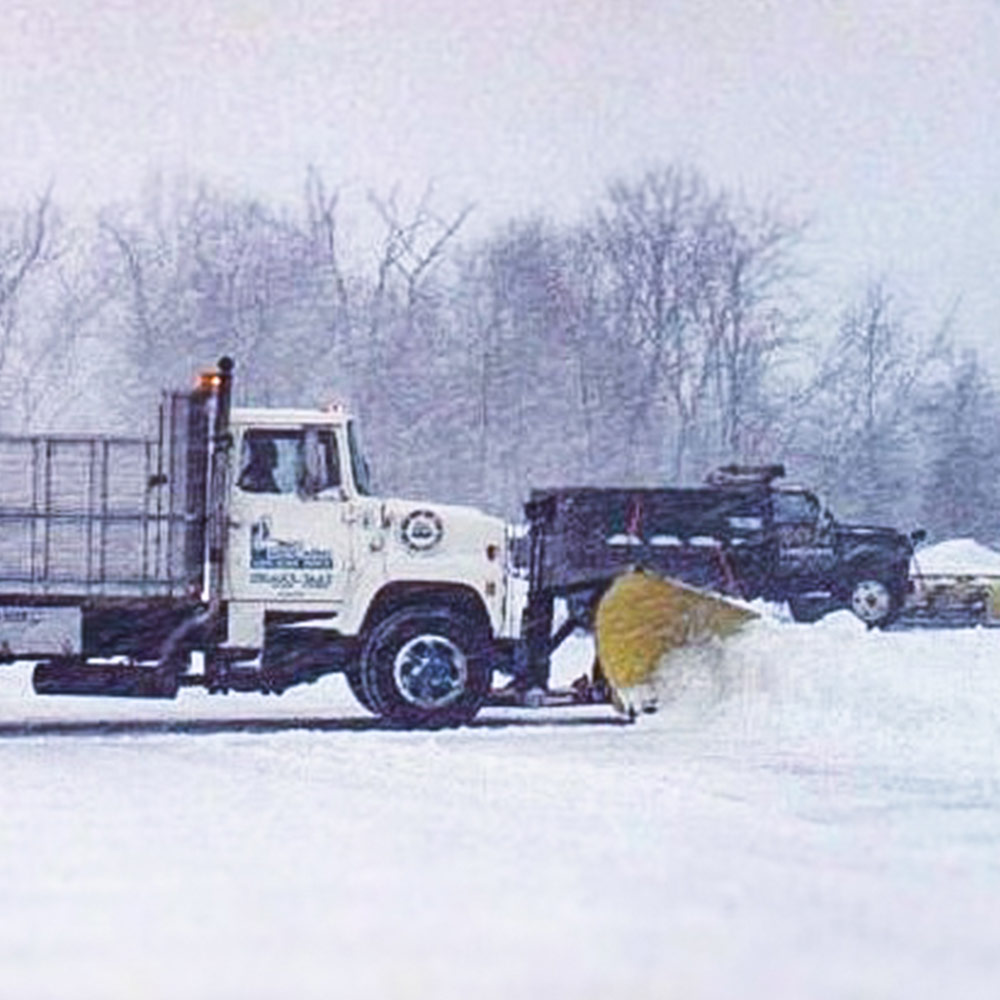
Trigger depth is the accumulation that sends crews out without anyone calling. Most properties do better with a split trigger than with one number for the whole site. We build walkway triggers at 0.5 to 1.0 inch for pedestrian routes and ADA ramps. A standard industrial or office lot sits at 1.5 to 2.0 inches.
Run both at the same depth and one side always loses. Set the whole site at 2 inches, and your walks stay slick through half the storm. Set it all at half an inch, and you pay to push a lot that barely needed it. High traffic sites usually land at 1 inch, including shopping centers, banks and medical offices. Zero tolerance applies where even a trace of ice is a problem. That split is the heart of sidewalk snow removal in Bucks County, PA. We wrote a fuller explanation of how trigger depth works if you want the detail.
What goes down after the shovel goes through
Clearing the walk is only half the work. Bare concrete still refreezes, especially on the shaded north side of a building. Anti-icing before a storm keeps ice from bonding to the pavement. De-icing afterward breaks up what did bond. Both belong to ice management. On a walkway they matter more than on the lot, because people fall on foot rather than in a car.
Material choice is part of sidewalk snow removal in Bucks County, PA too, and it carries a cost you see in April. Rock salt tracked indoors chews up flooring. Salt spray pushed into beds along a walk burns evergreens and turf edges. Penn State Extension covers that plant damage well in its guidance on de-icers and plant health. Where a walk runs past plantings, we would rather adjust rates than replace your shrubs in the spring.
The pile sitting above your ramp
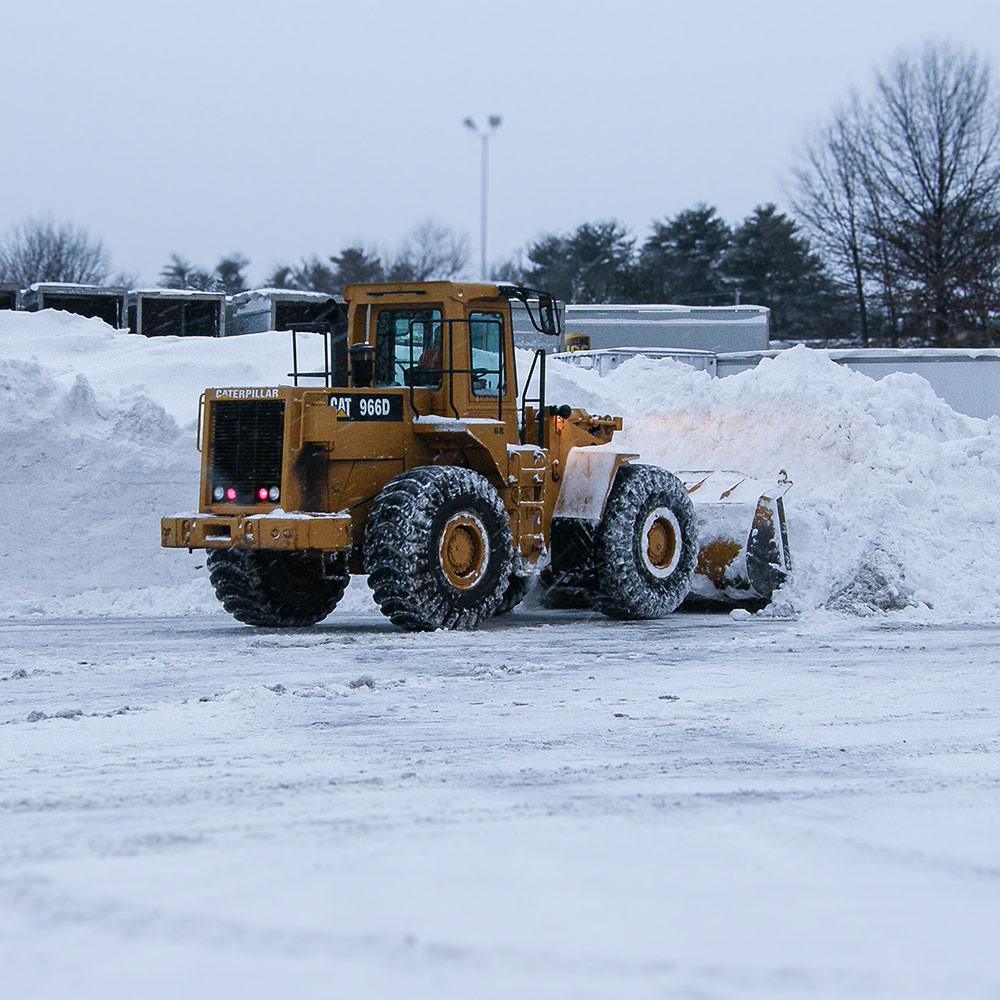
Where snow gets stacked decides what freezes later. Pile it uphill of a walkway, and the melt runs across that walk every afternoon. Then it locks up after sunset. Pile it over a storm drain, and the water has nowhere to go at all. Neither problem shows during the storm. Both show up at 7 pm on a clear night, on pavement that looked fine three hours earlier.
That is a site layout question. So we walk and measure the property before quoting, rather than pricing it over the phone. Tight sites with no stacking room get loading and hauling instead. We pull the excess snow off the property so the walks and the lot stay usable. We also run property inspections through the season as conditions change.
Bucks County sits close to the freezing line for much of the winter. That is why the refreeze cycle drives so many claims here. The National Weather Service office in Mount Holly is worth a bookmark for anyone who owns that risk.
One agreement beats two phone numbers
Splitting the lot and the walk between two contractors sounds thrifty. In practice it creates the exact failure you are trying to avoid. The plow crew clears the lot at 3 am. Then it windrows a pile across a sidewalk the walkway crew finished an hour earlier. Nobody owns the overlap, so the ramp stays buried until somebody complains.
Put both under one scope with one point of contact. Then the sequence is planned, and pile locations account for the walks. Sidewalk snow removal in Bucks County, PA works far better that way. Managers running several sites keep the whole portfolio on one agreement and one billing cycle. That is how most of our HOA and condo association clients handle it.
The Lingo Takeaway
Sidewalk snow removal in Bucks County, PA is a liability decision wearing a maintenance budget. Your lot can be spotless while the walks produce the only claim of the season. Set the walkway trigger lower than the lot trigger. Name the curb cuts and ramps in writing. Plan pile locations around drainage, and keep both scopes with one provider. Do that in September, and the rest of winter stays routine.
Common questions
How early should we lock in walkway service?
Late summer through early fall. We build routes around properties that commit before the season, and a full route is full. Boards and facility managers set budgets in the fall anyway, so this is the right window.
Should the sidewalk trigger match the parking lot trigger?
Usually not. Walks and ADA ramps typically run at 0.5 to 1.0 inch. A standard lot runs at 1.5 to 2.0 inches. The split costs less overall, and it covers the higher risk surface properly.
Do you clear walks when it ices but never really snows?
Yes, and those nights are common here. Anti-icing before an event and de-icing afterward are both part of ice management. Some of the busiest calls involve no plowing at all.
What about the parking lot side of the property?
We handle lots, drive aisles and access roads on the same agreement. There is more in our guide to parking lot snow removal.
Do you run an emergency hotline?
No. We do not operate a 24/7 emergency line, and we do not promise an emergency response window. Contracted properties get serviced on the dispatch schedule their trigger depth and priority tier set. We would rather say that plainly before you sign.
By town
We price and route commercial snow and ice work town by town. See commercial snow removal in Doylestown, Warrington, Chalfont, Newtown and Buckingham. From our Chalfont base we also serve New Britain, Warminster, Horsham, Montgomeryville, Hatfield, Lansdale, Perkasie, Sellersville and the surrounding townships.
This season’s walkway routes are filling now
Do you manage a commercial property or a portfolio here? We will walk the site, measure the walks and the lot, set your triggers and put a real scope in front of you. Call the office at (215) 343-7700 or use our contact form. Then sidewalk snow removal in Bucks County, PA is handled before the first storm handles it for you.