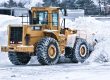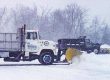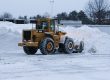


Average snowfall in Bucks County lands close to 28 inches in a normal winter. That one number drives more commercial budgets than it should, because average snowfall in Bucks County is a mean of very different seasons. Plan a parking lot around it and you can run short by February.
We have worked through Bucks County winters since 1982. The average almost never shows up as an actual winter. You get the mild one, or you get the ugly one. So here is what the numbers really say, and how to build a plan that survives both.
Why average snowfall in Bucks County lies to your budget
The county has no official long-term snowfall station of its own. Instead it sits between two that do. Philadelphia averages 23.1 inches a season. Allentown averages 33.1 inches. Both figures come from the 1991 to 2020 climate normals published by NOAA. Doylestown falls between them, which is where the high-20s figure comes from.
Now look at what a mean hides. One winter delivers 14 inches across six small events. Every one of them is a routine push. The next winter delivers 34 inches, but 20 of it arrives in a single weekend. Then comes a week of refreeze. Both winters average out fine on paper. Only one of them empties your budget by Presidents Day.
So the useful question is not what the season total will be. It is how many separate dispatches your site needs, and at what depth each one starts.
The calendar your salt bill actually follows
Snow season here runs from roughly mid-November to early April. November usually brings a dusting and little else. That makes it the month to pre-treat and check the site plan, not the month to plow. December produces the first genuinely plowable events. It does that while retail traffic is at its peak.
January and February carry most of the weight. Together they account for well over half of average snowfall in Bucks County. They also stack events close together. Piles from the first storm are often still sitting there when the second one lands. March then turns wet and heavy. Late-season snow holds more water per inch, so it is harder on equipment and harder on turf edges. It is hardest on anything planted along a salted curb line. Penn State Extension has a useful rundown on deicer damage to landscape plants if your lot has beds fronting it.
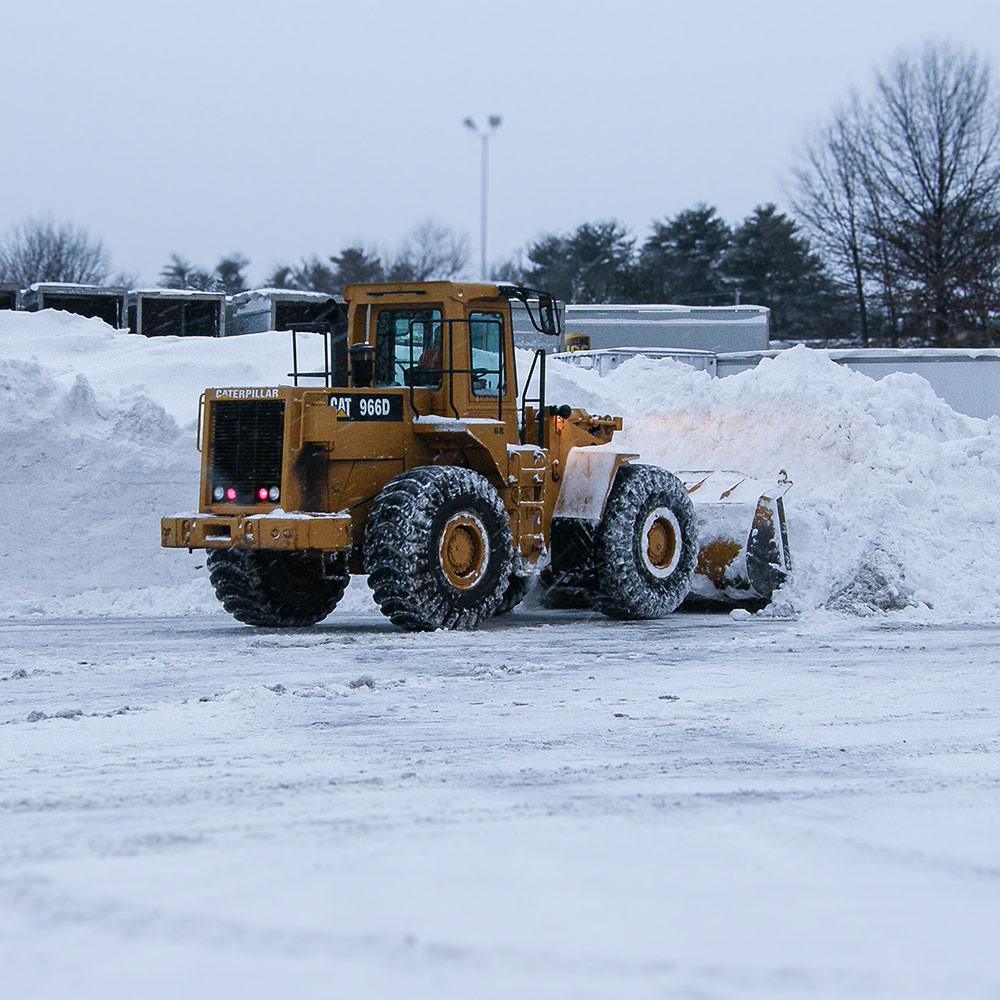
Quakertown weather and Bristol weather are not the same weather
Bucks County is long and narrow. It also drops more than 400 feet of elevation from the upper end down to the river towns. That matters more than most owners expect. Upper Bucks around Perkasie, Sellersville and Quakertown sits higher and colder. It behaves closer to the Allentown end of the scale. Lower Bucks along the Route 13 corridor sits warmer, and it tracks the Philadelphia number.
In many coastal storms the rain and snow line runs straight through the middle of the county. We have had mornings where a site off Route 309 needed a full push. The same morning, a site off Route 13 needed nothing but a salt run. So if you manage properties at both ends, average snowfall in Bucks County is not one budget line. It is two. The National Weather Service office in Mount Holly covers the whole region and is worth watching all season.
What the season total never counts
Here is the part that gets missed. Ice adds no inches to a snowfall total. It still generates the dispatches, and it generates the claims. A quarter inch of freezing rain puts nothing on the ruler. It can shut a medical office down anyway. None of that shows up in average snowfall in Bucks County, because a total only measures snow.
Bucks County spends much of the winter sitting right around freezing. Pavement that is wet and safe at 3 pm can glaze over by 7 pm. All it takes is the sun dropping behind the building. That is an ice problem rather than a plowing problem. So our contracts set a separate trigger for it. Zero tolerance sites such as hospitals and 24-hour retail dispatch at a trace to 0.01 inches of ice. Walkways and ADA ramps typically sit at 0.5 to 1.0 inch. The lot runs 1.0 inch for high-traffic retail and medical. Industrial and private office parks usually run 1.5 to 2.0 inches.
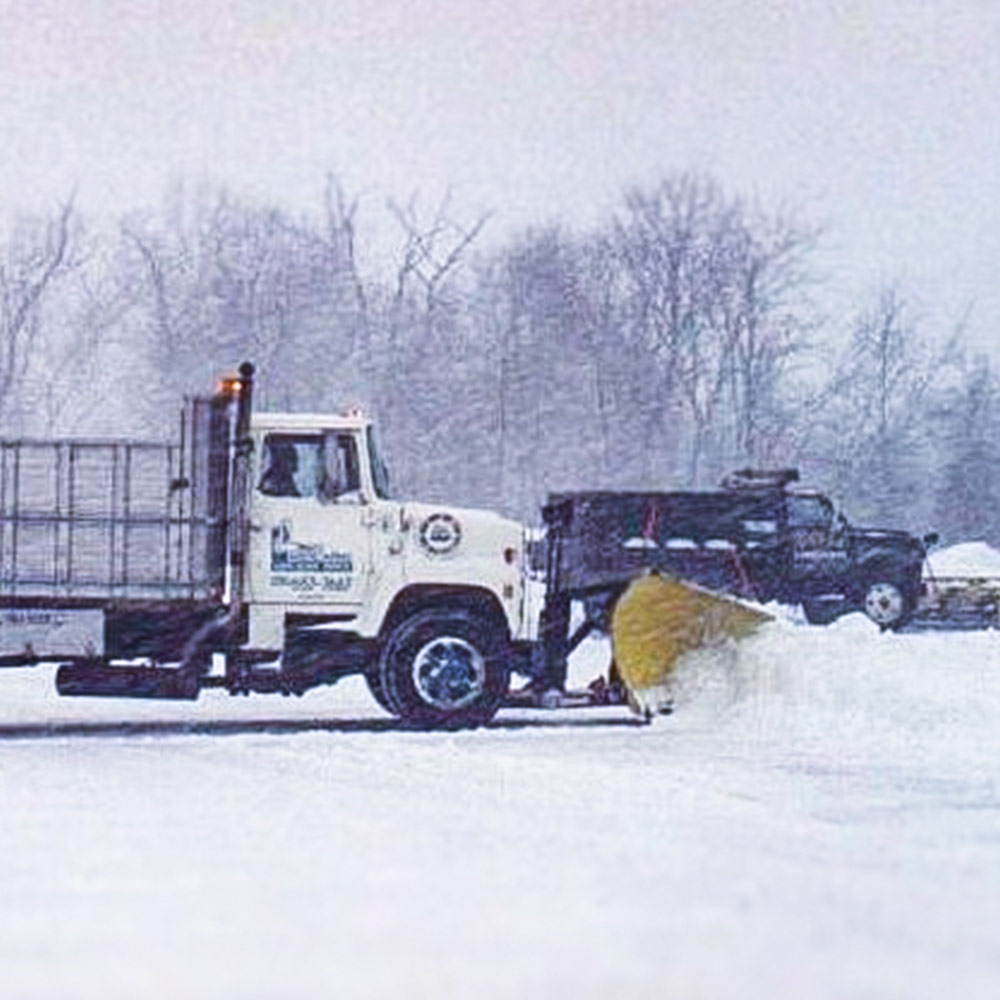
Buying a winter you cannot forecast
Once you accept that the average will not repeat, the billing structure becomes the real decision. Average snowfall in Bucks County cannot tell you which of the three below fits your property. Our commercial snow management contracts are written three ways. Per-event billing charges for each push and each application. It costs less in a light winter and more in a heavy one. A seasonal fixed contract costs the same either way. That is why most multi-property managers and association boards choose it. Time and materials bills hours on site plus material used. It fits complex sites where the scope shifts storm to storm.
None of those structures works without a site walk first. Cleared square footage, stacking room, walkway linear footage and grade all change the number. No honest quote comes over the phone. We covered what belongs in the document before you sign in our guide to commercial snow removal contracts.
By town
Snow routes get built around the properties that commit before the season. Boards set their budgets in the fall. We run commercial snow and ice management from our yard on Timber Lane in Chalfont. That keeps most of central Bucks inside a short response window.
- Commercial snow removal in Doylestown, PA
- Snow and ice management in Chalfont, PA
- Commercial snow removal in Warrington, PA
- Snow and ice management in Newtown, PA
- Commercial snow removal in Buckingham, PA
We also service New Britain, Warminster, Perkasie, Sellersville, Hatfield, Horsham, Lansdale, Montgomeryville and the surrounding townships.
The Lingo Takeaway
Average snowfall in Bucks County tells you what a normal winter weighs. It tells you almost nothing about the winter in front of you. So build the plan around trigger depths, stacking room, walkway responsibility and a billing structure your budget can absorb. Do that and the season total stops mattering much. Get it wrong and one February weekend will find every gap.
Common questions
How much snow does Bucks County get in a year?
Average snowfall in Bucks County works out to roughly 28 inches countywide. Central Bucks typically sees somewhere in the high 20s of inches per season. Upper Bucks runs higher, closer to the Allentown average of 33.1 inches. Lower Bucks runs lighter, closer to the Philadelphia average of 23.1 inches.
Which month brings the most snow?
February is usually the heaviest, with January close behind. Those two months together carry most of average snowfall in Bucks County in a typical year.
When should a commercial property sign a snow contract?
Fall, before the first event. Routes are built around properties that commit early. Association boards generally set winter budgets during the same window.
Does a light winter mean a smaller bill?
Under per-event billing, yes. Under a seasonal fixed contract, no. You are buying a capped budget rather than a count of pushes, and that predictability is the point for managers running several sites.
Do you plow residential driveways?
No. Our snow operation is built for commercial properties. That includes retail centers, medical offices, industrial parks, office parks and HOA communities.
Get your site walked before the first storm
If your property still has no snow plan for this season, now is the time to fix that. Call The Lingo Group at (215) 343-7700 during business hours, Monday through Friday. You can also reach us through our contact page. We will walk the site, measure it, and quote against what is actually there.