
Fall cleanup in Bucks County, PA is less about tidy curb appeal than most people expect. What matters is what you leave on the ground going into December. Timed right, a fall cleanup in Bucks County, PA protects turf, beds and drainage through four months of freeze and thaw.
We work out of 1170 Timber Lane in Chalfont, and The Lingo Group has been on Bucks County properties since 1982. Fall clean-up sits inside our seasonal transformations service, and the work covers leaf removal, gutter cleaning and pruning. Here is how we read a property in October, and what the timing actually decides.
Leaf Drop Here Runs Longer Than One Weekend
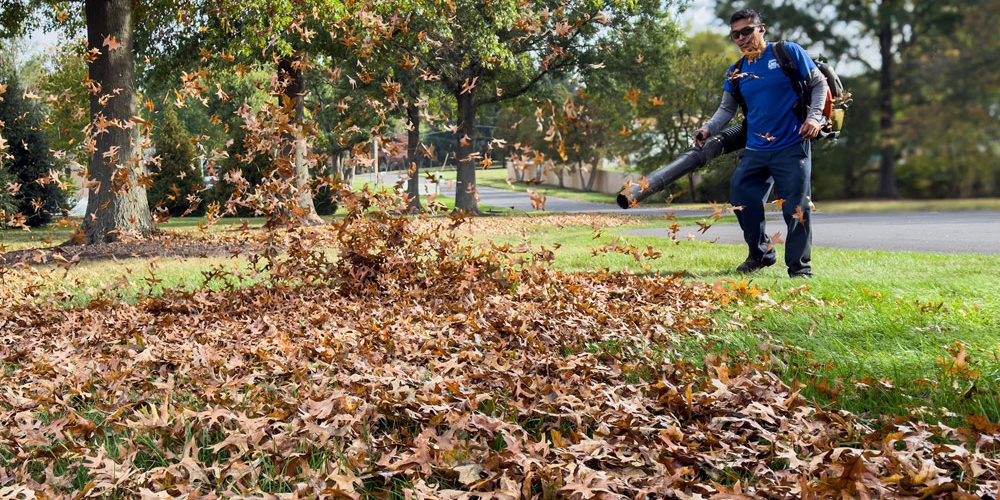
Plenty of owners book one visit and call the season finished. Then the oaks let go. Maples and ash drop first across the county, usually through the back half of October. Oaks hold on well into November, and pin oaks sometimes carry leaves past Thanksgiving.
So a single pass in early November leaves half the canopy still overhead. On a wooded lot in Buckingham or along the older street trees in Doylestown Borough, we plan two or three passes instead. Meanwhile an open lot in a Warrington business park might genuinely need one.
Frost timing shapes the rest of the fall cleanup in Bucks County, PA schedule. Inland parts of the county usually see a first freeze in the second half of October. The National Weather Service office in Mount Holly covers this area if you want to watch it. Once the ground freezes hard, debris stops breaking down and simply sits there until spring.
Leaves, Gutters and the Cuts That Can Wait
Our fall clean-up covers three things, and each one has a reason behind it.
- Leaf removal, because a wet mat holds moisture against the crown of the grass plant.
- Gutter cleaning, because a packed gutter sends water down the foundation and across walkways that later ice over.
- Pruning, because deadwood and crossing limbs fail first under snow load.
Thin leaf cover is a different story. Penn State Extension points out that shredded leaves feed the lawn rather than harm it. A layer up to about half an inch mulches in fine. Trouble starts when oak leaves pile three inches deep and then get rained on. After that it is a mat, not mulch.
Pruning gets a narrower window than the rest. We take out dead, damaged and rubbing wood in fall. However, hard shaping cuts on spring bloomers wait until after they flower, because cutting now removes next year’s buds.

Where the Water Goes in January
Half the damage we fix in April started as a blocked path in November. Leaves travel to the lowest point on a site, then settle into swales, catch basins and curb inlets. After that, every thaw sends water somewhere it was never meant to go.
During a fall visit we clear runoff channels, pull debris off drainage points and flag low spots that hold water. On a sloped Chalfont property, that often means the swale behind the building rather than anything you can see from the parking lot. Therefore we walk the back of the site, not just the frontage.
Ice follows water. A clogged inlet near a walkway in December becomes a sheet of ice in January. That is a liability question before it is a landscaping one. So drainage is part of every fall cleanup in Bucks County, PA we schedule, never a separate job.
Cool Season Turf Spends Its Best Weeks in Fall
Lawns across Pennsylvania run on cool season grasses. They push roots hard in September and October, slow down in the cold, then come back early in spring. That makes autumn the strongest stretch of the year for turf work.
Our turf management program covers aeration and overseeding, fertilization and weed control. Seasonal care runs from spring revitalization through fall preparation. Aeration opens compacted soil so roots reach water and nutrients. Overseeding then fills thin spots while the soil is still warm enough for germination.
Fall cleanup in Bucks County PA works best when it lines up with that schedule. Clearing leaves before aerating gives the machine clean contact with soil. Seeding into a debris free surface also puts seed where it can actually root. Order matters more than people think.

Clay, Shale and a Lawn That Mats Flat
Soils across the upper townships sit on red shale, and the clay above it drains slowly. Water perches near the surface instead of moving down. As a result, a leaf mat on clay stays wet far longer than the same mat on a sandy lot.
Compaction compounds it. Heavy equipment, foot traffic and saturated ground all squeeze pore space out of the soil. We keep access routes controlled during cleanup for exactly that reason, and we keep disruption down on clay heavy sites.
Mulch rings help the trees through the same winter. Penn State Extension has written about mulch applied correctly around trees, and the common mistake is piling it against the trunk. We keep it off the bark and spread it wide instead.
Commercial Sites Get Phased, Not Blitzed
A high traffic commercial property cannot shut down for a cleanup crew. HOAs, retail centers, medical offices and office parks keep running while we work. So we phase the visits and keep access open. The same approach shows up on our yard cleanup in Bucks County page, because the logic holds in both seasons.
Fall also hands off directly to winter. Pile zones, bed edges and drain locations are easier to mark while you can still see pavement. Property managers who settle grounds work and commercial snow management together get a cleaner handoff in December.
What Actually Sets the Price for Fall Cleanup in Bucks County, PA
There is no flat county rate, and any number quoted over the phone was not based on your property. These are the measurable things that move it.
- Canopy density, because a wooded lot drops many times the debris of an open one.
- Number of passes, since oaks force a later visit after everything else is done.
- Turf and bed area, meaning the ground we actually clear and cut back.
- Gutter runs and roof height, because access changes how long that part takes.
- Debris volume and haul-off, since what leaves the site gets handled and disposed of.
Those six items decide a fall estimate far more than square footage alone. So we walk the property before we quote it.
The Lingo Takeaway
Fall cleanup in Bucks County PA is a drainage and timing job wearing a leaf blower. Plan more than one pass if you have oaks. Clear the swales and inlets, not only the lawn. Line the cleanup up with aeration and seeding while soil is still warm. Get those three right and your property starts spring ahead instead of behind.
Common Questions
When should fall cleanup in Bucks County, PA happen?
Most properties need work spread across late October and November. Maples and ash come down first, oaks finish last, so the final pass usually lands after the oaks let go and before the ground freezes hard.
Is one visit enough?
On an open lot with few trees, often yes. On a wooded property, no. We plan two or three passes so a mat never sits on the turf for weeks at a time.
What does your fall clean-up include?
Leaf removal, gutter cleaning and pruning. We also clear drainage paths, cut back the plant material that should be cut in fall, and look at irrigation and lighting while we are on site.
Do you handle commercial properties and HOAs?
Yes. We phase cleanups on high traffic commercial sites so access stays open and operations keep moving.
Can leaves just be mulched into the lawn?
A thin layer, yes. A deep oak mat, no. Once leaves pack down and get wet, they block light and air at the soil surface, and the turf underneath thins out.
By Town
Grounds work is scheduled by area. Start with your township.
- Landscaping in Doylestown, PA
- Landscaping in Warrington, PA
- Landscaping in Chalfont, PA
- Landscaping in Newtown, PA
- Landscaping in Buckingham, PA
Fall clean-up is part of our seasonal transformations service, and our turf management program covers the aeration and seeding side. To get a fall cleanup in Bucks County, PA on the schedule, call us at (215) 343-7700 or use our contact page. We will walk the property, count the passes it really needs, and put the scope on paper before the first freeze.