
Self storage snow removal in Bucks County looks simple from the road and almost never is. A storage property is mostly drive aisle, so self storage snow removal in Bucks County lives or dies on how those aisles get handled. The buildings sit close together. Snow pushed off one aisle lands against the roll-up doors on the next one.
Bucks County adds its own wrinkle. Most storage sites here sit on the commercial edges, off Route 309 near Hatfield, along Street Road in Warminster, or on Easton Road north of Doylestown. Those pads were graded for drainage and unit count, not for winter. So there is pavement nearly everywhere and very little open ground to put a pile.
Where the Loader Starts
Order of operations decides whether tenants can reach their units at all. A storage site has one entrance, one gate lane, then a grid of aisles that dead end. So the sequence runs from the outside in, and the gate comes first.
- Entrance apron off the road, so trucks and trailers turn in without stopping traffic.
- Gate lane and keypad island, cleared wide enough that a driver reaches the pad without stepping into slush.
- Office walk and ADA ramp, because that is where falls happen and where claims start.
- Main spine aisle, cleared full width so two vehicles can pass each other.
- Secondary aisles and the back row last, once the spine is open.
That back row matters more than it looks. Tenants with boats, campers and work trailers usually park out there, and those drivers need room to swing. One pass down the middle leaves them stuck against a bank.
Self Storage Snow Removal Bucks County and the Gate Clock
Storage gates tend to open early and close late, so the site stays in use across a longer day than an office park does. Self storage snow removal in Bucks County has to fit that window instead of a nine to five one. A manager opening the gate at six wants the gate lane and the office walk done first. A tenant pulling a trailer out at seven in the evening wants the spine aisle still passable.
We are straightforward about the limits here. The Lingo Group does not run an emergency snow hotline and does not promise an emergency response window. Contracted properties get service on the schedule their trigger depth and priority tier set, and the office takes calls at (215) 343-7700 during business hours, Monday through Friday. So your gate hours belong in the contract rather than in a phone call during the storm.
Snow Between the Buildings
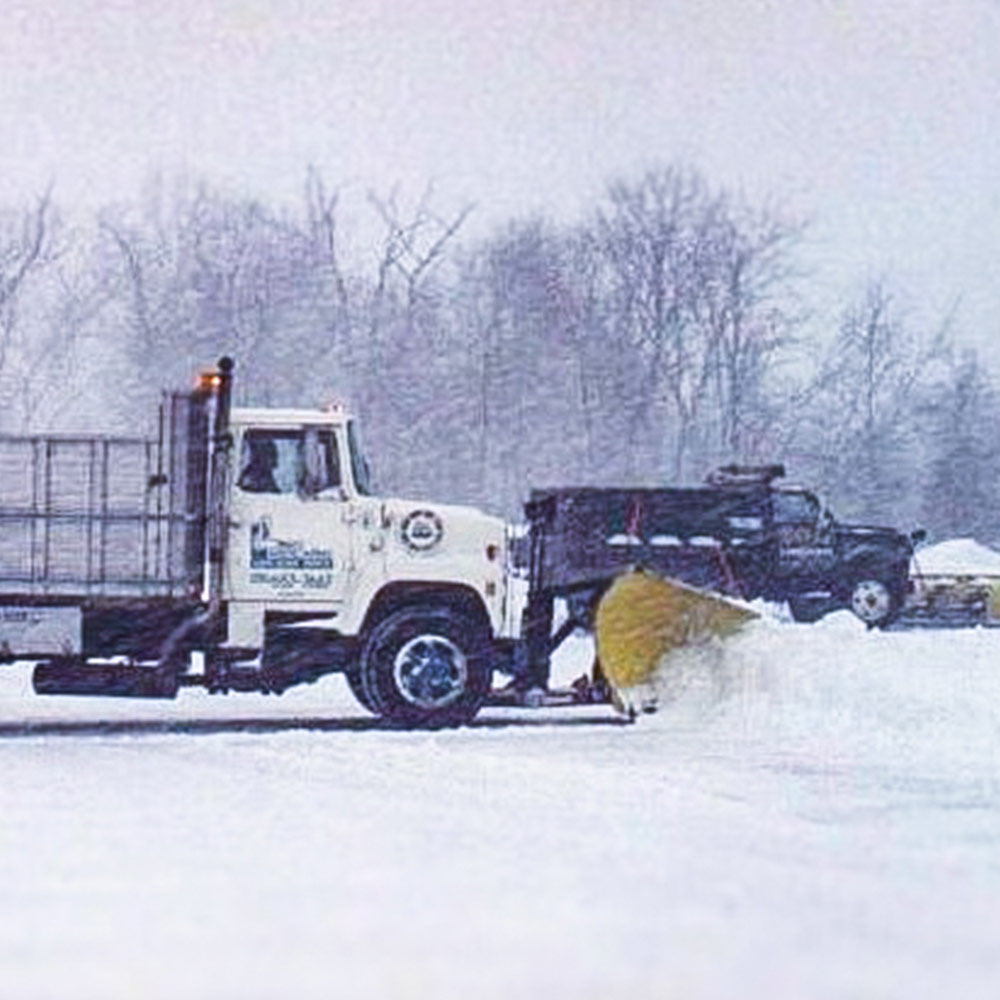
Stacking room is the real constraint on a storage property, and it shapes self storage snow removal in Bucks County more than horsepower does. Aisles between buildings often run twenty five to thirty feet wide. Push snow to one side and it buries doors. Push it to both sides and the aisle narrows until a box truck cannot fit. After two or three storms inside ten days, those banks stop melting and start steering traffic.
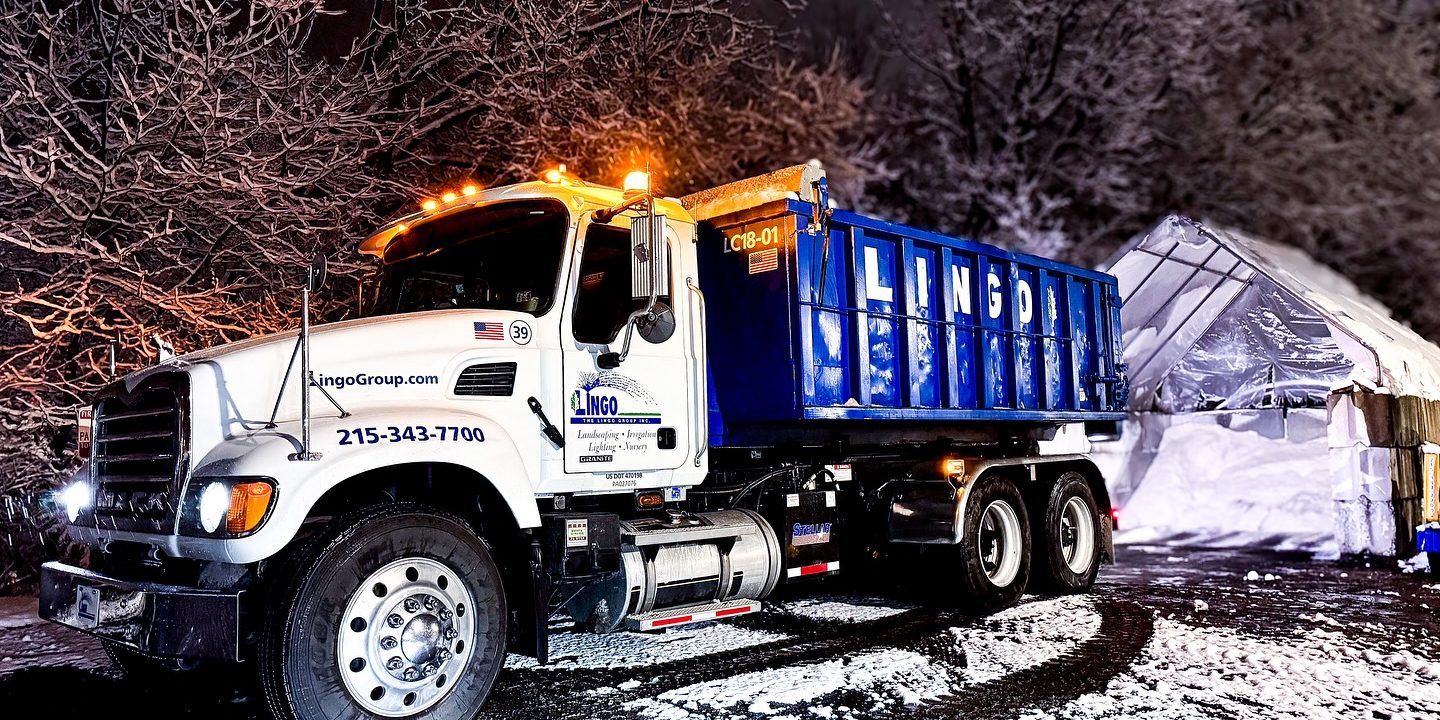
So plan the pile in October, not during the second storm. Pick a corner of the outside lot, downhill of the buildings, away from door lines and away from the drainage inlet. Then expect to move it. We load and haul excess snow off site when a property runs out of room, and snow hauling is standard on tight commercial pads. It also prices separately, because it takes a loader and trucks instead of a plow.
Roll-Up Doors, Thresholds and Meltwater
Doors are where self storage snow removal in Bucks County gets expensive. A plow bank left against a roll-up door freezes to the slab, and the door will not lift until somebody chips it free. Meltwater runs under the threshold and refreezes inside the unit overnight. Tenants find wet boxes and blame the facility, not the weather.
Finish work therefore matters as much as the push. Crews should leave a clear strip across every door line rather than a shaved bank. De-icing and anti-icing treatment belongs on the gate lane, the office walk and the aisle crowns, and all of that sits inside our commercial snow and ice management service. Rock salt also slows down badly near twenty degrees, a limit Penn State Extension explains well. Overnight lows from the National Weather Service office in Mount Holly tell you which nights a shaded north wall will glaze over.

What Goes in Writing Before December
Trigger depth is the number that dispatches a crew, and a storage property usually needs two of them. Good self storage snow removal in Bucks County starts with those two numbers rather than a flat per visit rate. We build commercial contracts around set tiers. Standard business at one and a half to two inches fits the aisles and the outside lot. Sidewalk specific at half an inch to one inch fits the office walk and the ramp. Running both at the same depth either overspends on pavement or leaves your front door unsafe.
Price follows conditions you can measure on site. Cleared square footage, layout and stacking room, trigger depth and service level, walkway linear footage and billing structure all move the number. Per event billing costs less in a mild winter and more in a heavy one. A seasonal contract fixes the figure either way, which is why most multi property managers choose it. Pretreatment and brine come from the same playbook the state uses, and PennDOT defines those terms plainly.
The Lingo Takeaway
A storage property is nearly all pavement with nowhere to put what you move off it. That combination rewards a plan and punishes a one push contract. Clear the gate lane and the office walk first, keep a strip across every door line, and choose the pile corner before the first storm lands. Then set two trigger depths and budget for hauling. Handle that now, and a February week with three storms stays a scheduling problem instead of a lockout.
Common questions
How wide should a storage aisle be after the plow goes through?
Wide enough for a box truck and a passing car, which usually means full width rather than a single pass. Aisles tighten every storm as the banks build. So self storage snow removal in Bucks County works better when the plan includes pushing snow out of the aisles entirely instead of stacking it along them.
Why does snow get hauled off a storage site?
Because the site runs out of room. A storage grid has no landscape islands and no overflow field, so after a few storms the piles take aisle width and block sight lines at the gate. Loading and hauling returns that space, and it carries its own line on the invoice.
Do crews clear in front of every unit door?
That depends on what the contract says, so put it in writing. Door line strips, walkways and ramps take hand or machine work, and they price apart from the lot. Facilities with ground floor drive up units generally want the strips included.
Does The Lingo Group answer calls during a storm?
We take calls at (215) 343-7700 during business hours, Monday through Friday. There is no emergency hotline here. Trigger depths and priority tiers get set during the site walk for exactly that reason.
Is a seasonal contract or per event billing better for a storage facility?
A seasonal contract caps the winter number, which suits a property with a fixed monthly revenue line. Per event billing wins in a light winter and hurts in a heavy one. Owners running several sites usually take the fixed figure.
By town
Commercial routes get built around properties that commit before the season starts. The towns below are where we organize commercial snow work, so self storage snow removal in Bucks County follows those same routes. If your facility sits in one of them, the town page explains how the route runs.
- Commercial snow removal in Doylestown, PA
- Commercial snow removal in Chalfont, PA
- Commercial snow removal in Warrington, PA
- Commercial snow removal in Newtown, PA
- Commercial snow removal in Buckingham, PA
Storage sites share a lot with distribution property, so it helps to read how warehouse snow removal gets sequenced around doors and aprons. Township ordinances add their own clocks, and Bucks County links out to each municipality so you can check yours.
We work out of Chalfont, close to the corridors most storage facilities sit on, and that proximity is the whole point of running this work on a route. Call (215) 343-7700 during business hours or use the contact page. We will walk your site, measure it, and set triggers that fit how your gate actually runs.