
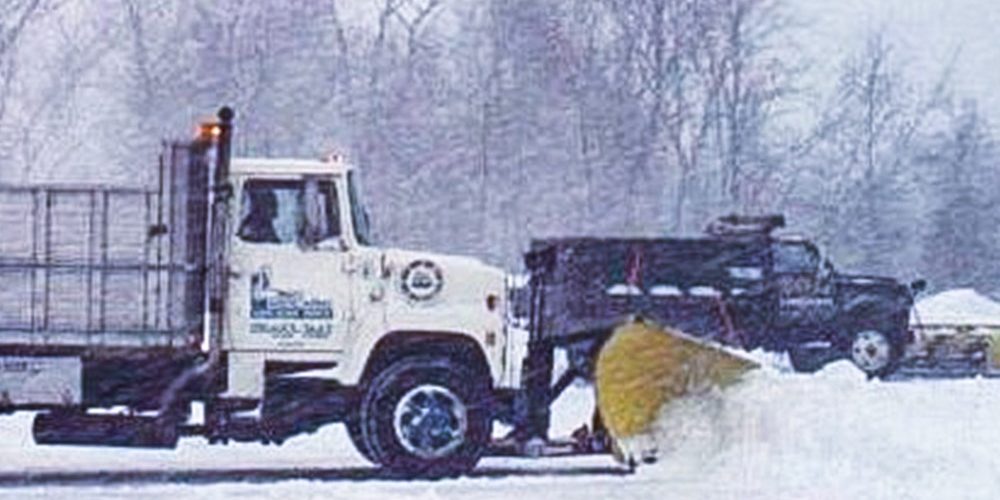
De-icing services in Bucks County are what stand between a cleared lot and a refrozen one. Plowing moves the snow, but de-icing services in Bucks County handle the thin film a blade always leaves behind. That film is where most winter slip claims begin. A lot can look finished at 6 a.m., then turn slick by 8 a.m. once the sun drops behind the building.
The Lingo Group runs commercial snow and ice work out of our shop on Timber Lane in Chalfont. Ice control is part of every contract we write, because a plow-only property is only half covered. Here is how the material, the timing and the pavement itself decide what actually works.
What Your Pavement Is Doing While You Sleep
Salt does not melt ice by touching it. Instead, it dissolves into the moisture already on the surface and drops the freezing point of that brine. So the whole system leans on two things. Liquid water has to be present, and the surface has to stay warm enough for the chemistry to run. Air temperature is the number everyone checks. Pavement temperature is the one that decides the outcome.
Straight rock salt keeps working down to roughly 15 or 20 degrees on the surface. Below that, it slows badly and can sit there as expensive gravel. PennDOT builds its entire winter program around that limit. That is why state crews pre-treat highways with liquid brine instead of spreading dry salt afterward. You can read the approach on the PennDOT winter operations page.
De-Icing Services in Bucks County Start Before the First Flake
Anti-icing means treating a surface before precipitation arrives. A brine pass leaves a dry salt residue that keeps the first snow from bonding to the asphalt. Then, when the plow comes through, it scrapes to bare pavement instead of skating over a welded layer. Our ice management includes de-icing and anti-icing treatments on contracted properties. That pre-storm pass is usually the cheapest hour of the whole event.
Timing is the catch. Rain ahead of a changeover washes brine straight off, so pre-treating before a wet start wastes money. Because of that, we read the forecast discussion from the National Weather Service office in Mount Holly. That office covers Bucks County and the rest of the Delaware Valley, and it tells us far more than a phone app icon.
Rock Salt, Brine and the Thermometer
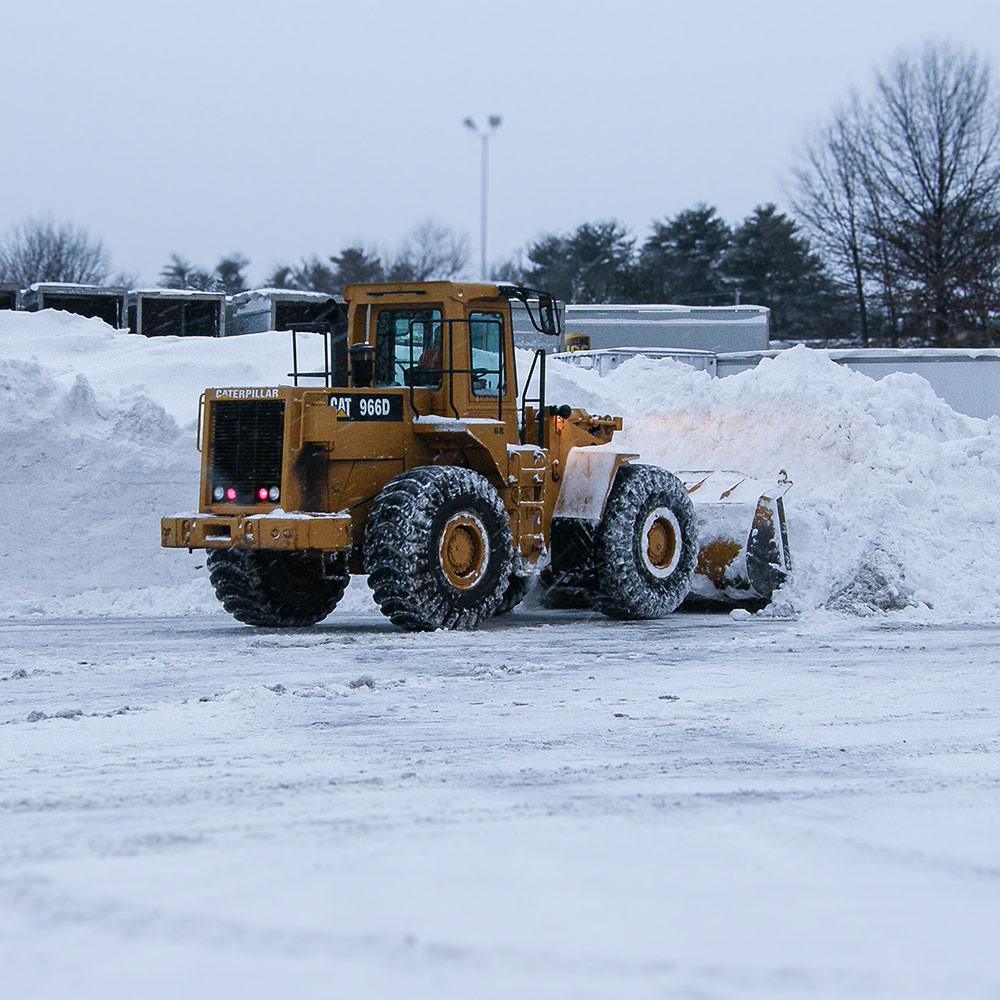
De-icing services in Bucks County work from a short list of materials, and each one has a job. Rock salt is the workhorse above about 20 degrees. Treated salt is rock salt coated with a liquid additive. It stays active lower, and it sticks to the pavement instead of bouncing into the turf. Calcium chloride and magnesium chloride blends keep going into the single digits, though they cost more per pound. Sand adds traction but melts nothing at all.
Using more product is not the same as using the right product. Over-application is the most common mistake on commercial sites. Later it shows up as burned turf edges, spalled concrete and chloride in the creek. Penn State Extension has a plain summary of the runoff side in its guide to watershed-friendly deicing. A good spread plan puts material where traffic packs it down. Then it skips the open middle of a lot that drains fine on its own.
Where Ice Shows Up First on a Property Here
Local terrain makes ice predictable once you know a site. North-facing entrances stay shaded all day in January, so they refreeze first. Loading docks sit below grade and collect meltwater from everything uphill. Downspouts that discharge onto a walkway build a sheet of clear ice by the second night. Nobody sees that one coming.
Elevation plays a part too. Properties around Doylestown and New Britain often run colder than sites in Warminster or Newtown. So a storm that falls as rain in one place can glaze over in another. Traffic patterns count as well. Drive aisles off Easton Road and County Line Road get packed hard by mid-morning. Meanwhile the back rows of the same lot stay loose and powdery. As a result, one blanket salt rate for a whole site either overspends or leaves a hazard.
Questions Worth Asking Before You Sign
Ice control is the part of a snow contract that usually gets skimmed. Before you sign for de-icing services in Bucks County, settle these five points.
- Is de-icing included or billed separately? Both structures are normal. You only need to know which one you have before the first invoice lands.
- What triggers an ice-only visit? Freezing rain, refreeze after a thaw and black ice each need a dispatch rule of their own. Those rules sit apart from snow depth.
- Who covers walkways and ADA ramps? Those carry the most liability per square foot, and they often price apart from the lot.
- What documentation comes with it? Time-stamped records of every application are what answer a slip-and-fall claim two years later.
- What happens in a salt shortage? Regional supply runs tight after long cold stretches. Ask early where your property sits in the priority order.
Our breakdown of commercial snow removal trigger depth walks through the tiers we build contracts around.
The Lingo Takeaway
We have handled commercial snow removal for retail centers, medical offices, industrial parks and HOAs across Bucks County for decades. The pattern repeats every winter. Properties that get through cleanly have an ice plan written down in the fall. Good de-icing services in Bucks County start with that plan, not with a phone call after the first glaze. Our hub on Timber Lane in Chalfont sits within roughly five miles of the county’s main commercial corridors. That proximity decides how fast a site gets treated. Tell us during the site walk what your walkways, ramps and docks need. Then we will build the trigger rules around them. The full scope lives on our Snow Management page. Our guide to parking lot snow removal in Bucks County covers the plowing side.
Common questions
Does de-icing replace plowing?
No. Salt is not built to melt six inches of snow, and trying it costs far more than a plow pass. Crews clear first, then treat what the blade could not reach.
How cold is too cold for rock salt?
Plain rock salt gets sluggish around 15 to 20 degrees on the pavement. Below that, treated salt or a chloride blend does the work instead.
Can you pre-treat before every storm?
Not sensibly. If the event starts as rain, brine washes off before the snow arrives, so the pass buys nothing. The forecast decides.
Will de-icer hurt my landscaping?
Heavy spreading along bed edges and lawn strips can burn roots and leave salt in the soil through spring. Calibrated application and smart placement keep most of that damage off your turf.
Are de-icing services in Bucks County available around the clock?
We answer the office line Monday through Friday during business hours, and we do not run an emergency hotline. Contracted properties are serviced on the dispatch schedule their trigger depth and priority tier set.
By town
We build and price commercial snow and ice routes town by town. Drive time between sites decides how many properties one truck can carry. These pages cover the work in each.
- Commercial snow removal in Doylestown, PA
- Warrington, PA commercial snow removal
- Snow and ice management in Chalfont, PA
- Commercial snow removal in Newtown, PA
- Buckingham, PA commercial snow removal
If your lot, walkways or docks need de-icing services in Bucks County this winter, call The Lingo Group at (215) 343-7700 or reach us through our contact page. Routes fill before the season starts, so earlier is better.