
Grocery store snow removal in Bucks County starts hours before the first customer pulls in. By six in the morning the lot has to be pushed, the entrances treated and the cart corrals dug out, because bread trucks, dairy deliveries and the opening crew all arrive in the dark. Supermarkets never get a slow morning after a storm, and that one fact shapes how the whole property gets cleared.
Stores along Route 611 in Warrington, Easton Road in Doylestown and Bristol Road in Chalfont sit on lots built for a busy Saturday, not for ten inches of snow. Once the piles go up, the lot shrinks. Then the evening rush arrives and the same spaces have to work twice as hard.
Before the Bread Truck Backs In
Deliveries set the sequence on a supermarket site. Trailers often reach the receiving door between four and six in the morning, so the dock apron and the rear drive have to open first. If a driver cannot swing the trailer, the load sits and the shelves stay thin through the morning.
After that, crews run the fire lanes and the main drive aisle, then the customer rows, then the walkways and corrals as they work back toward the front. The Lingo Group clears parking lots, driveways and access roads as part of its snow management work. On a retail property, the order of operations counts as much as the equipment does.
Every pass also has to leave the lot usable while it happens. Plowing a full row at nine in the morning is a different job than plowing an empty one at four.
Grocery Store Snow Removal in Bucks County Starts at the Entrance Doors
Grocery store snow removal in Bucks County lives or dies at the front doors. Automatic doors jam when slush packs into the track. Vestibule tile turns slick once a few hundred people carry salt and meltwater across it. Walk-off mats soak through by mid-morning and need a swap.
Walkway service gets written separately from the lot for that reason. Lingo sets sidewalk triggers at a half inch to an inch, while a high traffic retail lot usually runs at an inch. Running both at the same depth either overspends on the lot or leaves the sidewalk short, and the sidewalk is where slip and fall claims tend to start.
Cart Corrals Get Buried First and Found Last
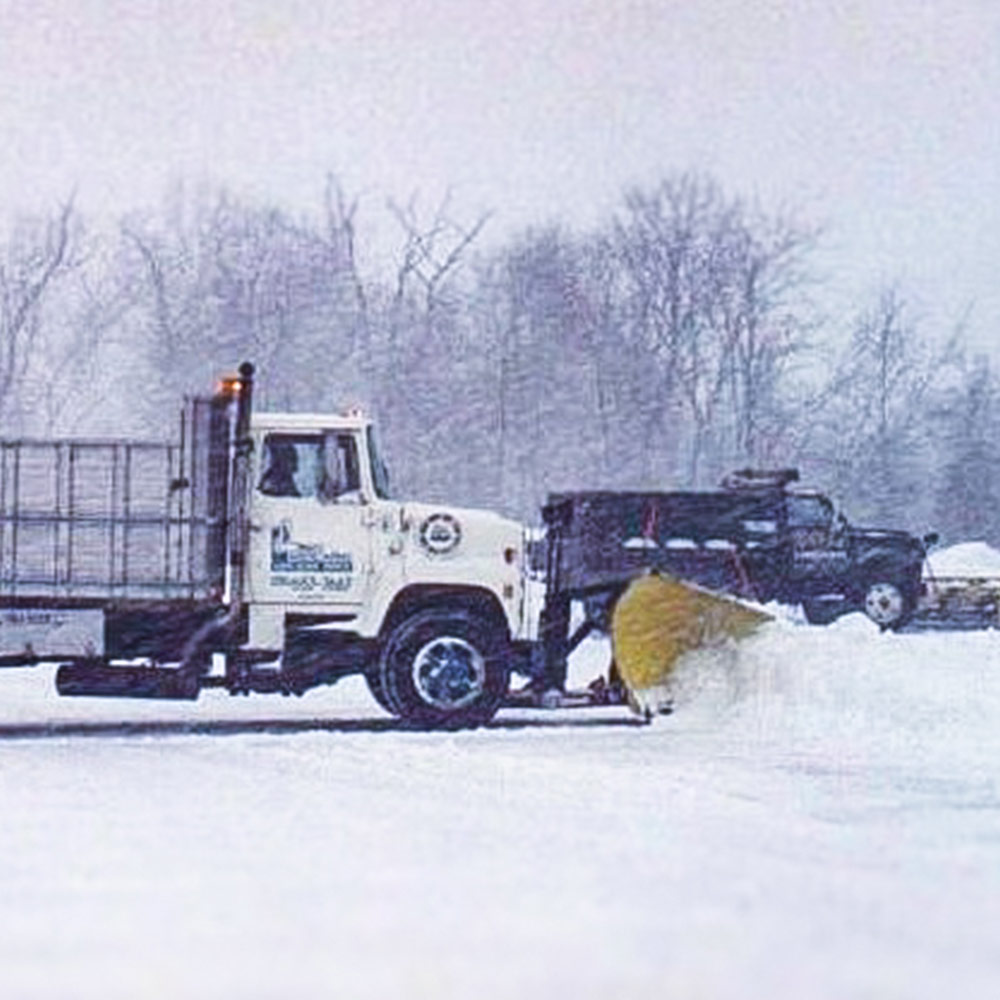
Cart corrals sit in the middle of the lot, which makes them the easiest thing to wall in. A truck running a clean pass berms a corral in seconds unless someone moved the carts first. Then the store loses the corral, the row beside it and usually a few carts frozen to the pavement.
The fix happens before the storm rather than after. Staff pull carts inside or into a cleared zone, and the corrals get marked so an operator can see them under the snow. Marking protects the posts and curbs too, since plow damage to lot fixtures shows up on nearly every commercial site by March.
The Dock, the Compactor and the Rear Drive
The back of a supermarket carries more traffic than most people picture. Haulers need a straight shot at the compactor. Trailers need turning room. Vendors park wherever they can find a gap.
Snow gets pushed toward the rear of the lot on plenty of properties, but the rear drive of a grocery store cannot become the pile. Once it does, the compactor cannot be pulled and the trash backs up inside the store within a day.
Salt, Refreeze and the Hours Between Rushes
Ice management is its own line of work. Lingo runs de-icing and anti-icing treatments instead of waiting for a sheet to form, and the quiet stretch between the lunch and dinner rushes is when crews can actually treat the lanes closest to the doors.
Refreeze does most of the damage at a grocery store. Meltwater runs across the lot all afternoon, and once temperatures drop after sunset that same path turns to black ice right as the dinner crowd arrives. For those overnight numbers, the National Weather Service office in Mount Holly is the forecast most local operators watch.
Salt carries a second cost as well. Penn State Extension reports that chloride from winter deicing ends up in nearby soil and streams, so measured application beats heavy application on a property this size.
Where the Snow Goes When the Lot Never Empties
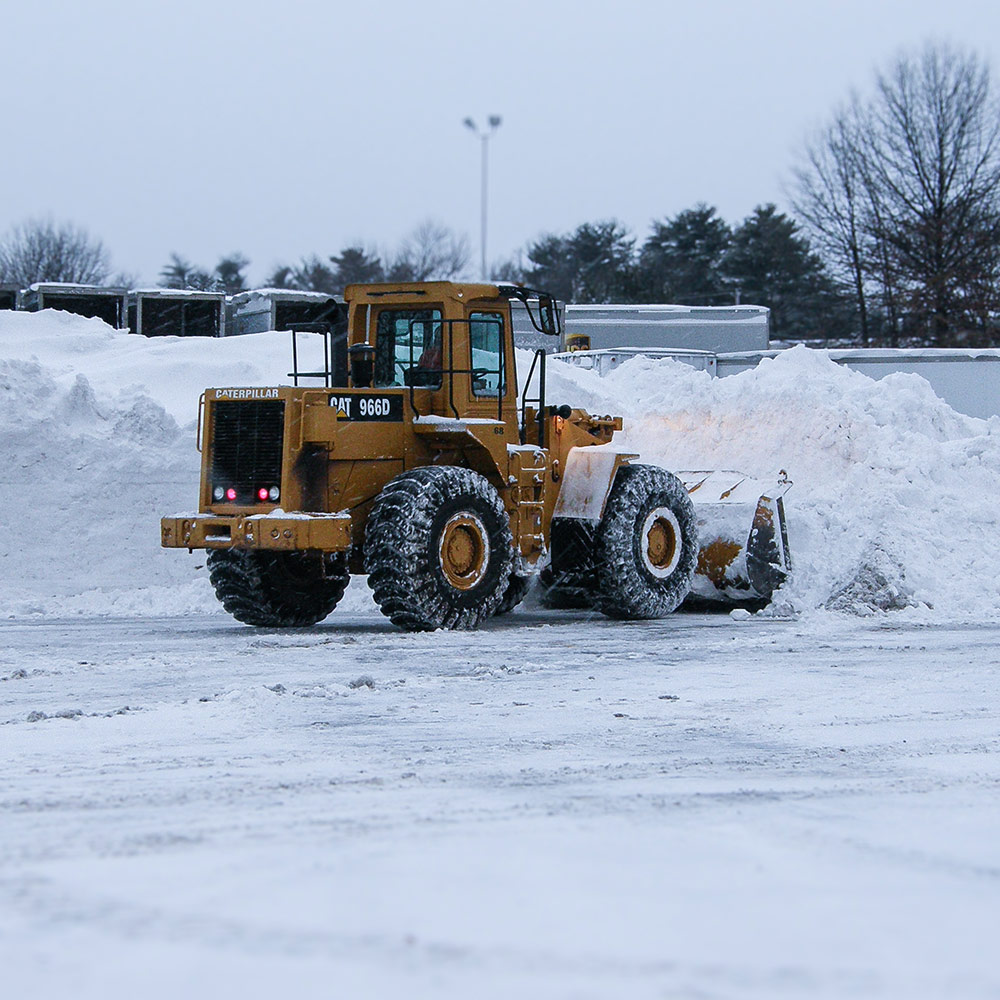
Stacking room decides the budget on a supermarket site. A store that can bank snow along a back berm pays for pushing. A store hemmed in by islands, a drive-through lane and a shared outparcel pays for loading and hauling snow off site instead, which is the single largest cost escalator on any property.
Lost parking carries a price of its own. Every row buried under a pile is a row that cannot turn over on a Saturday, and industry groups such as the Snow and Ice Management Association build their site planning guidance around exactly that tradeoff.
The Lingo Takeaway
A grocery store is a 1 a.m. loading dock, a 7 a.m. commuter stop and a 5 p.m. rush on the same slab of asphalt. Clearing it well means sequencing the property rather than simply pushing it. Lingo runs commercial snow and ice from the yard on Timber Lane in Chalfont, which keeps equipment within roughly five miles of most of the county commercial corridors, and routes get built in the fall around properties that commit before the season.
We are also straightforward about one thing. There is no emergency hotline here and no guaranteed emergency response window. Contracted properties are serviced on the dispatch schedule their trigger depth and priority tier establish, and the office answers at (215) 343-7700 Monday through Friday.
Common questions
What time does a supermarket lot need to be clear?
Before deliveries and the opening crew arrive, which usually means overnight work. Most stores want the dock, the fire lanes and the entrances open first, then the customer rows ahead of the morning traffic.
What trigger depth fits a grocery store?
High traffic retail generally runs at one inch for the lot, with sidewalks set at a half inch to an inch. A store that stays open around the clock sits closer to a zero tolerance standard, where a trace of ice is enough to dispatch.
Do you clear sidewalks and entrances or only the lot?
Walkway service covers sidewalks, entries and ADA ramps, and it gets priced separately from the lot because it is hand and machine work. Accessible spaces and access aisles are part of that same scope.
What happens when the lot runs out of room?
Crews load and haul the excess off site. On a tight retail property that step usually arrives after the second or third storm of a heavy stretch.
How is grocery store snow removal in Bucks County priced?
Pricing follows cleared square footage, stacking room, trigger depth and service level, walkway linear footage and billing structure. Per event billing costs less in a mild winter, while a seasonal contract fixes the number regardless of snowfall.
By town
Commercial snow contracts are priced and routed separately from grounds maintenance, so the town pages below cover how each area runs.
- Commercial snow removal in Doylestown, PA
- Commercial snow removal in Warrington, PA
- Commercial snow removal in Chalfont, PA
- Commercial snow removal in Newtown, PA
- Commercial snow removal in Buckingham, PA
If you manage a supermarket, a strip anchor or a shared retail lot and want grocery store snow removal in Bucks County handled before the first delivery truck arrives, call (215) 343-7700 or use our contact page. Tell us the store and the layout, and we will walk the site and quote against it.